Review – Teamgroup XTREEM DDR5-6400 CL32 32GB (2x16GB) – Another Excellent Memory Kit with Hynix A-Die ICs!
 by Giancarlo C. Dalmedico "NoMS" December 22, 2024 · DRAM Memory / Memórias / Reviews / Reviews
In this review, we’ll be analyzing a DDR5 memory kit from Teamgroup’s Xtreem series. This lineup offers models with speeds ranging from 6000 to 8200 MT/s, available in 16, 24, 32, or 48 GB modules. These can be purchased in kits of 32 GB, 48 GB, 64 GB, or 96 GB. For this review, we’re testing a 32 GB (2×16 GB) kit rated at 6400 MT/s with timings of 32-39-39-84 and an operating voltage of 1.35V.
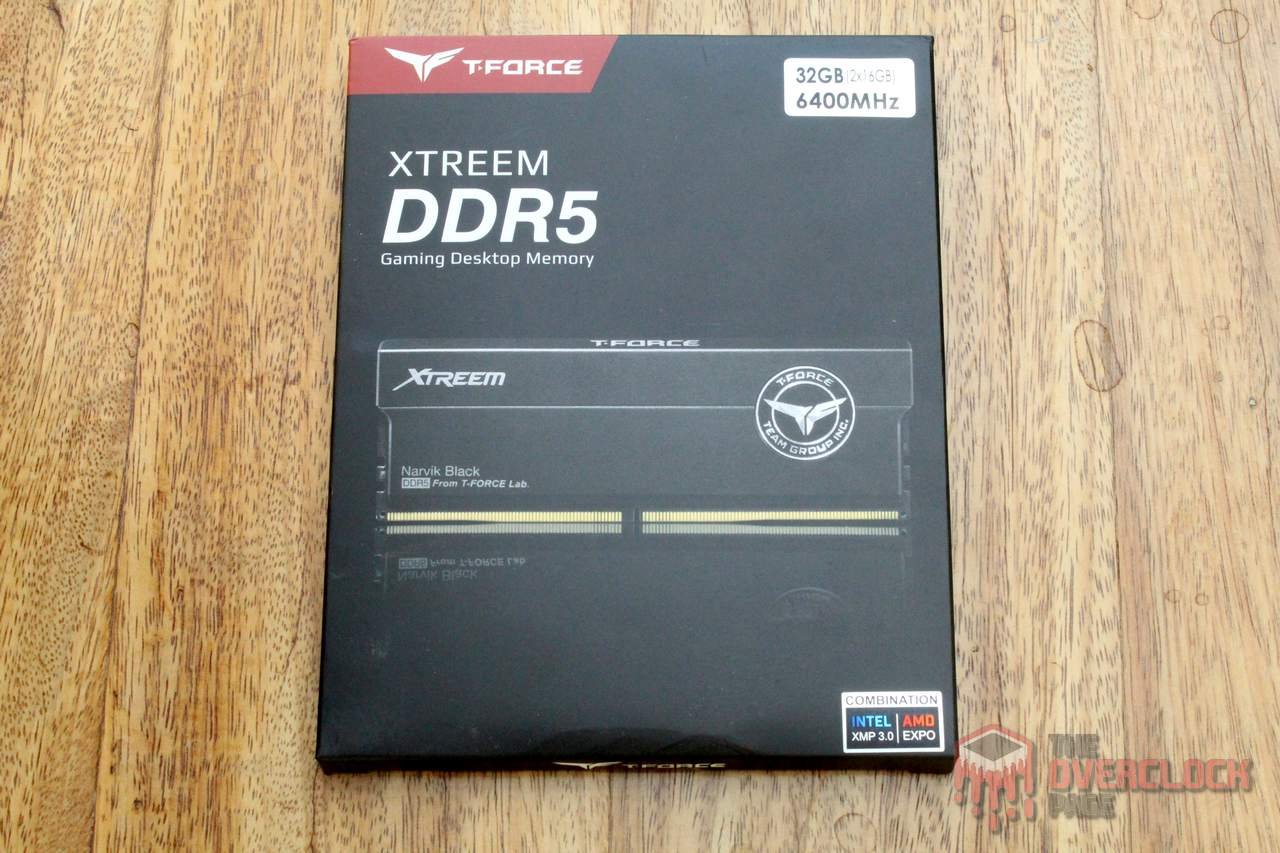
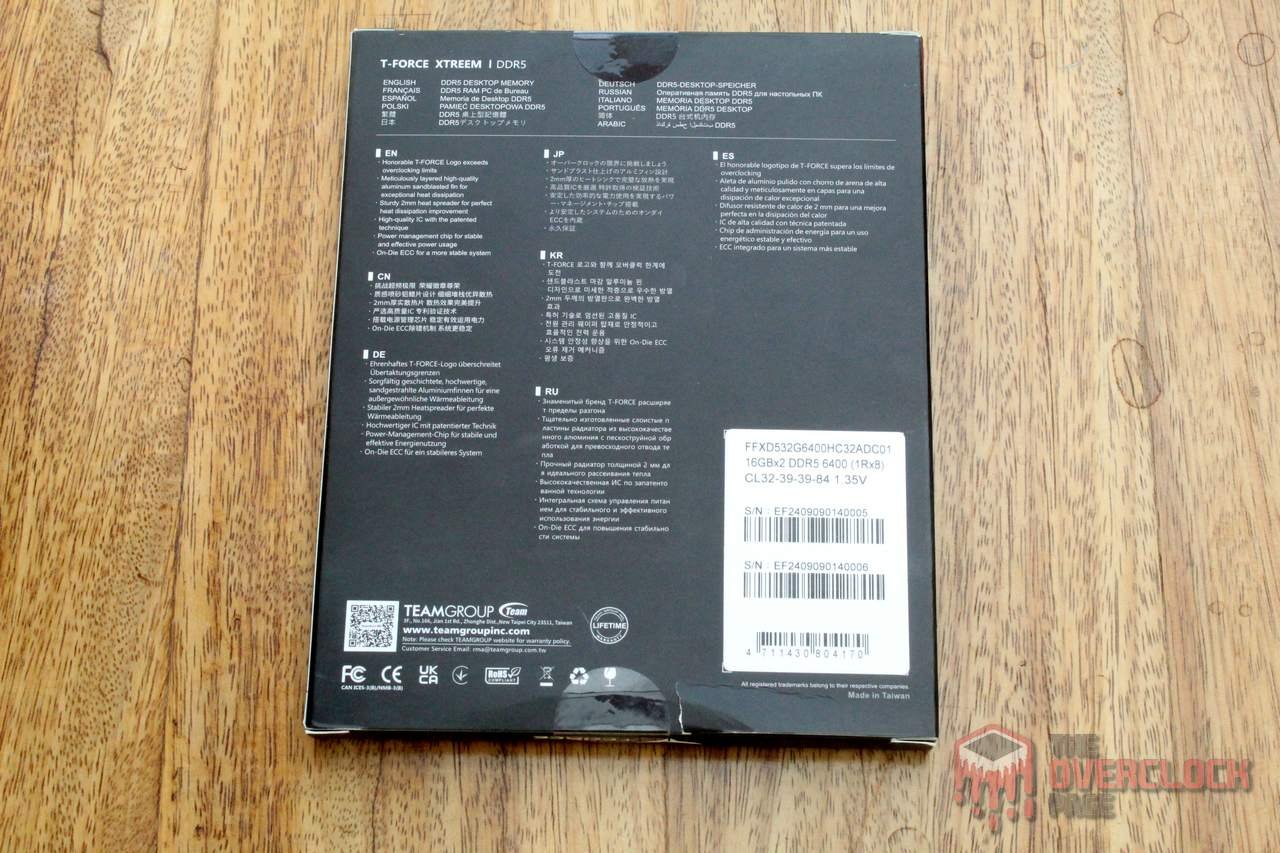
The memory sticks come in a rectangular box featuring an illustration of the product, the manufacturer’s logo, and the model name. On the back, you’ll find additional descriptions in multiple languages and a label listing the specifications, where the product code for this kit is FFXD532G6400HC32ADC01.
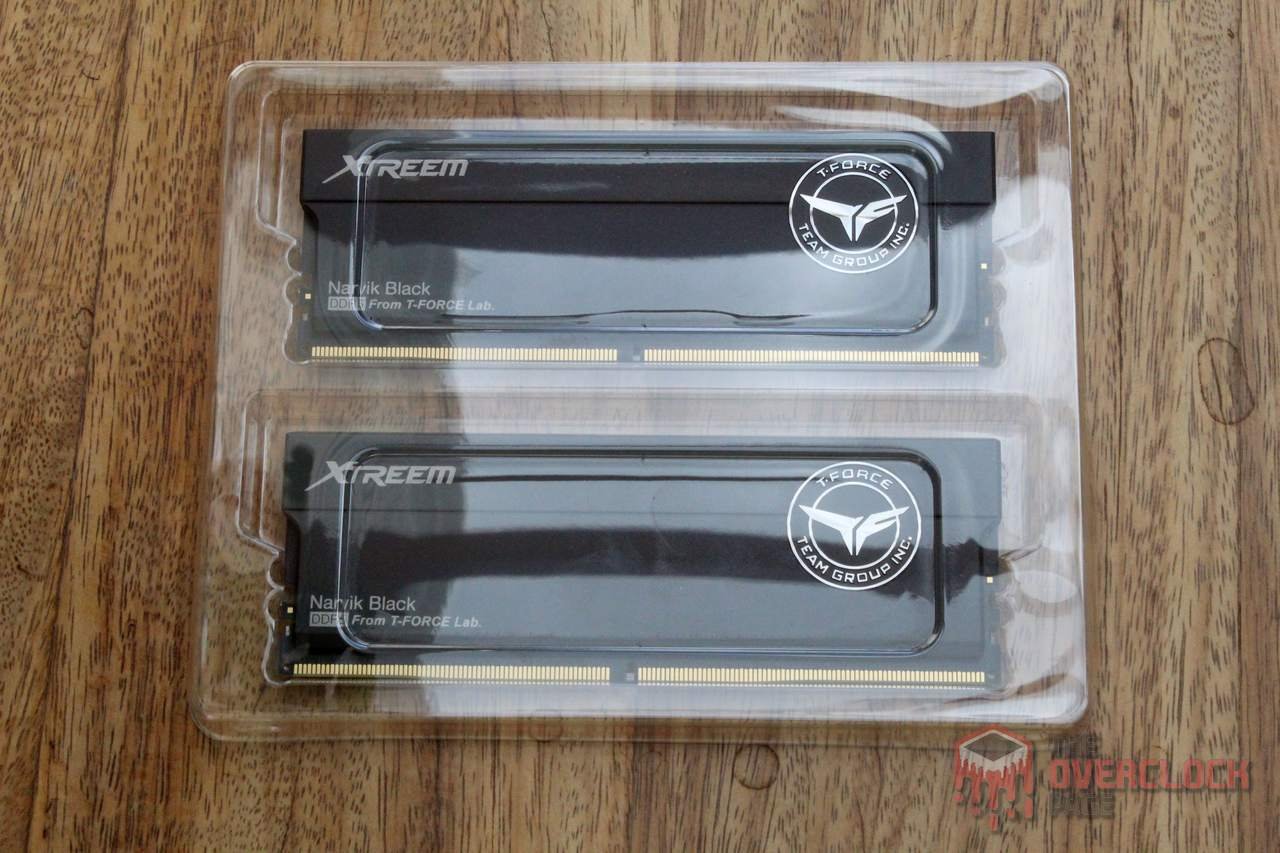
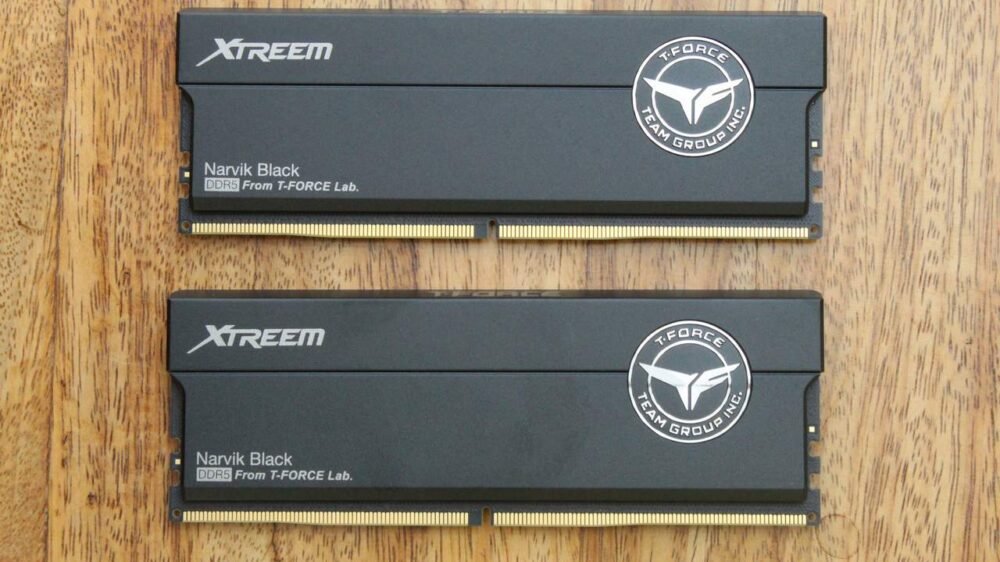
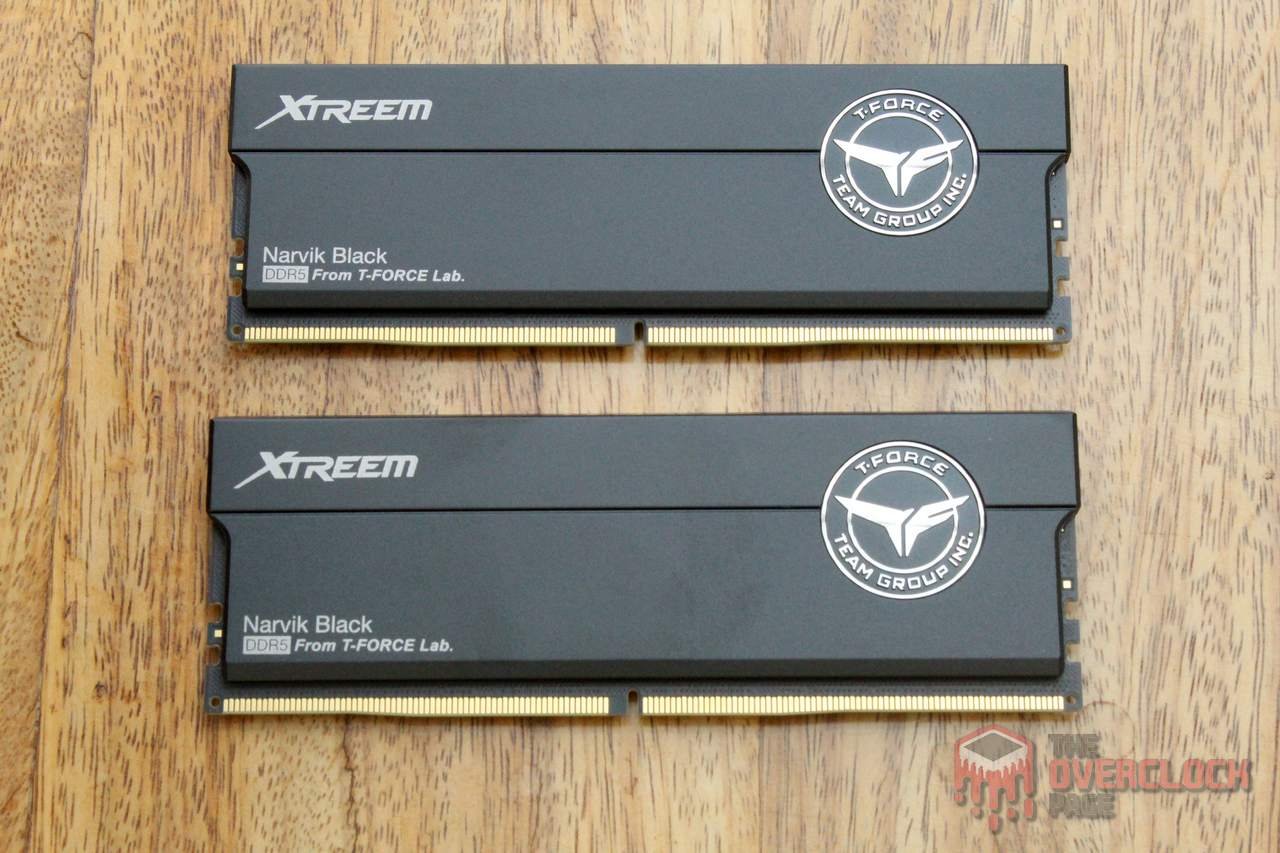
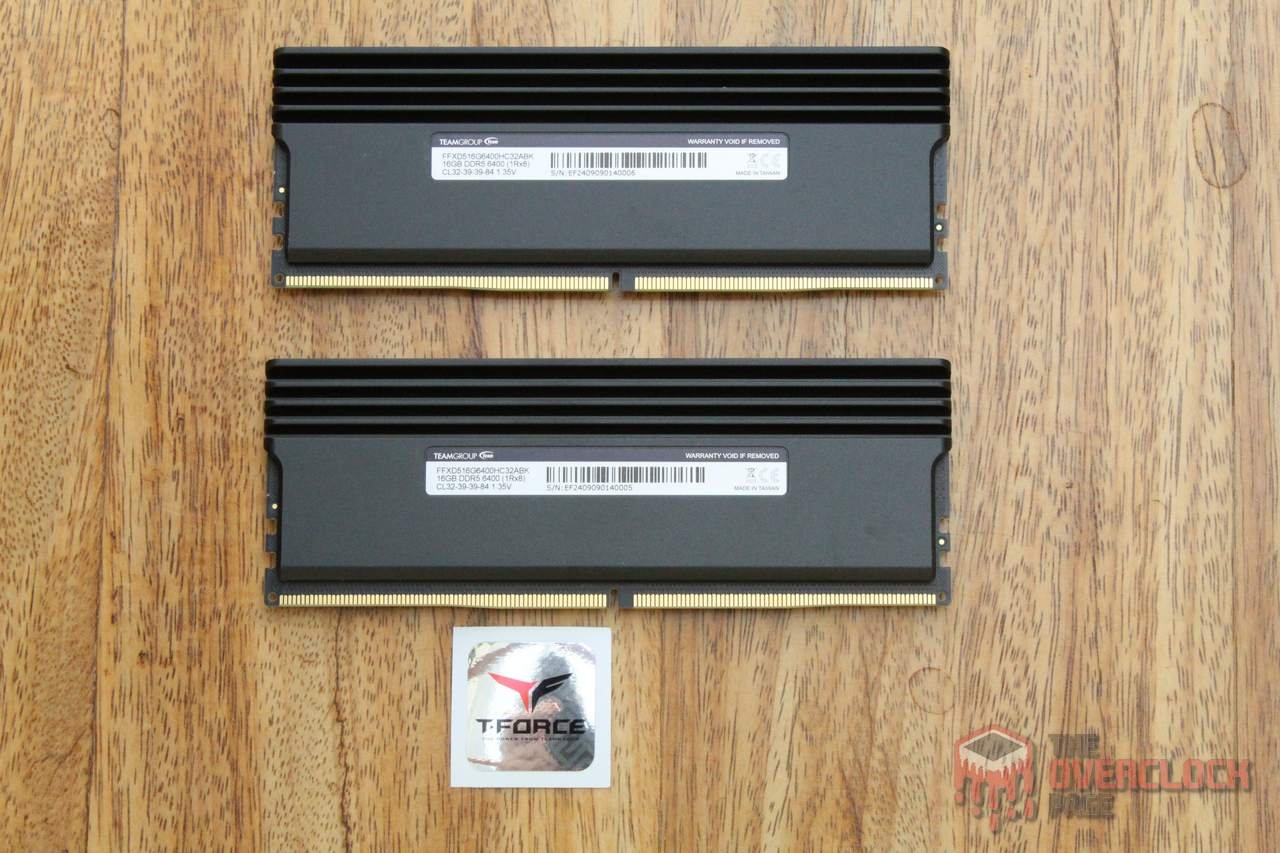
When it comes to the heatsink, Teamgroup didn’t hold back, incorporating a robust finned aluminum piece on one side. This design benefits from lateral airflow and ensures full coverage of the memory chips and the PMIC, maximizing heat dissipation.
The unit we tested does not feature any kind of lighting. However, Teamgroup offers ARGB models in the XTREEM ARGB lineup. It’s worth noting that there are differences in specifications between the standard XTREEM models and their ARGB counterparts.
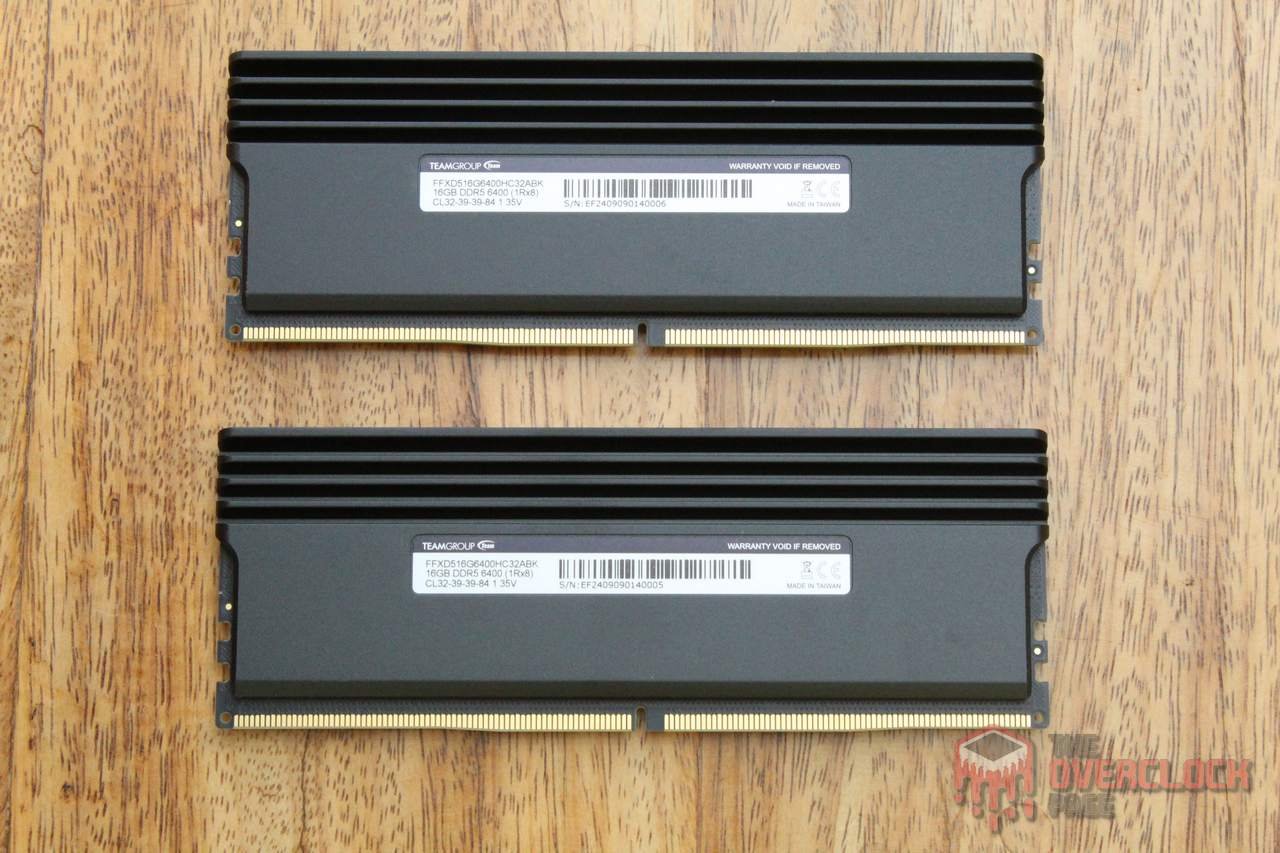
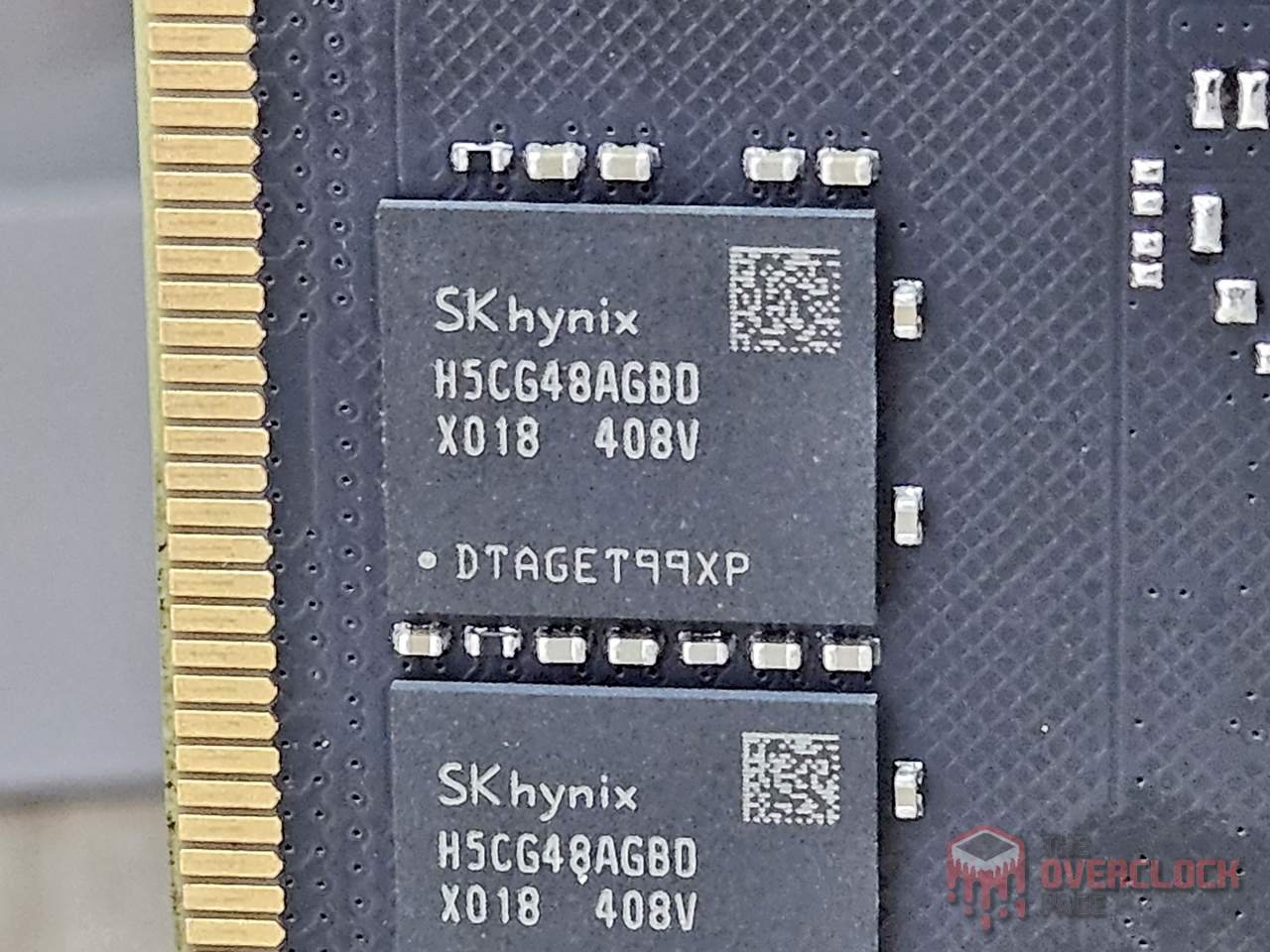
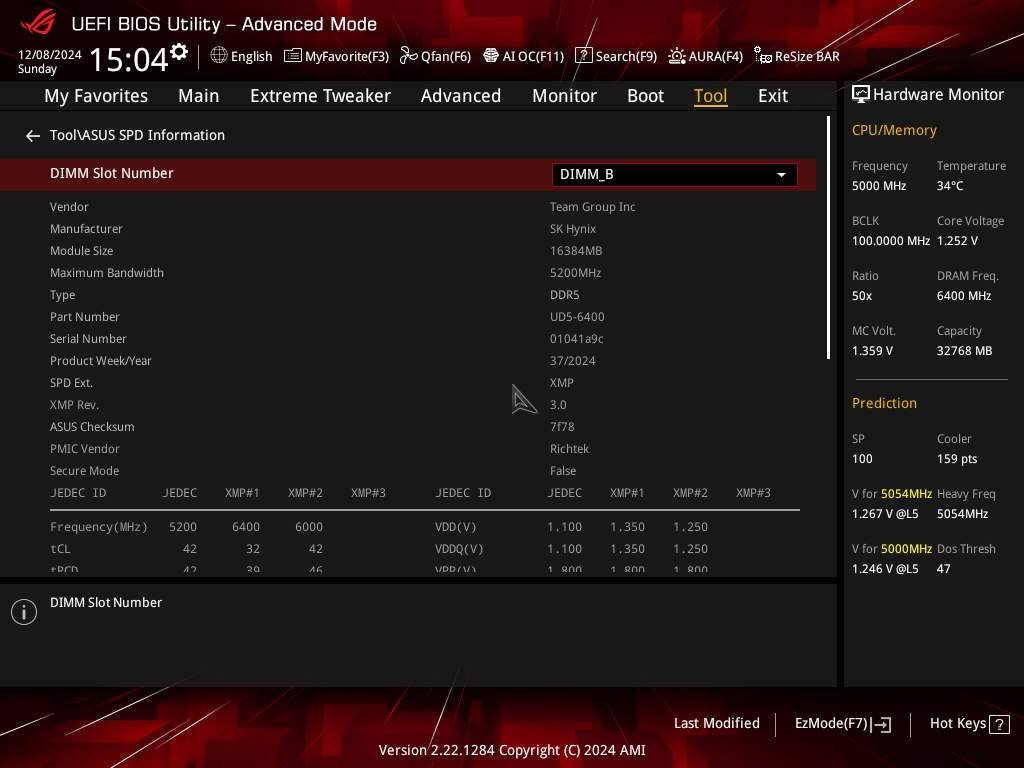
The memory chips used in this kit are the well-known SK Hynix A-Die 16-Gbit (H5CG48AGBD-X018). These chips are widely used in most 16 GB and 32 GB DDR5 modules aimed at enthusiasts or users seeking higher performance. This is because they are practically the only chips with this density capable of achieving aggressive timings and high frequencies simultaneously.
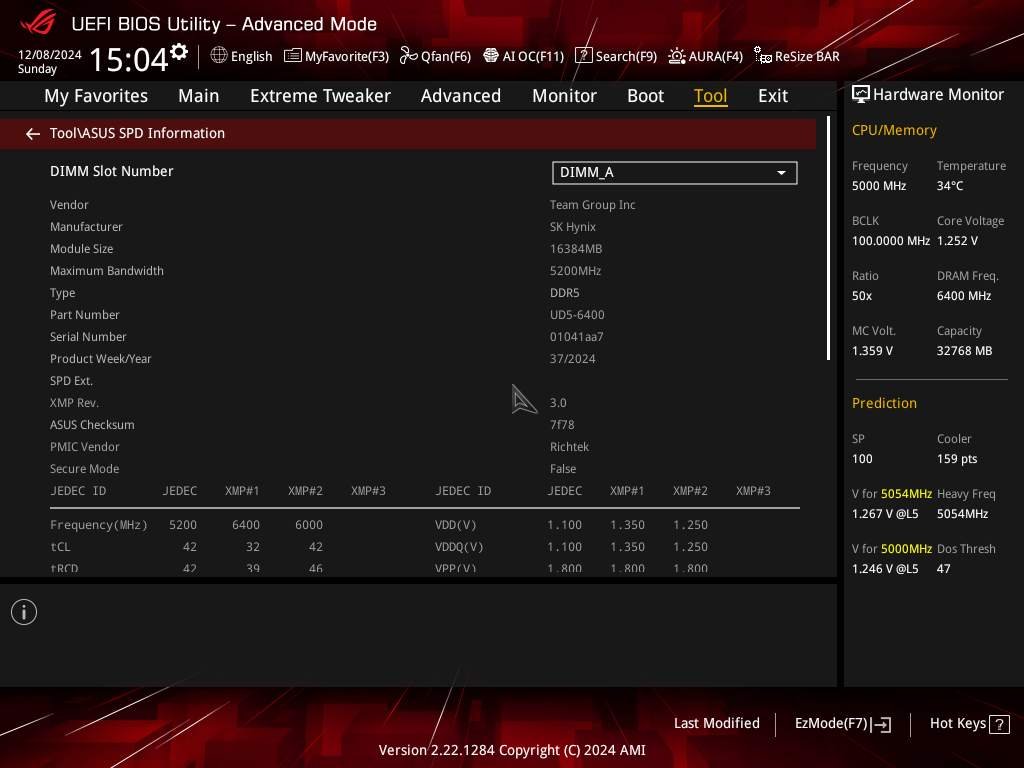
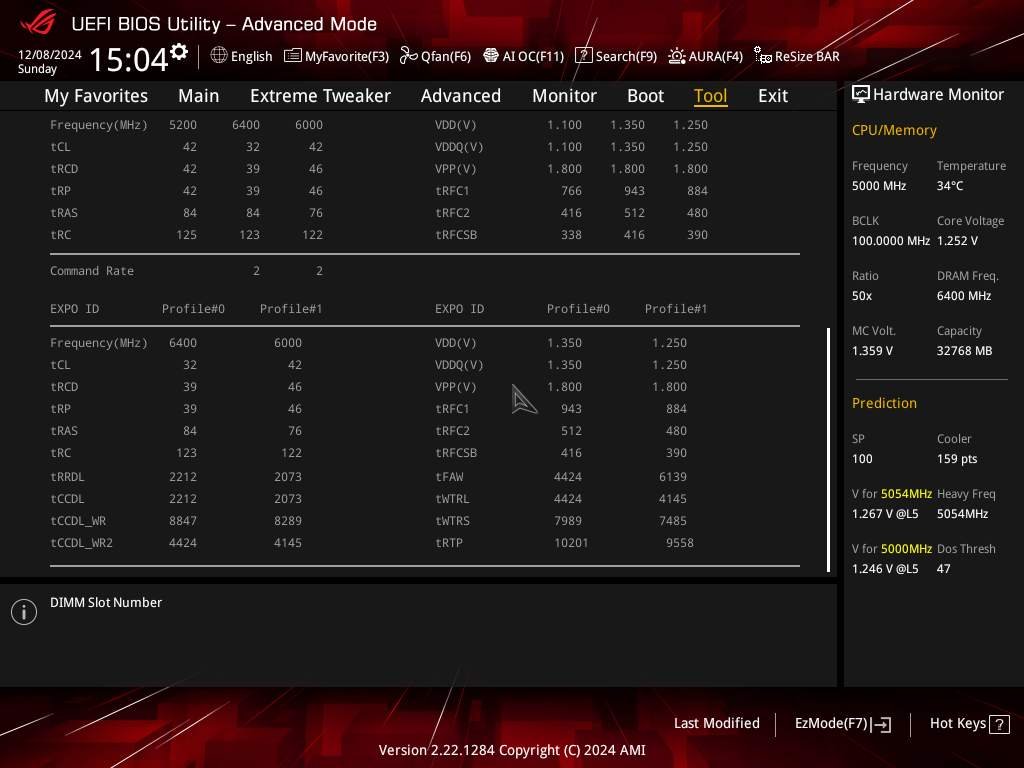
The PMIC (Power Management Integrated Circuit), which handles the power delivery for the memory module, is supplied by Richtek. This PMIC supports “High Voltage Mode,” allowing VDD/VDDQ voltages above 1.43V on compatible motherboards. This capability is confirmed by the SPD (Serial Presence Detect) data embedded in these memory modules.

If you’re interested, here’s the link to the product page on the manufacturer’s website: Teamgroup XTREEM DDR5 Black.
Testing hardware:
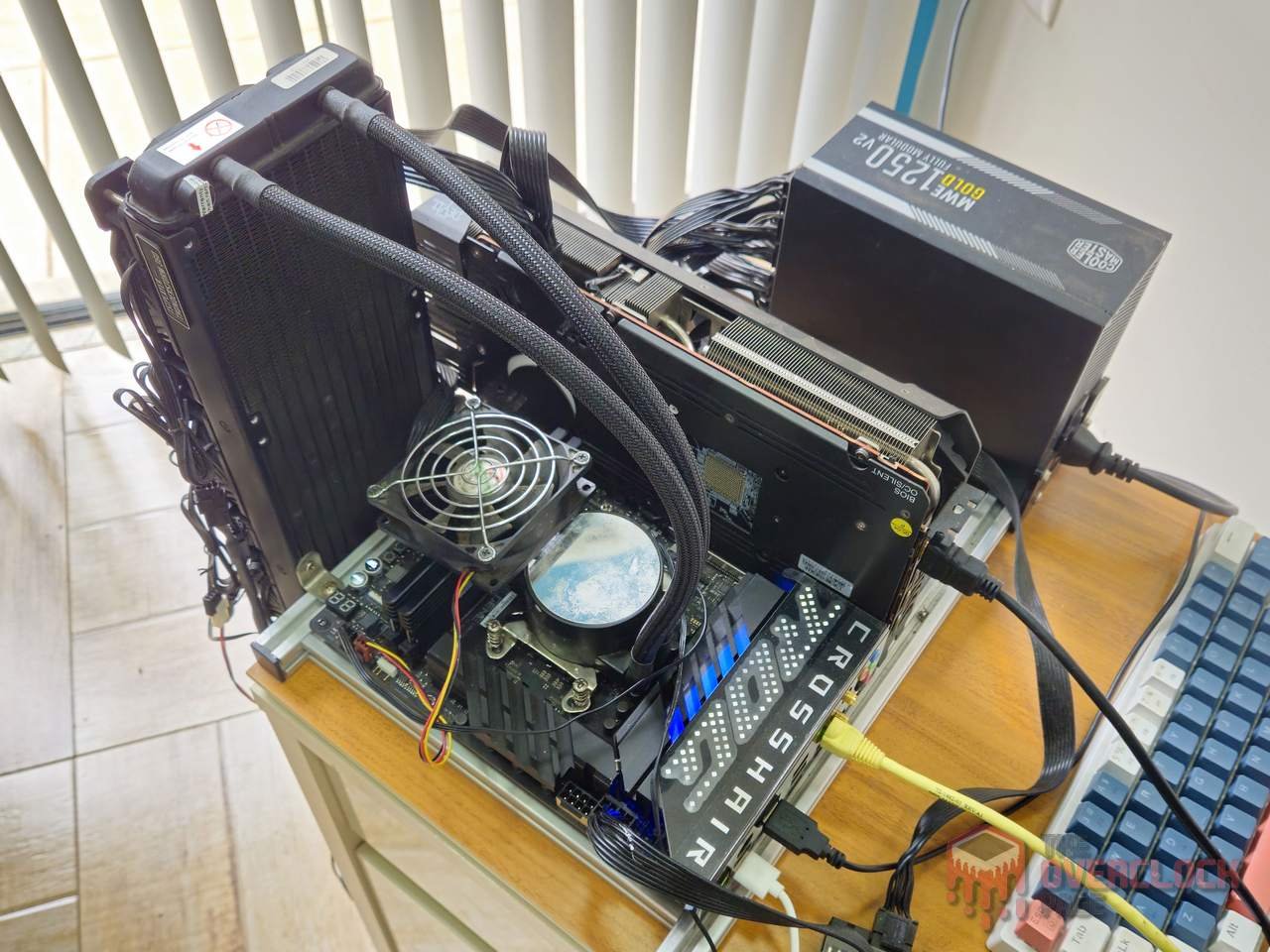
CPU: AMD Ryzen 7 8700G e Ryzen 7 9700X (Thanks AMD!)
MOBO: ROG Crosshair X670E Gene (BIOS: 2505)
RAM: 2×16 GB Teamgroup XTREEM DDR5-6400CL32 1.4V – FFXD532G6400HC32ADC01 – (Thanks Teamgroup!)
GPU: Powercolor RX 6800 XT Red Devil 16 GB
PSU: Coolermaster MWE 1250 Gold V2 (Thanks Cooler Master!)
COOLER: 1STPlayer TS-360
SSD: Crucial BX300 120 GB + Teamgroup T-Force Vulcan Z 1TB
Software: Windows 10 22H2 x64, TM5 0.13.1 1usmus, Geekbench 3.4.4, y-cruncher 0.85, Counter Strike 2, Shadow of the Tomb Raider and Starfield.
Testing methodology:
Discovering the daily-use limits of Teamgroup memory using the Ryzen 7 8700G and 9700X, aiming to explore the optimal settings for each of these CPUs:
1) XMP/EXPO: The goal here is to test whether it’s possible to operate with stability using the factory XMP profile or EXPO, if available, eliminating the need for the traditional overclocking tests we used to do under these conditions.This change was necessary because the “easy overclocking” approach no longer makes sense. For DDR5, the gains from overclocking are nearly nonexistent, as motherboards tend to relax the subtimings significantly, canceling out the potential gains from overclocking.
2) 24/7 with fine-tuning: In this scenario, manual adjustments were made to all possible parameters to achieve the best possible results for daily use, pushing the limits of 1:1 and 1:2 modes.In both cases 1 and 2, the following tools were used:
Timings – AMD
XMP / EXPO:
For this model, Teamgroup chose to include EXPO / XMP profiles for DDR5-6400 and DDR5-6000, which performed well on the test hardware, with the motherboard automatically applying the UCLK in 1:2 mode at 6400 MT/s on the 8700G.
Again, it’s important to note that this is a limitation of this particular sample. The same issue could occur with Ryzen 7000 and 9000 processors, where some units may not be stable with UCLK running at 1:1 and memory at 6400 MT/s. In such cases, it’s more beneficial to aim for the highest performance while maintaining the 1:1 ratio.
24/7 with fine tuning:
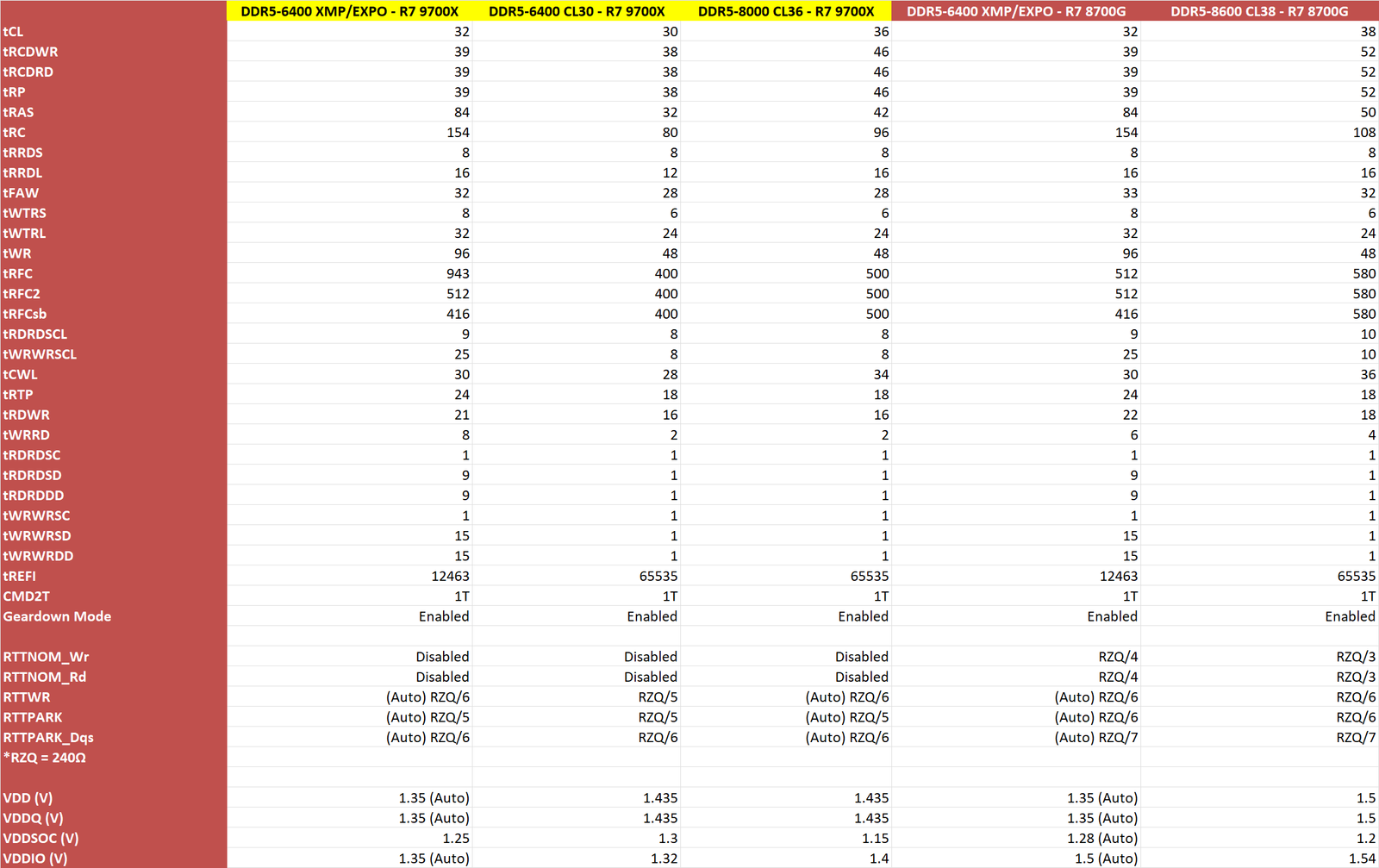
With fine-tuning, it was possible to improve several timings and reach 8600 MT/s with the R7 8700G. To achieve this, the VDD/VDDQ had to be increased to 1.5V, which is considered safe for these DDR5 modules with Hynix A-Die chips.
Regarding the timings, it was necessary to relax the primary timings somewhat to achieve stability at this voltage, although maintaining CL below 40, which is impressive. It’s important to note that with DDR5, certain subtimings have greater significance when it comes to performance, such as tREFI and tRFC. In any case, it’s possible to tighten the primary timings further by increasing the voltage, although practical gains may not be substantial, and it could impact the longevity of the modules with prolonged use.
With the Ryzen 7 9700X, it was possible to reach 6400 MT/s with CL30 and an aggressive tRFC for this processor, which should deliver strong performance in 1:1 mode on chiplet-based models. Additionally, reaching 8000 MT/s with CL36 is possible, but in models with only 1 CCD, this doesn’t typically provide significant gains. However, in models with 2 CCDs, it can be beneficial due to the lower VDDSOC voltage compared to DDR5-6400, leaving more TDP margin for the CPU cores.
It’s worth mentioning that both adjustments were achieved with just 1.435V. In other words, there was no need to resort to High Voltage Mode or push the voltage up to the 1.5V limit. However, had we done so, it might have been possible to tighten the primary timings further, though this wouldn’t make a major difference in performance for daily use scenarios.
Benchmarks
Here are the performance numbers in the benchmarks. It’s important to note that these results can vary depending on the processor and platform. For example, performance with higher memory frequencies is typically more noticeable on 12th/13th/14th generation Intel processors, while on Ryzen 7000 and 9000 series, the gain in gaming performance tends to be negligible in 1:2 mode, even at 8000 MT/s.
It’s worth mentioning that all these results passed the stability test with TM5 0.13.1 and, specifically for these samples, represent configurations that can be used daily.
Benchmarks 2D
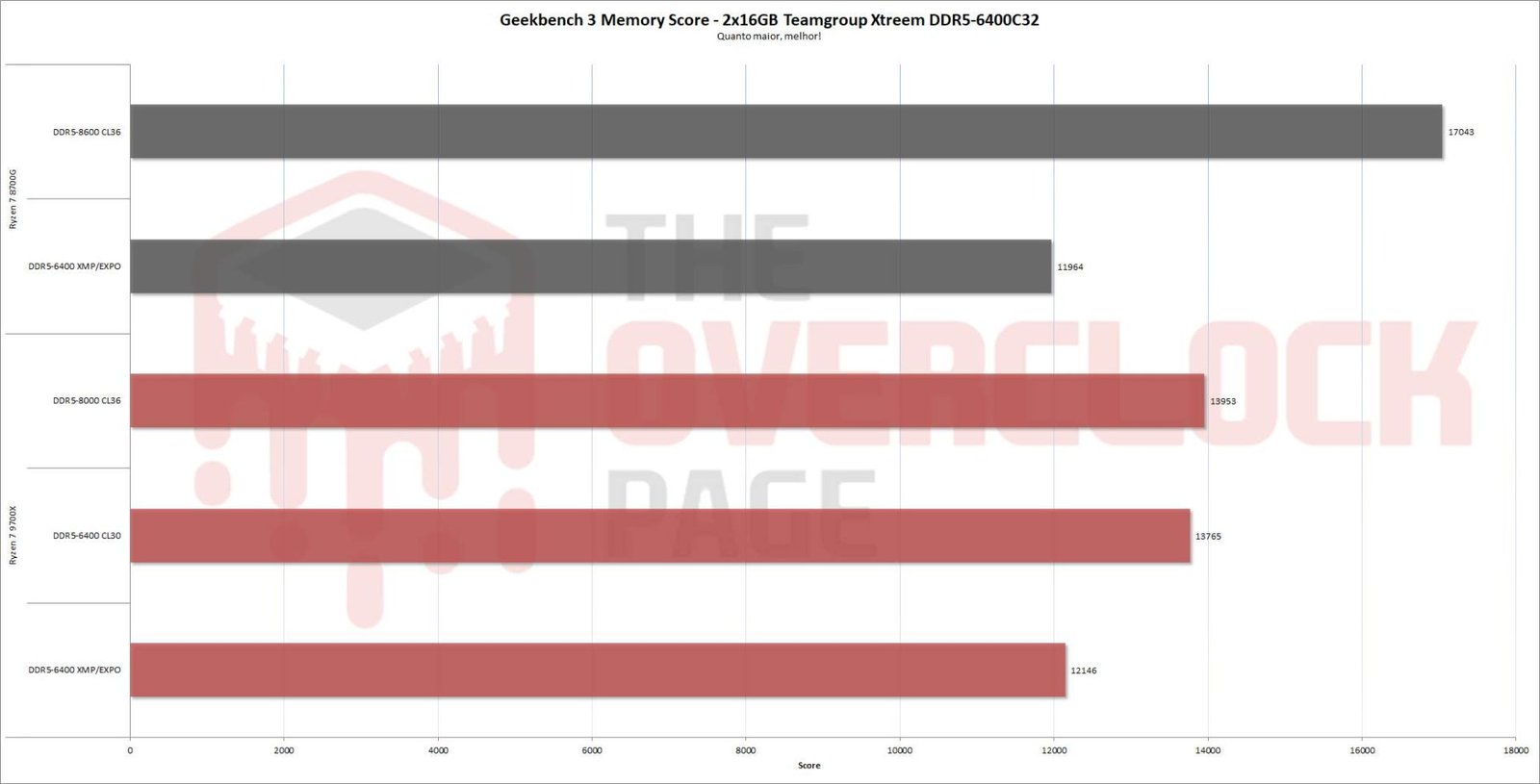
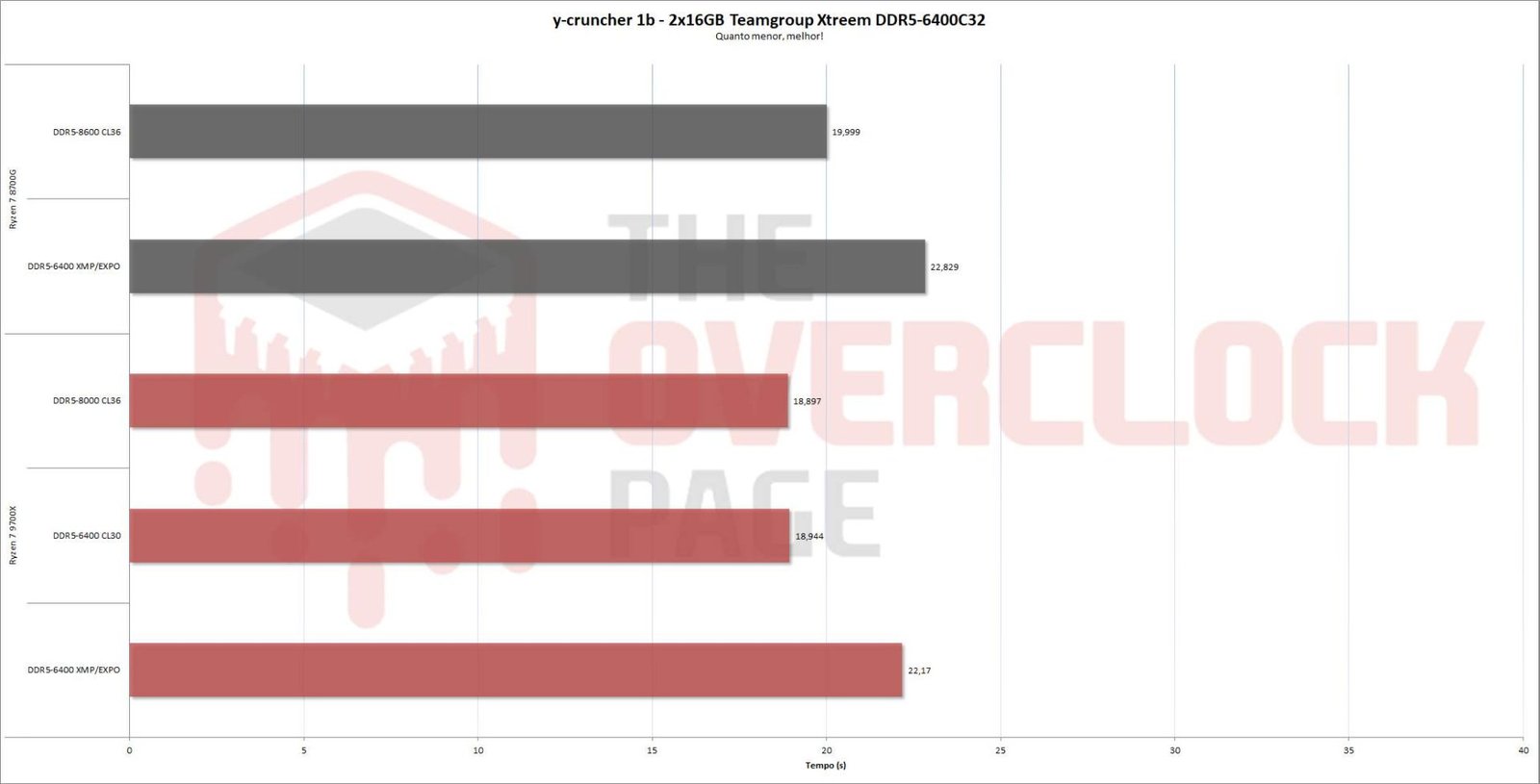
In synthetic memory benchmarks, the difference from overclocking tends to be more evident, with both Geekbench and y-cruncher 0.85 1b showing significant gains when overclocking, which isn’t always the case in other 2D applications, as we observed in our optimization guide for the Ryzen 7 8700G.
The gains were more noticeable on the 8700G, as it benefits from the higher FCLK, which ensures greater effective memory bandwidth in these situations. On the other hand, the 9700X showed little improvement when scaling from 6400 MT/s to 8000 MT/s.
Benchmarks 3D
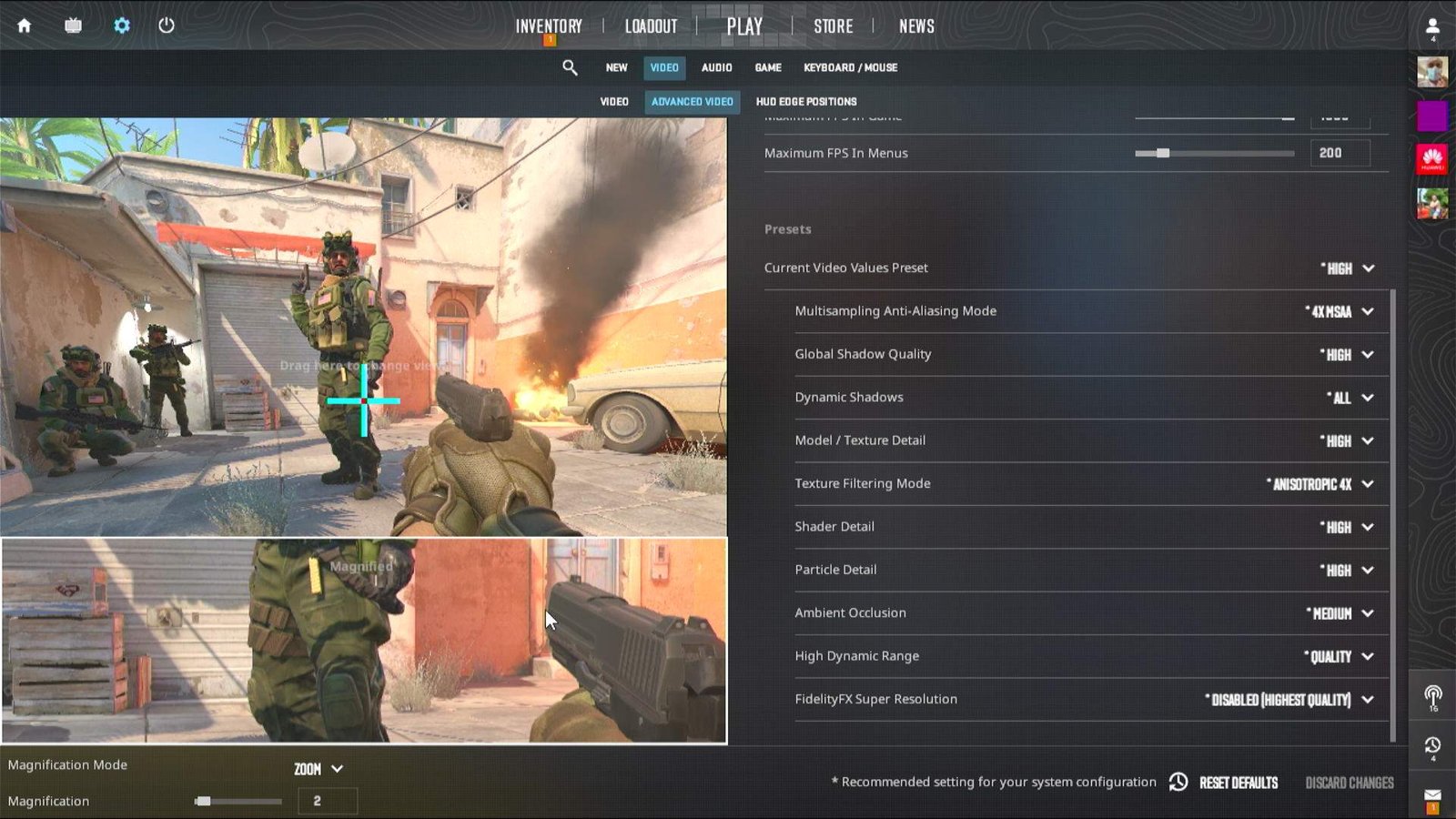
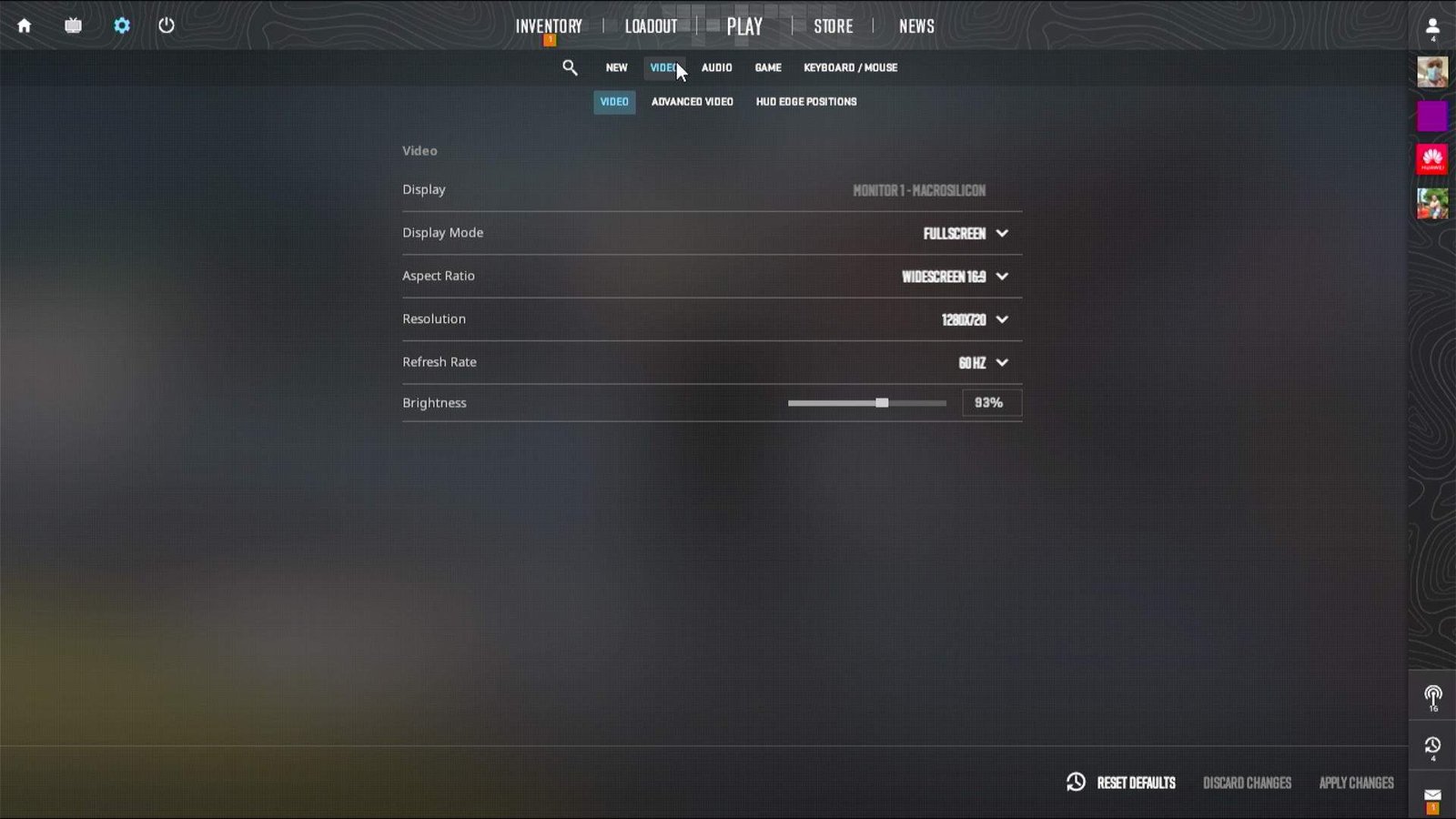
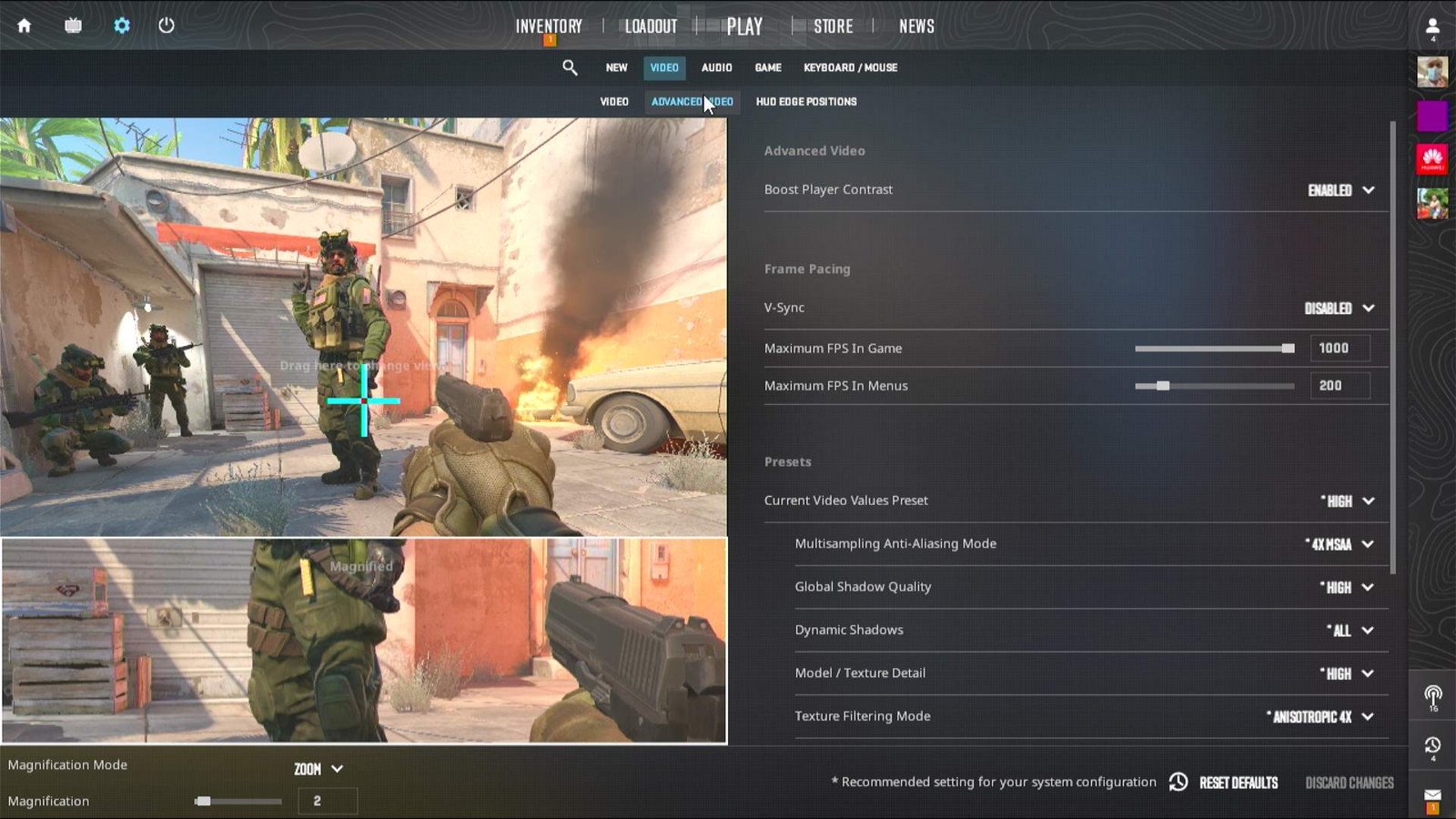
In addition to the 2D tests, we also performed gaming tests to evaluate the performance gain from optimizing timings and frequency. The tests were run at 720p Low with the following configurations, aiming to simulate a scenario where the CPU is the limiting factor. This represents the best-case scenario for the tested CPUs, where the performance gain tends to decrease with higher resolutions.
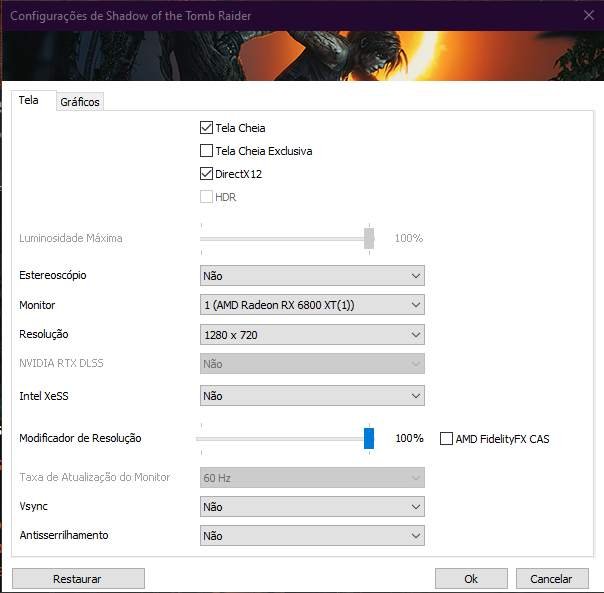
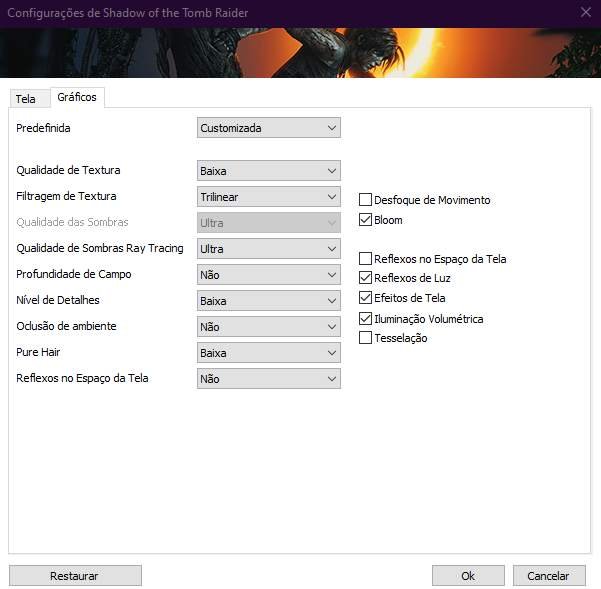
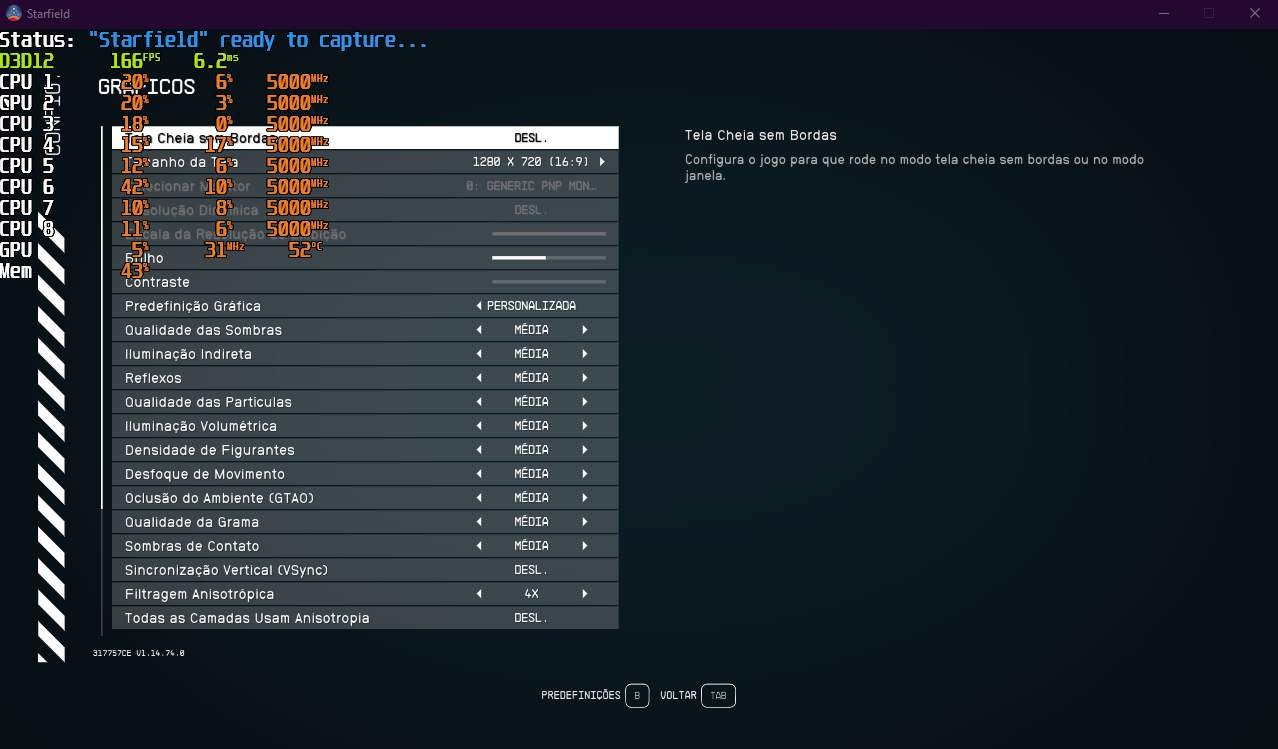
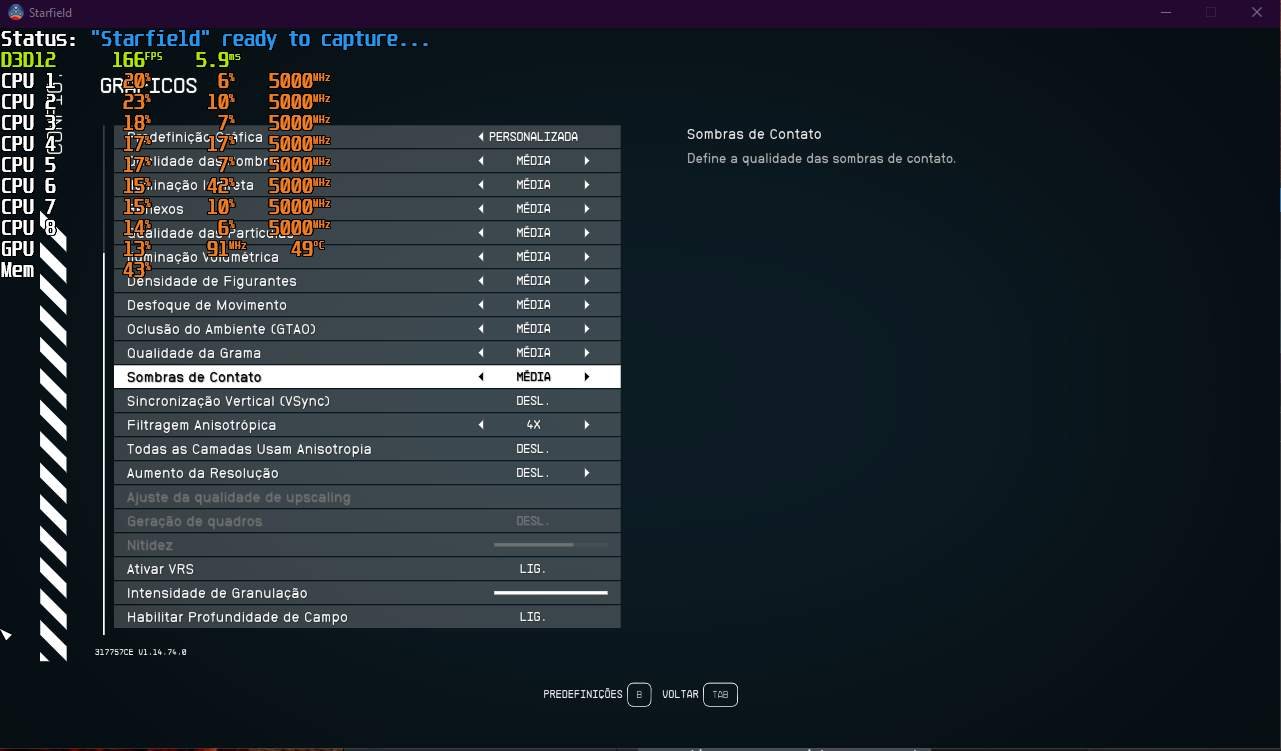
Results:
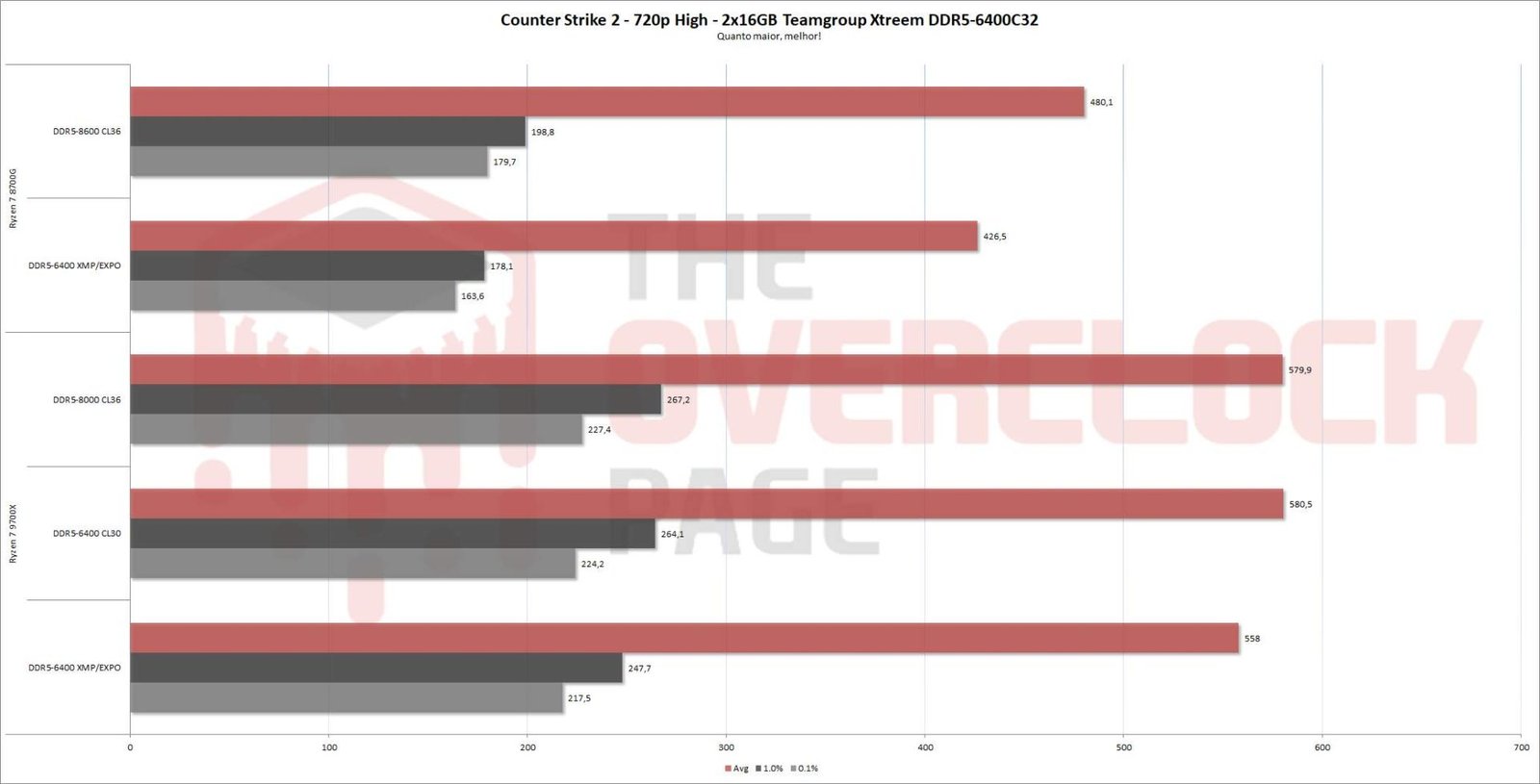
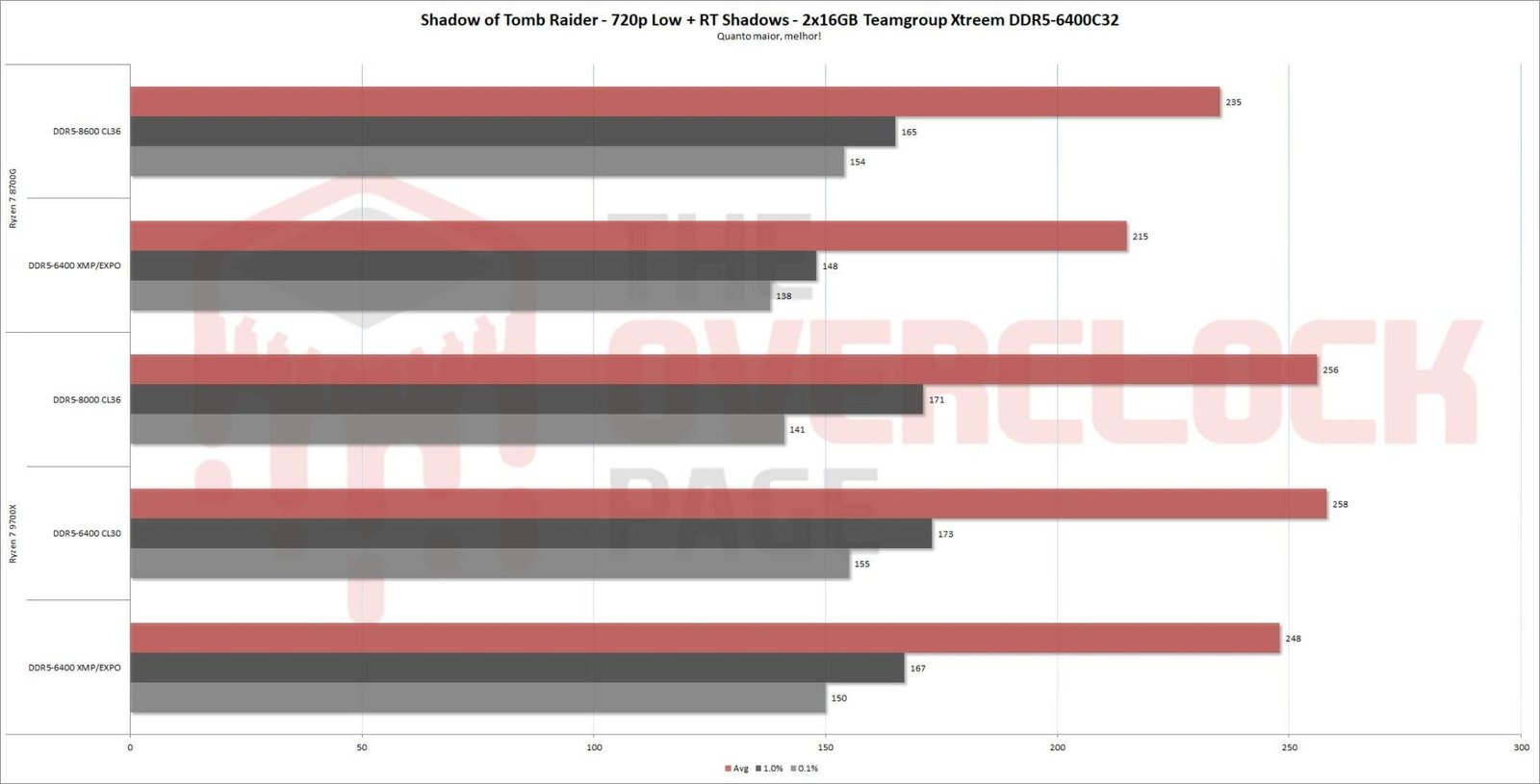
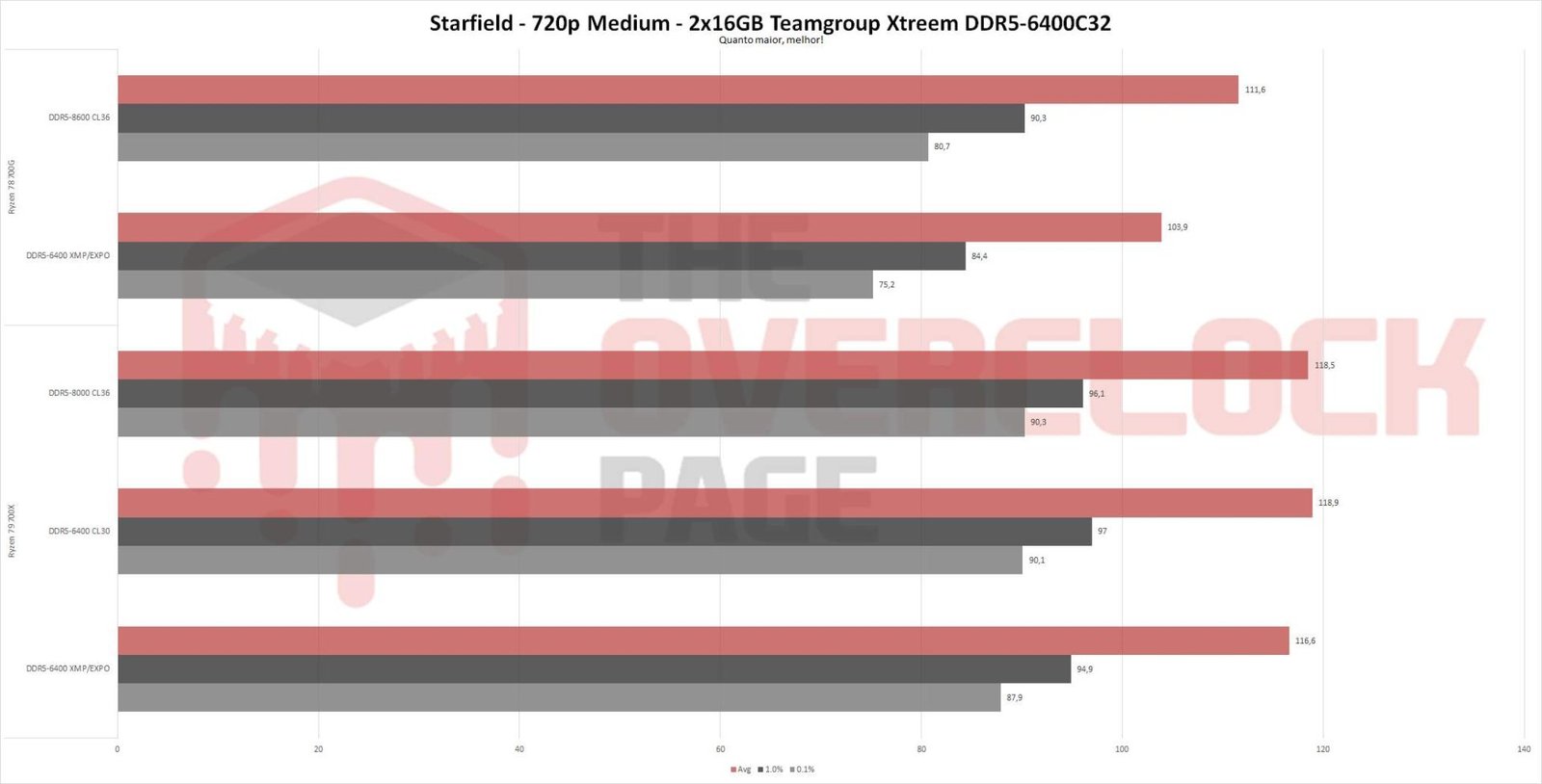
The memory overclock gains on the 8700G were more significant compared to the 9700X, mainly because the 8700G has half the L3 cache of the 9700X, which leads to more memory accesses. In this scenario, a faster memory subsystem and IF (Infinity Fabric) help to compensate for this limitation.
For the 9700X, the largest gains came from optimizing the timings relative to the standard EXPO settings at 6400 MT/s, with little to no benefit from pushing to 8000 MT/s. The only advantage of reaching 8000 MT/s was the ability to use a lower VDDSOC, freeing up some TDP margin for the CPU.
Extra tests – DDR5 9000 can be a reality!
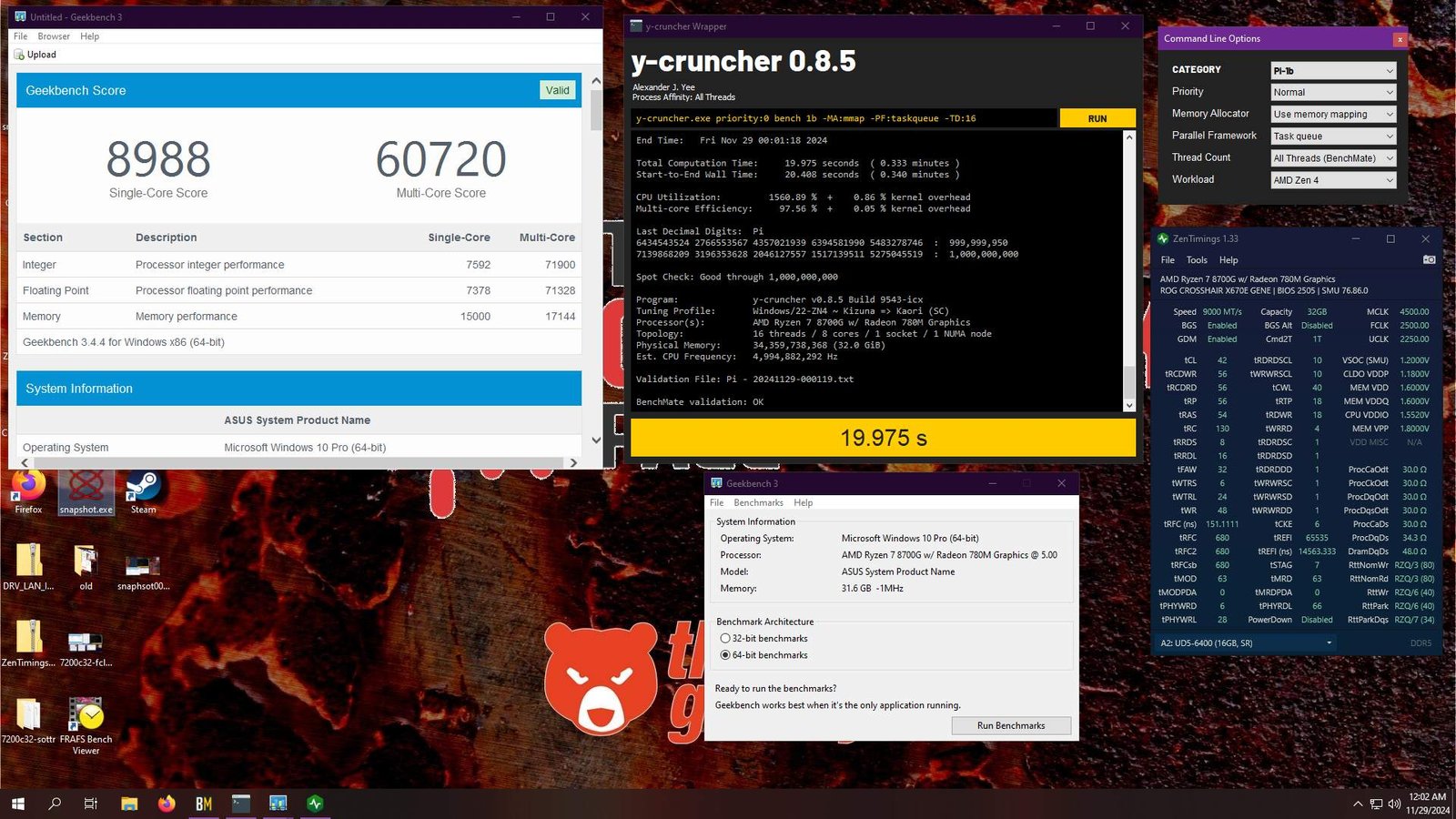
For safety reasons, we set 1.5V as the limit for VDD/VDDQ in our DDR5 memory tests, as it’s impossible to predict the usage conditions of the readers, and we don’t want to share adjustments that might end up damaging other people’s hardware. However, it is known that these Hynix chips are capable of scaling with even higher voltages. Out of curiosity, we also tested whether it would be possible to go beyond 8600 MT/s with more than 1.5V.
By applying 1.6V to the VDD/VDDQ, we managed to reach 9000 MT/s CL42 with stability in TM5! It’s important to note that in order to achieve this and complete the TM5 test, it was necessary to set VDDIO to 1.56V and VDDP to 1.18V on the 8700G, which are somewhat aggressive values. Not every CPU sample responds well to these voltages; for example, our 8600G doesn’t tolerate these high voltages and doesn’t reach these high frequencies with stability.
It’s also important to emphasize that not every motherboard can handle this, and this is a relatively difficult milestone to achieve, not so much because of the memory itself, but due to the combination of CPU and motherboard. Things might improve in the future if CKD or CAMM2 modules see wider adoption and support.
Conclusion
The Teamgroup XTREEM 32 GB (2×16 GB) DDR5-6400 kit showed good compatibility with the AMD platform, working normally with the 6400 MT/s profile without user intervention, although this resulted in UCLK running in 1:2 mode with the 8700G. This can vary depending on the CPU and motherboard used and has little to do with the memory itself.
With manual adjustments, it was possible to achieve DDR5-8600 CL38 with stability, an excellent mark for a kit like this, though it may be unattainable for most AM5 motherboards. With the Ryzen 7 9700X, we managed to reach settings like DDR5-6400 CL30 or DDR5-8000 CL36 with just 1.435V and very aggressive timings, comparable to the best DDR5 kits using Hynix A-Die chips that we’ve tested.
It’s important to note that while the original heatsink is better than average, it’s essential to keep an eye on temperatures if overclocking is planned. You may need to use a traditional fan blowing directly onto the memory to keep temperatures under control.
In terms of availability and price, the 32 GB Teamgroup XTREEM DDR5-6400 CL32 kit can be found for around 110 USD, making it a product with excellent cost-to-performance value. Given the excellent results seen in the tests, we highly recommend these memory modules.