Extreme Overclocking with Ryzen 7 9700X and ASRock B650M-HDV/M.2 – Results and Benchmarks!
 by Giancarlo C. Dalmedico "NoMS" November 17, 2024 · Extreme Overclocking / Overclock Extremo
Extreme overclocking is our specialty, and with so many exciting new releases, like the Ryzen 9000 series, why not freeze one of these CPUs to see how it performs? In this article, we’ll explore how the Ryzen 7 9700X paired with the ASRock B650M-HDV/M.2 handled extreme overclocking using liquid nitrogen! 🙂
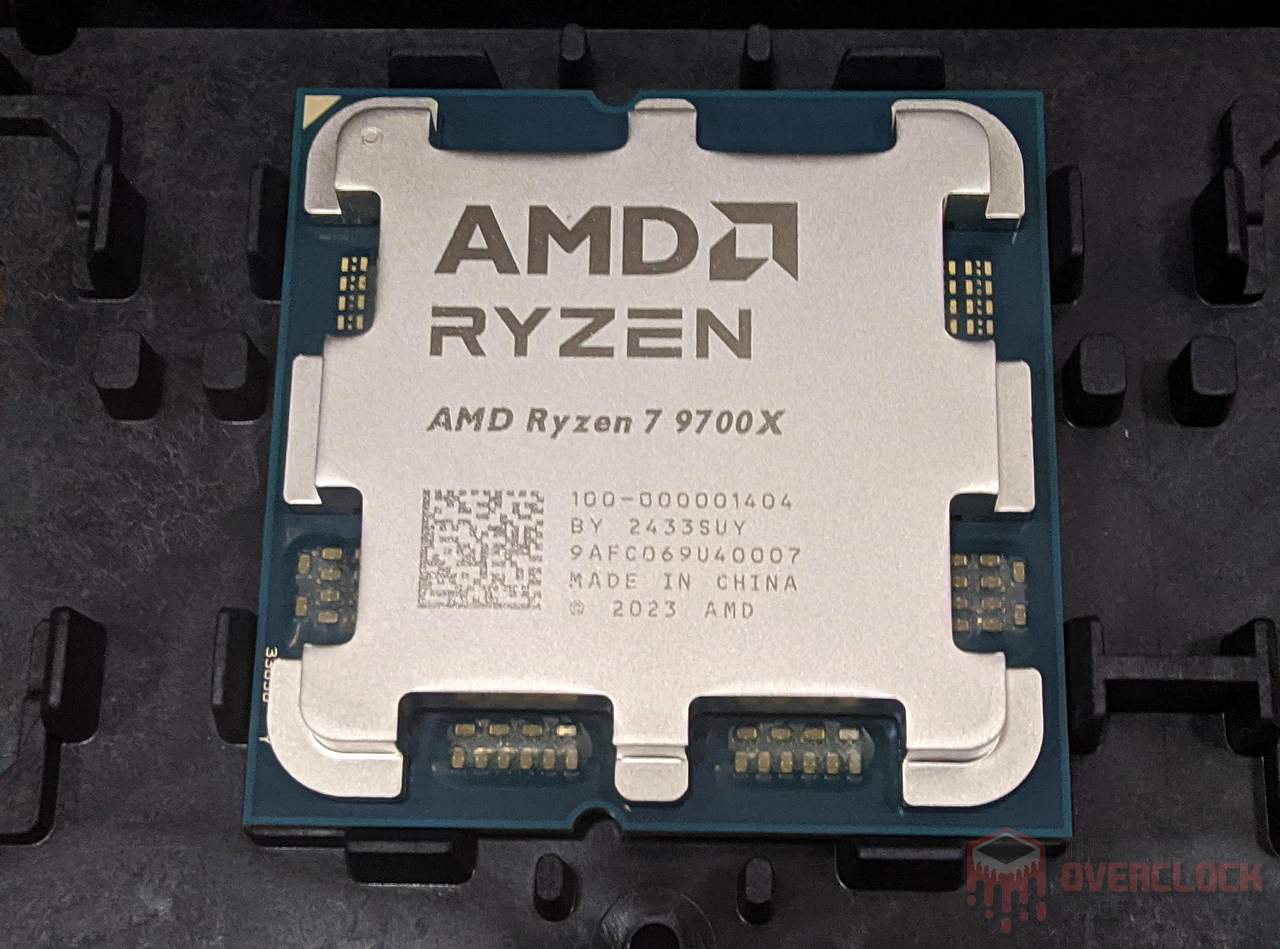
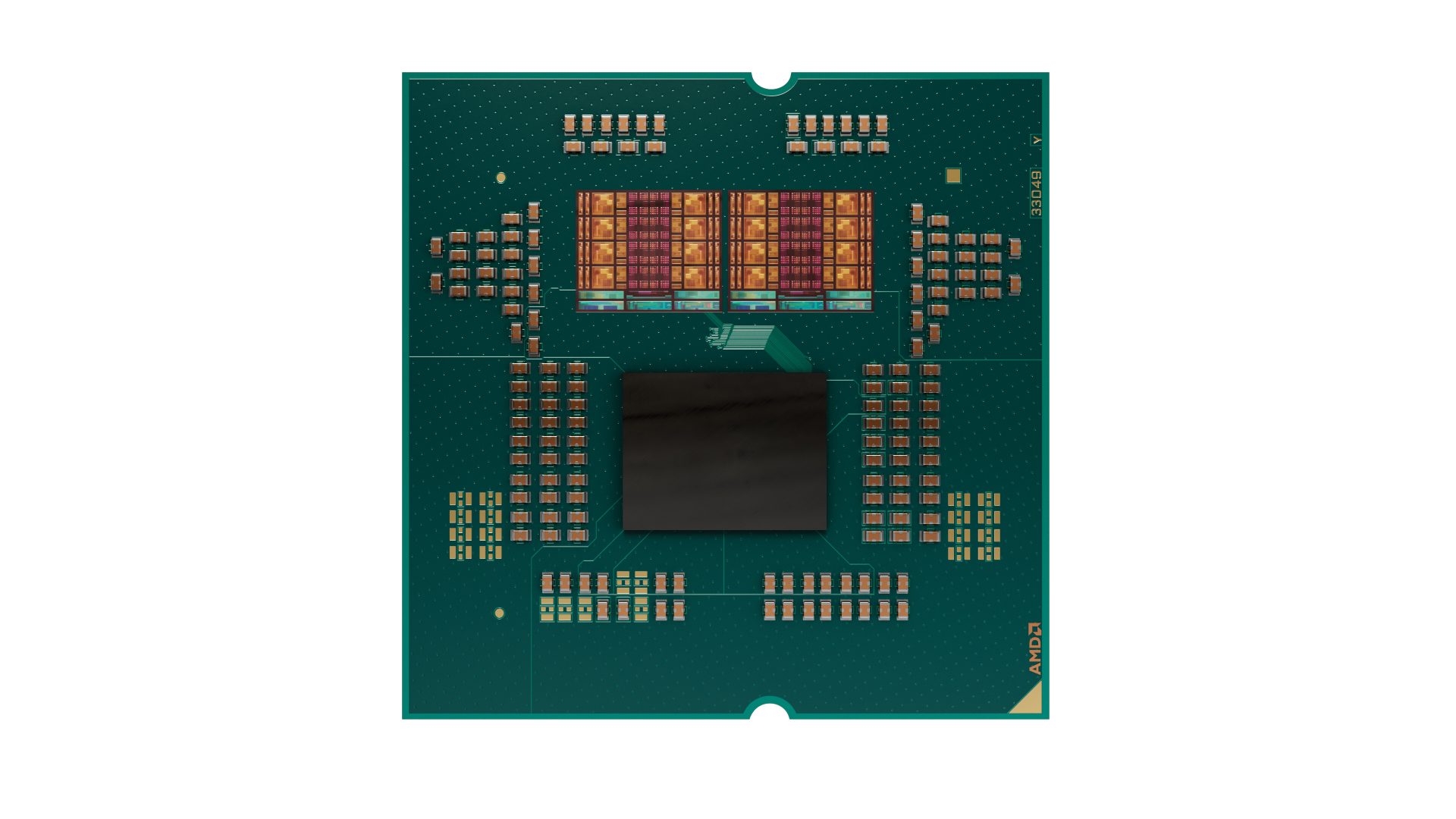
To give a quick introduction, the Ryzen 9000 series is built on the new Zen 5 architecture and manufactured using TSMC’s 4nm process— which seems to be a clear step up from the previous generation. However, the IO Die and chiplet layout remain largely unchanged from the past generation.
While gamers weren’t particularly thrilled with the modest performance gains in gaming, professionals, workstation users, and server operators welcomed the release with open arms, as the improvements in those areas were significant!
For these tests, we chose the ASRock B650M-HDV/M.2 motherboard, a proven option for extreme overclocking that also offers the rare combination of being both reliable and reasonably affordable.
As for insulation, we applied three layers of Plastidip and added paper towels to make the board almost waterproof, protecting it from potential condensation mishaps.
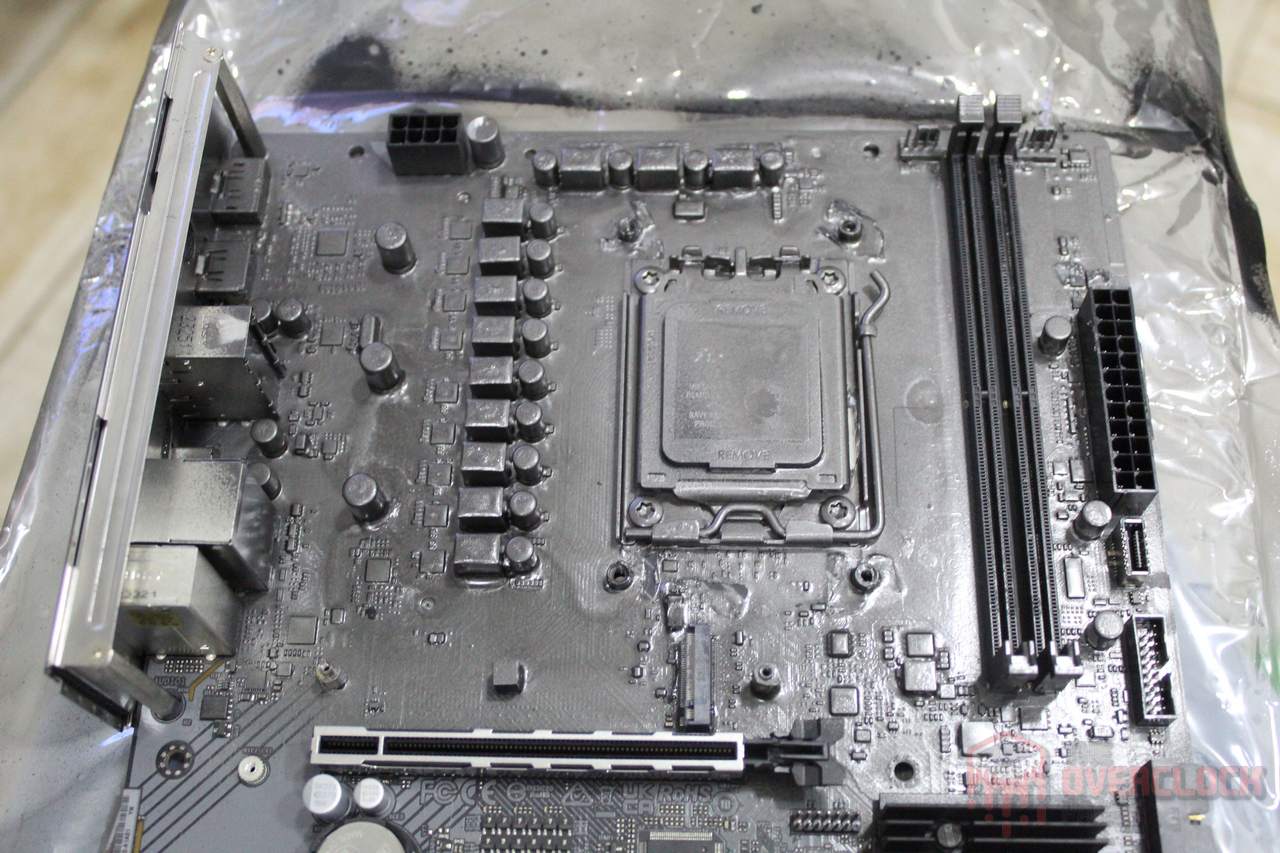
Hardware used:
CPU: AMD Ryzen 7 9700X (Obrigado AMD!)
MOBO: ASRock B650M-HDV/M.2
RAM: 2x16GB Kingbank Sharp Blade 6800CL34
GPU: EVGA GTX650
PSU: Coolermaster MWE Gold 1250 V2 Full Modular
COOLER: Kingpin F1 Dark e Nitrogênio Liquído
STORAGE: Kingspec 240 GB SATA
Software utilizado: Windows 11 x64 24H2 LTSC Ghostspectre, Benchmate 12.1.0 e Geekbench 3.4.4
Testing goals:
The goal was to push the new Ryzen 7 9700X to its limits with extreme overclocking using liquid nitrogen, testing how it performs under extreme cold, and ultimately gathering benchmark results.
Details about the methodology and how the tests were conducted are included in the sections accompanying the results below.
Results:
Given the similarities to the Ryzen 7000 series—such as the same IO Die, a similar package, and the 4nm manufacturing process as an evolution of 5nm—it was expected that the Ryzen 9000 series would behave similarly under liquid nitrogen cooling. This expectation held true, with the Ryzen 7 9700X operating flawlessly at temperatures as low as -130°C. Fortunately, it didn’t experience any CBB (cold boot bug), which is the minimum temperature at which the system can successfully POST. This is a significant positive for extreme overclocking enthusiasts.
However, while the initial results were promising, some issues arose. The first problem was with the two latest BIOS versions for the ASRock motherboard (3.06 and 3.09), where the High Voltage Mode failed to work with Ryzen 9000 CPUs. This limitation made it difficult to tighten memory timings or push frequencies higher, capping us at DDR5-6400 CL30. While not ideal, this wasn’t a major setback in the grand scheme of things.
The more significant issue was the CPU’s inability to scale with additional voltage. It behaved unusually, becoming less stable during FPU-intensive benchmarks. For example, 7-Zip and Geekbench 3 completed at around 6200 MHz with 1.28V, while Cinebench R20 and R23 only reached just over 5900 MHz at 1.175V. Increasing the voltage further caused immediate system resets during benchmark attempts, even at temperatures below -100°C. This is unusual since these CPUs typically scale well with voltages between 1.4V and 1.55V at such low temperatures.
It’s worth noting that this particular sample exhibited similar behavior under water cooling. It performed better with PBO rather than manual overclocking and didn’t scale well with additional voltage, even when tested on a different motherboard. This suggests that these quirks are specific to this CPU sample. That said, we’ll re-test it once a new BIOS version is available to rule out other potential factors.
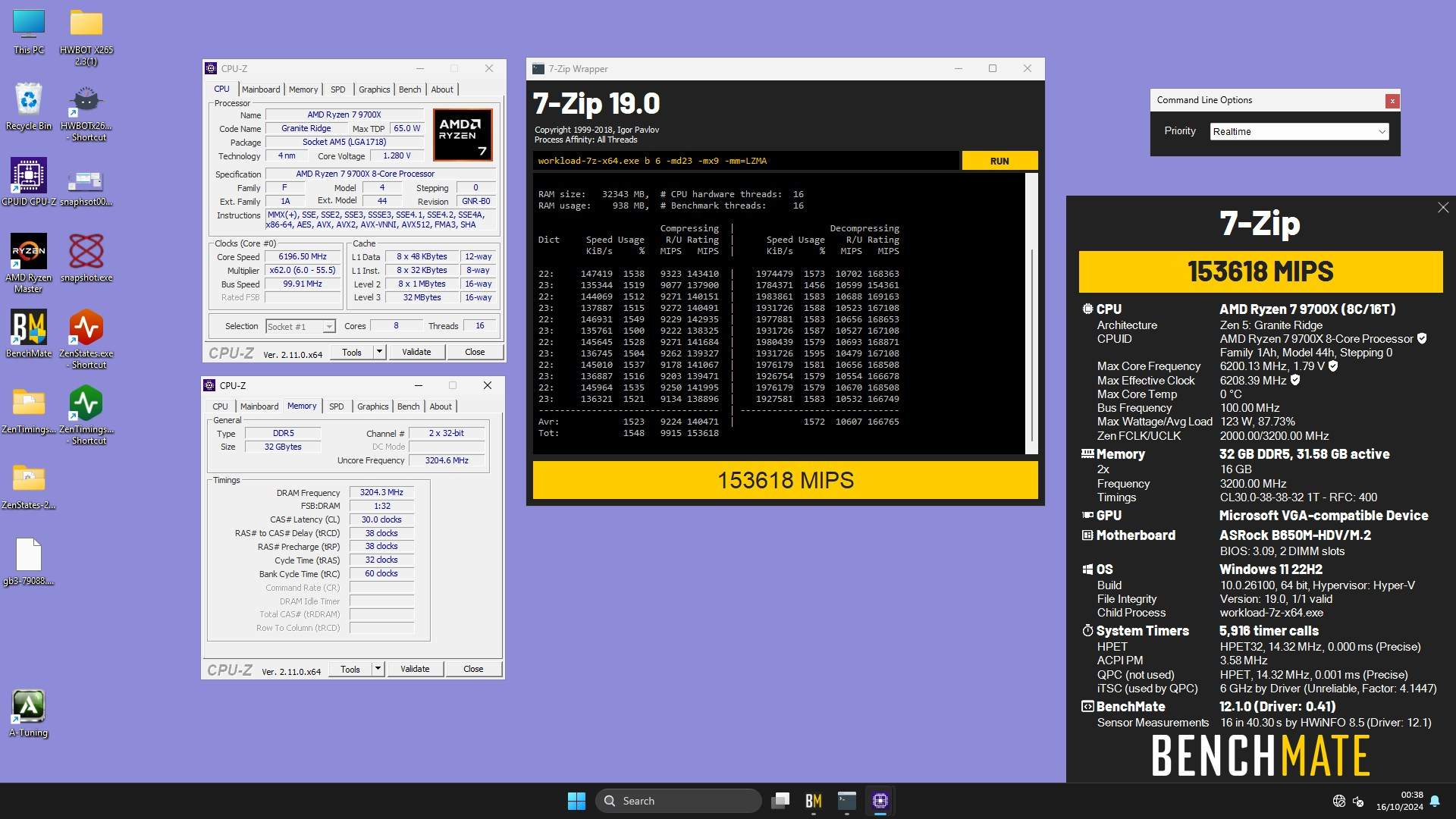
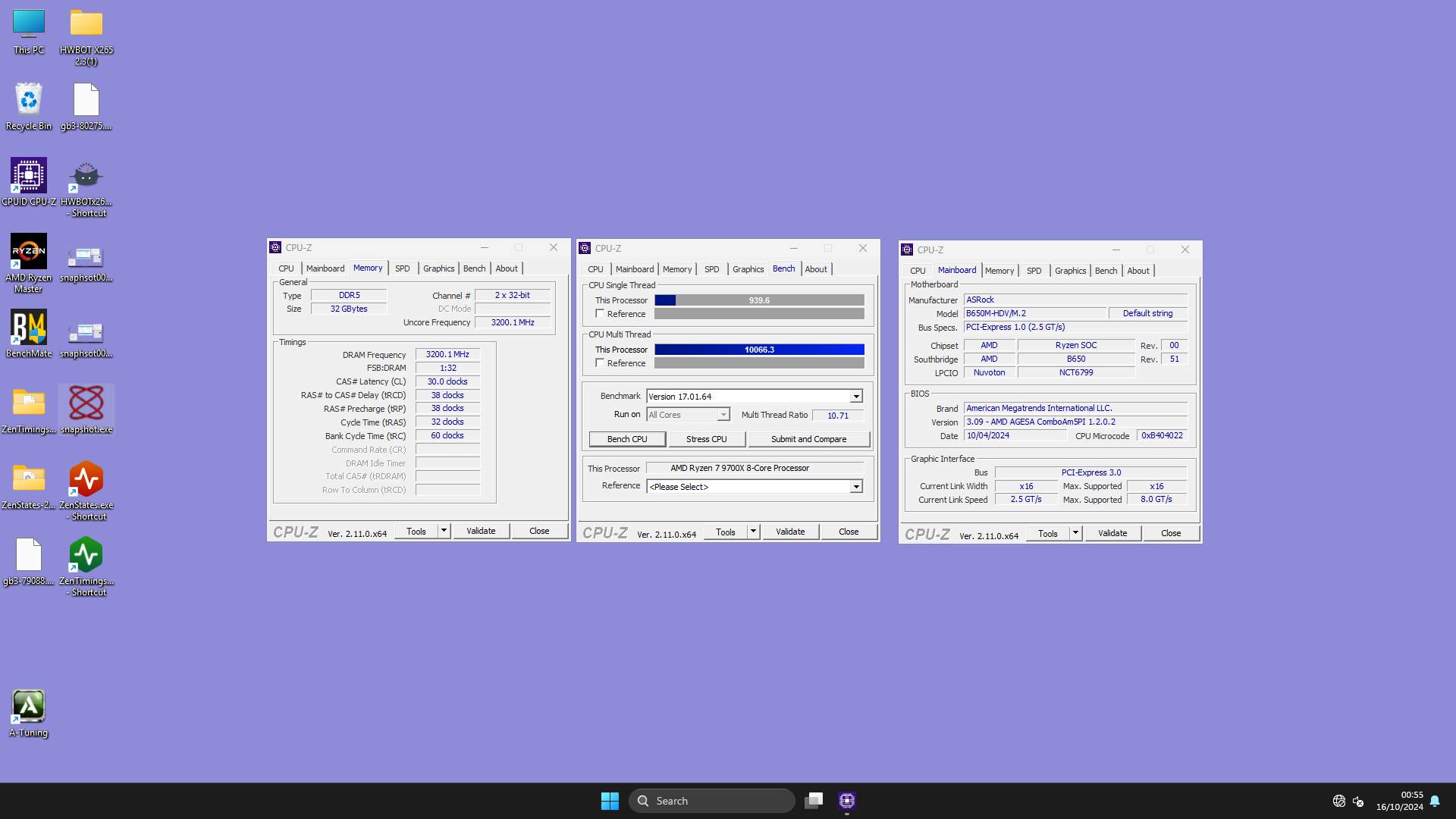
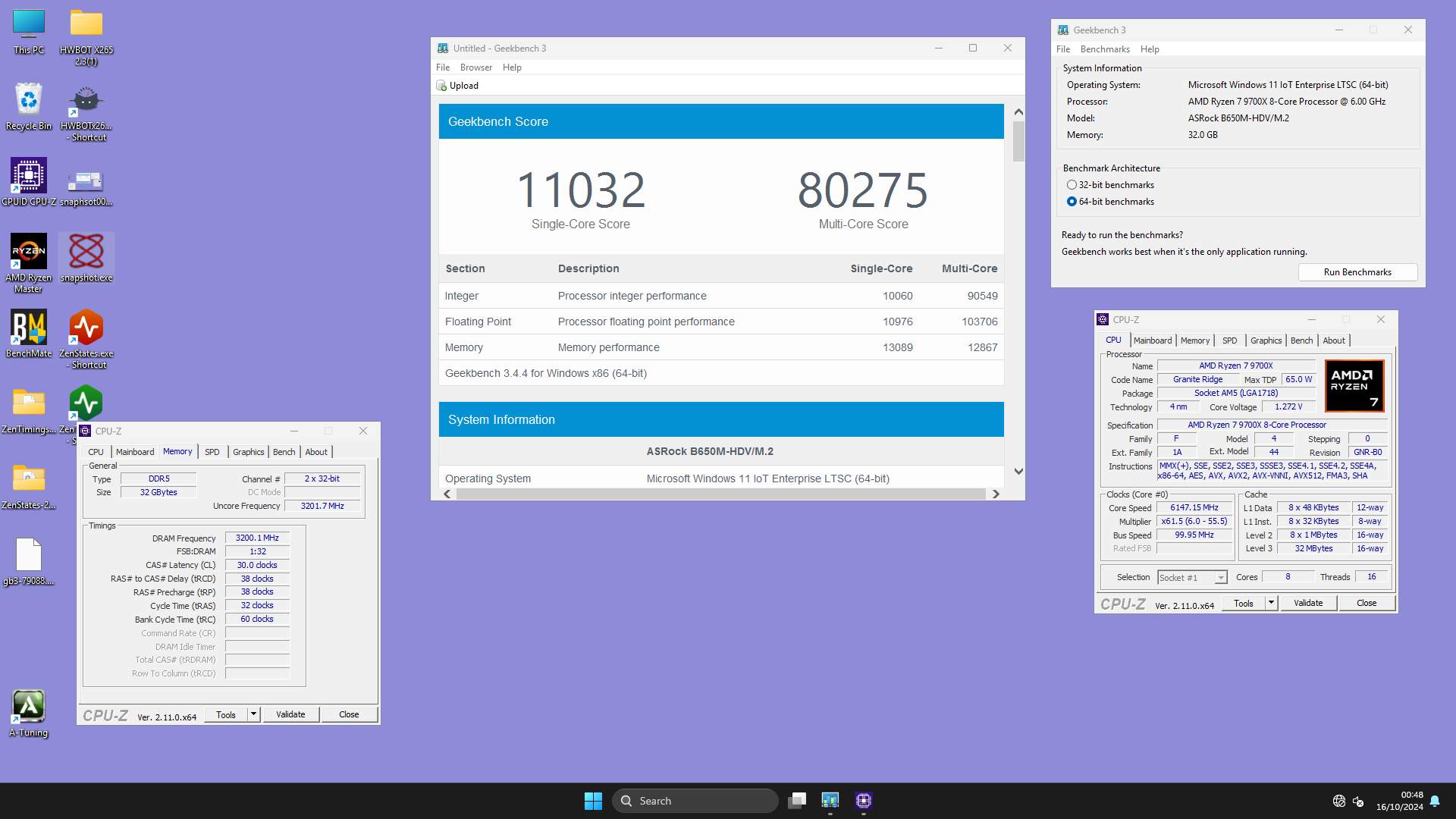
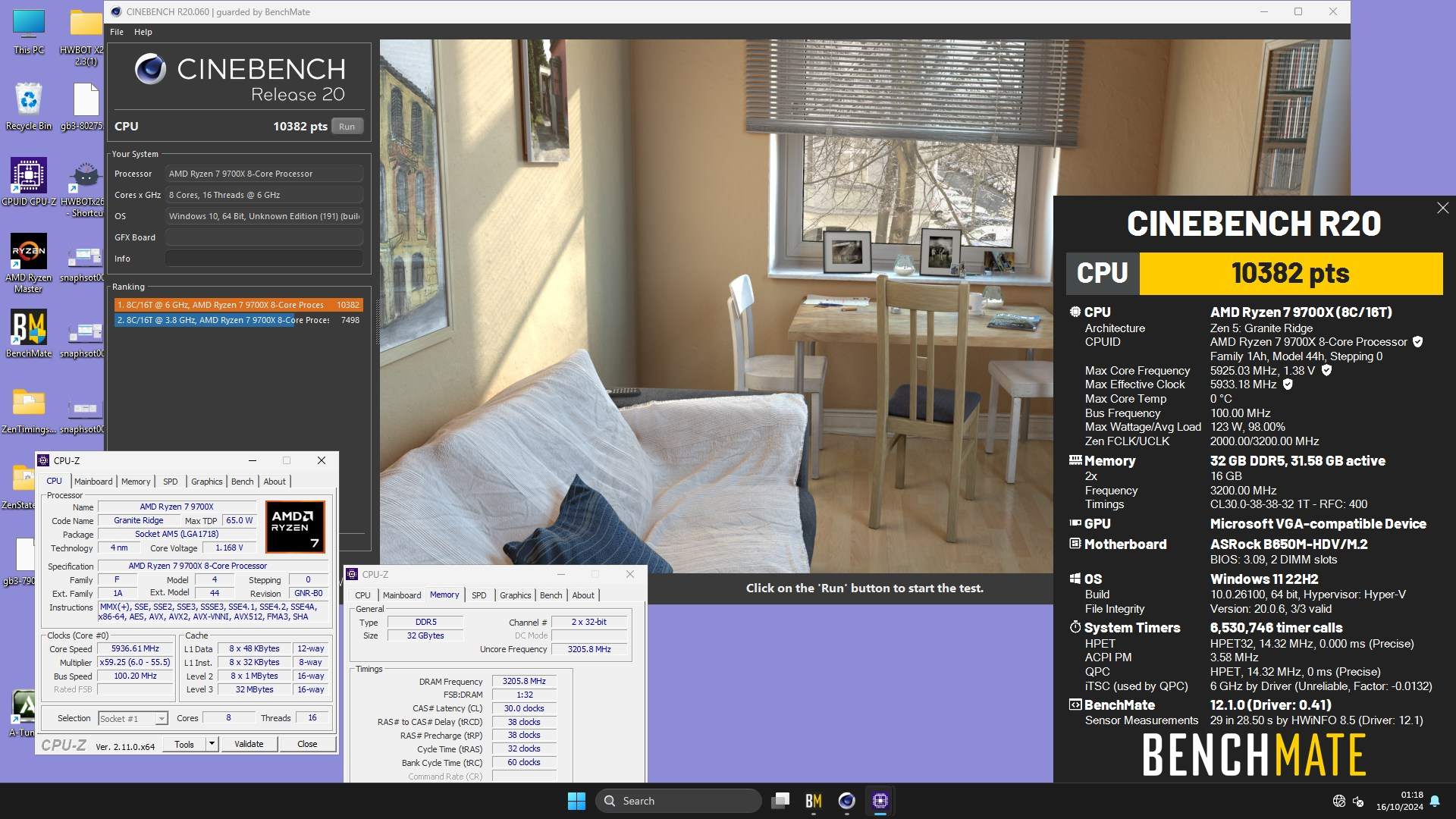
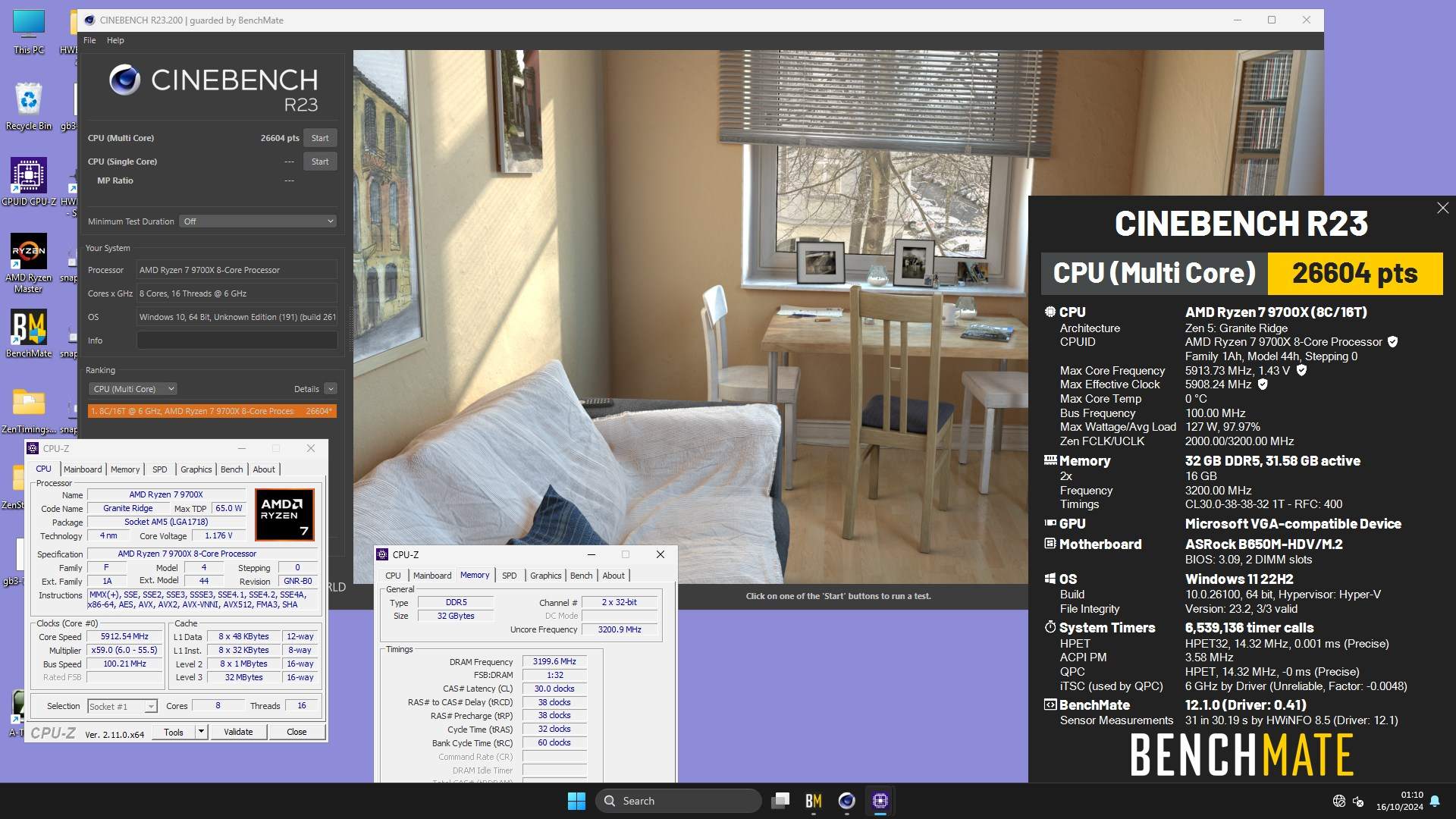
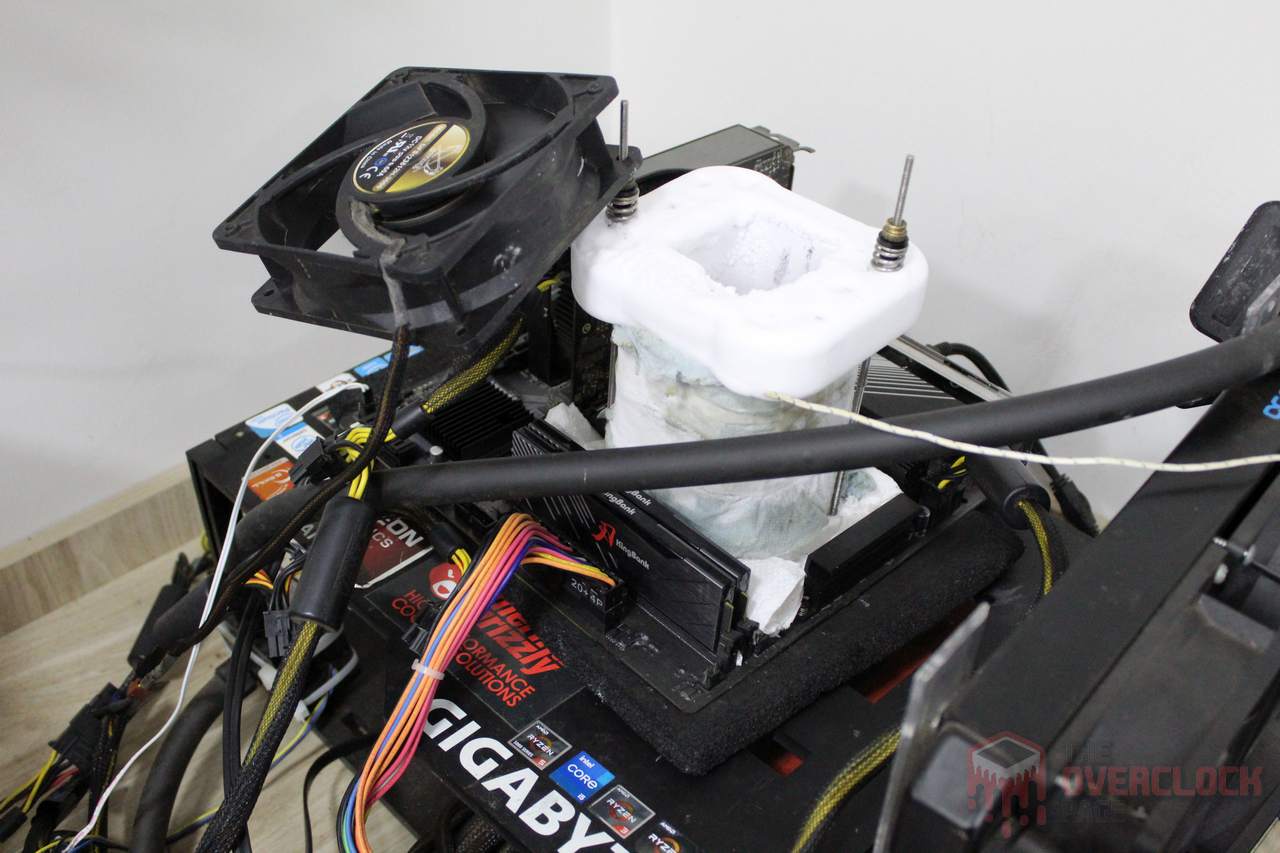
And finally, the classic photo of all the hardware frozen solid—a must-have in any post about extreme overclocking!
Conclusion:
The Ryzen 7 9700X and the motherboard held up well during the extreme overclocking session, with the CPU proving to be more manageable than the Ryzen 7 7700X. It didn’t suffer from annoying CBB issues and operated smoothly at temperatures as low as ?130°C.
That said, the tested sample showed an inability to scale with additional voltage, becoming more sensitive during FPU-intensive benchmarks. As a result, the frequencies ranged between 5900 MHz and 6200 MHz, with temperatures around ?120°C and voltages varying between 1.28V and 1.17V. While this delivered good efficiency in the benchmarks, the relatively low frequencies ended up limiting the overall results.
This behavior could be specific to our CPU sample or a potential issue with the current AGESA 1202 firmware. We plan to revisit this and other Ryzen 9000 processors for extreme overclocking in the future, so stay tuned for more results right here! 😉