Extreme Overclocking: Testing Epyc 4585PX and 4124P with Dry Ice!
 by Giancarlo C. Dalmedico "NoMS" May 15, 2026 · Extreme Overclocking / Overclock Extremo
After being away for a while, there is nothing like making a comeback with extreme overclocking tests! And that is exactly the subject of this article, featuring the presentation and results obtained by an epic duo, the Epyc 4124P and the Epyc 4585PX!
While the Epyc line typically brings to mind the giants destined for servers, AMD has introduced the Epyc 4004 and 4005 lines for the AM5 socket. The former utilizes the Zen 4 architecture, while the latter uses Zen 5, and despite the name, they share the same chiplet-based design as the Ryzen 7000 and 9000 series. These lines simply offer certain ‘new’ models with greater appeal for those looking to build compact servers or workstations. For example, while the 4565P is identical to the 9950X, the 4545P maintains 16 cores, yet features a 5.4GHz boost and a 65W TDP, a configuration that does not exist in the Ryzen lineup.
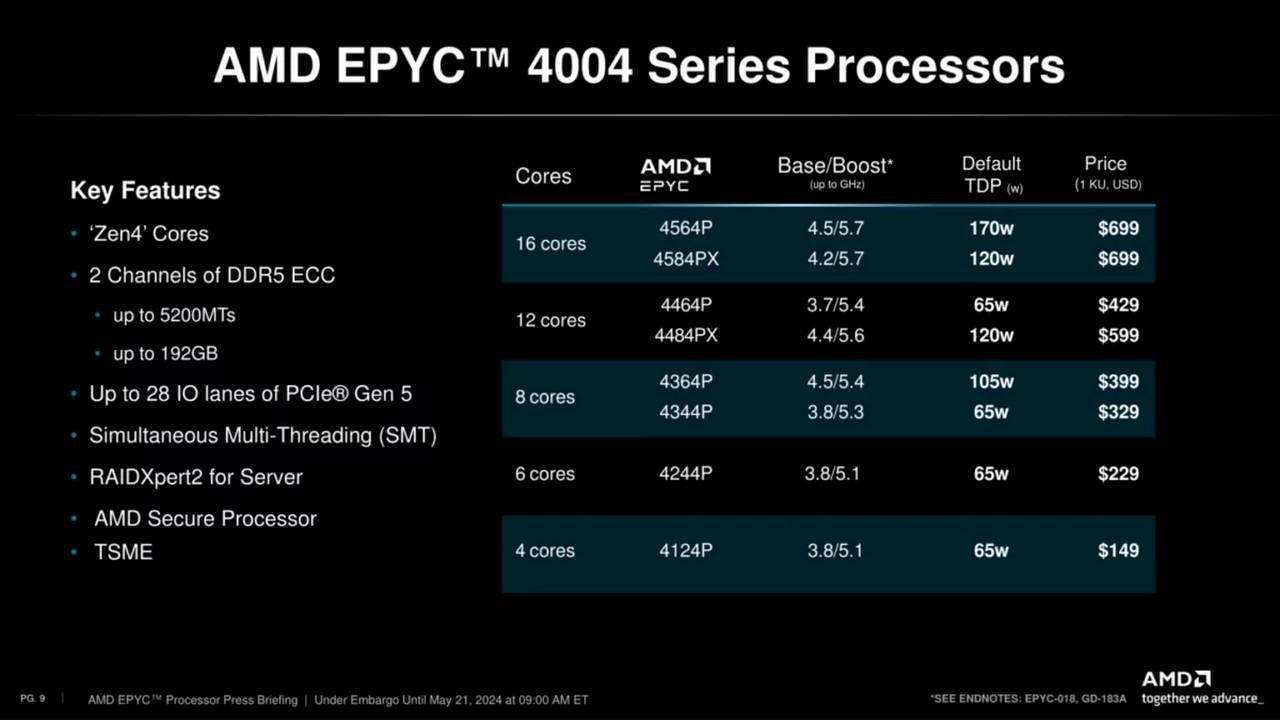
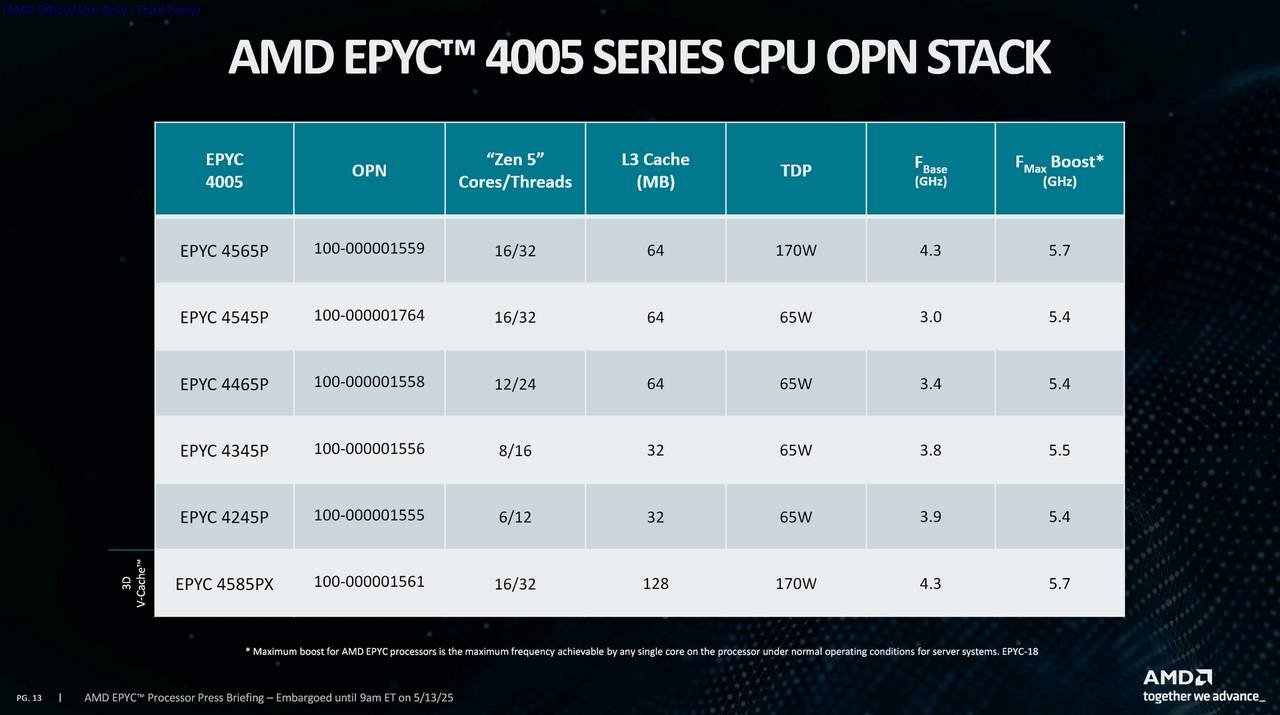
An interesting detail is that these Epyc AM5 processors work on any AM5 motherboard, meaning there is no need for industrial, server, or workstation-oriented boards. Another point is that, much like Ryzen, they are also unlocked for overclocking.
The main differentiator between these Epyc and Ryzen CPUs is the official support for ECC UDIMM, not to be confused with RDIMM, which is something that also works unofficially on Ryzen, though in both models, it is necessary to use a motherboard where ECC support has been implemented.
Now that the introductions are out of the way, let’s dive into the processors used for our testing!
- Epyc 4124P
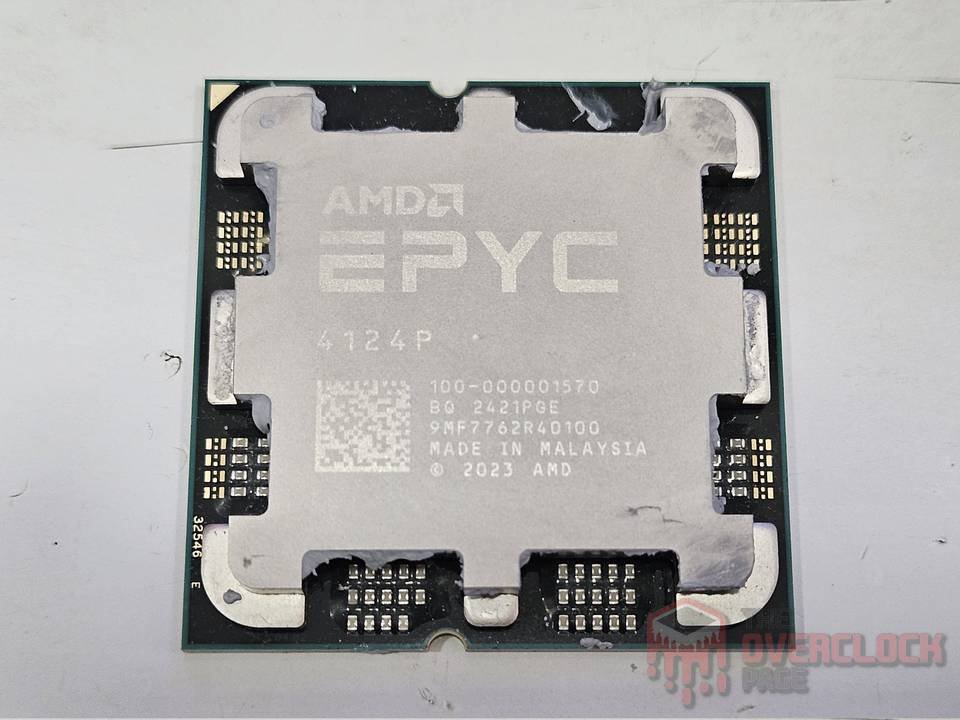
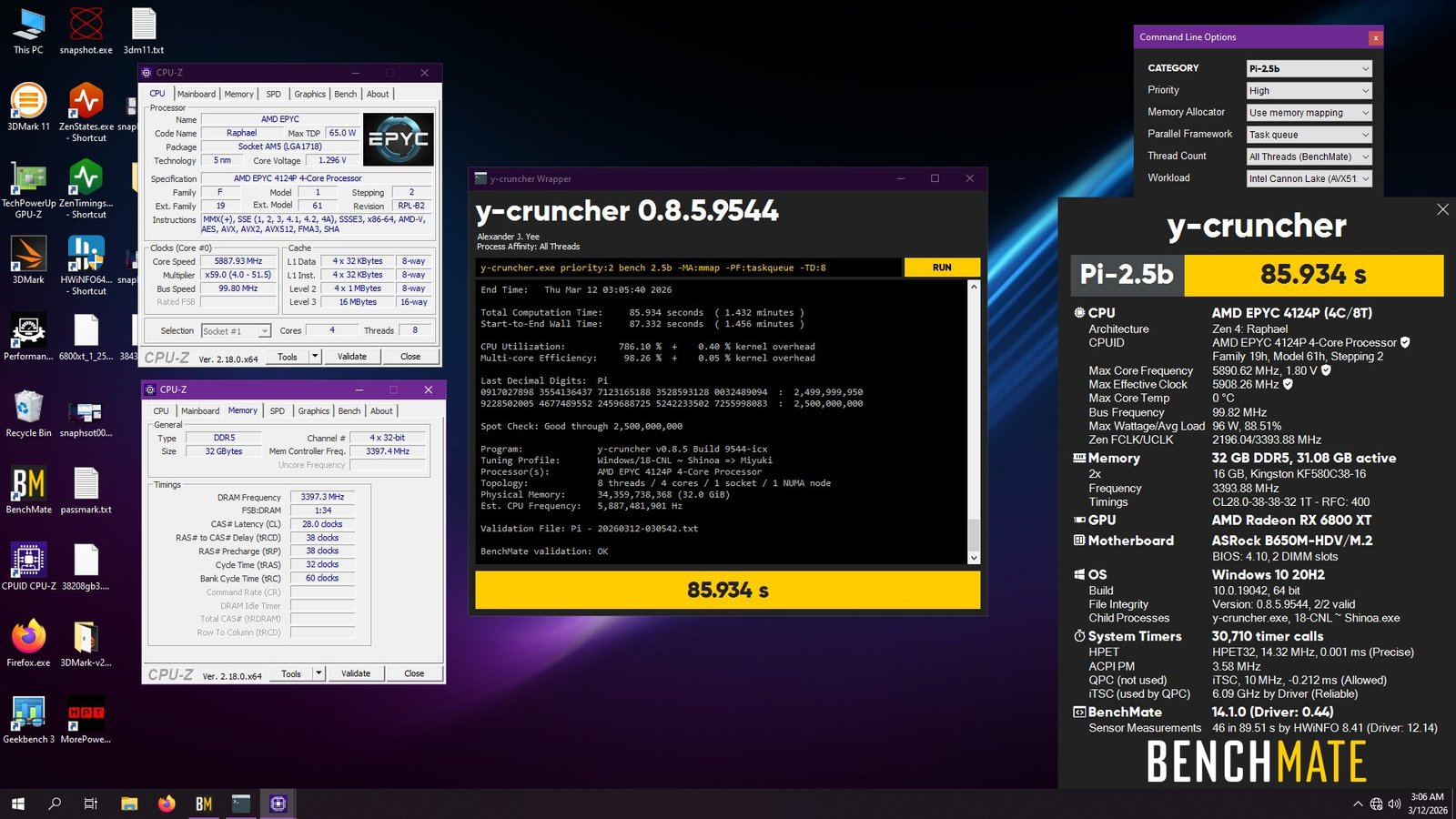
The first one is the Epyc 4124P, which is essentially the ‘Ryzen 3’ AM5 that AMD never made, meaning it is a quad-core based on the Zen 4 architecture, with a maximum boost frequency of 5.1GHz and a 65W TDP. Although these specifications might suggest that this processor could be based on an APU, in reality, it uses the same chiplet design found in the Ryzen 7000 series.
The focus of this model is small servers that depend more on I/O than the raw performance of a high-core-count CPU, which justifies its existence. That said, we have already performed a series of tests with it during a livestream, where it proved to be even capable of gaming, although it resulted in high CPU usage in certain titles.
The interesting part is that I had access to two samples, which we will call 0100 and 0090, where 0090 proved to be slightly superior in quality, running heavy benchmarks such as Cinebench R20 @ 5.6GHz on water, something that 0100 was unable to achieve, though it still performed respectably, trailing by about 25~50MHz depending on the test. Regarding the I/O Die, both were able to run DDR5-8000 with ease, even though DDR5-6600 was not 100% stable at 1.3V VDDSOC in either sample.
- Epyc 4585PX
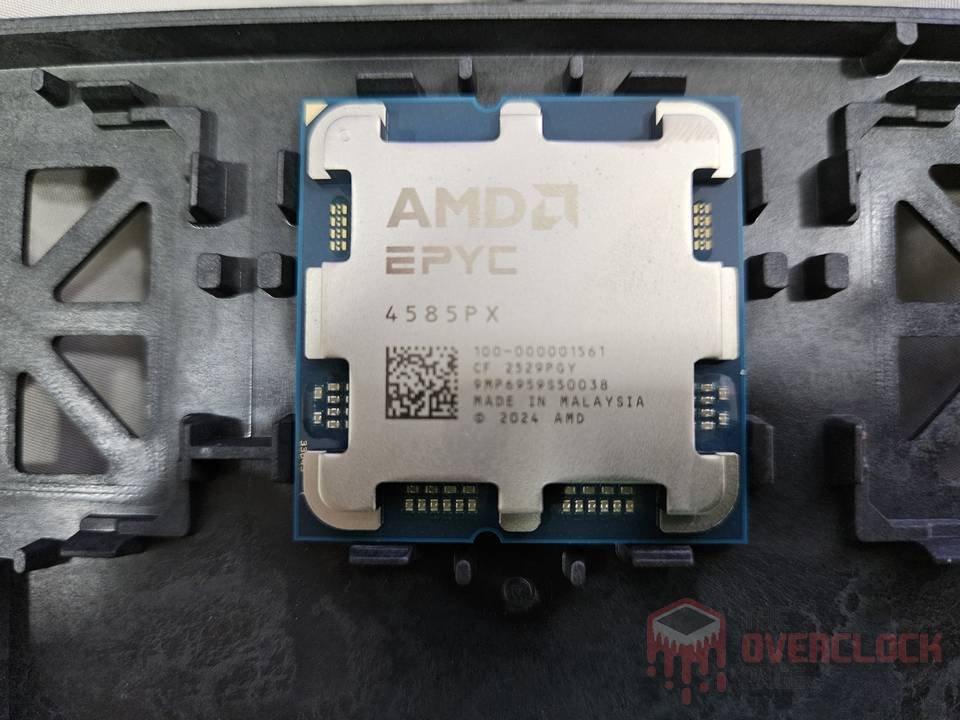
While the 4124P is more modest, the second CPU in this article is a true monster! The Epyc 4585PX features 16 cores based on the Zen 5 architecture, boasting a maximum boost frequency of 5.7GHz and a 170W TDP, but its standout feature is the 3D V-Cache on one of the CCDs, which adds 96MB of L3 cache to one CCD, providing a massive boost in gaming and 3D benchmarks.
If this description sounds familiar, it is because the 4585PX is basically a 9950X3D in a suit and tie, unlocked and with the same “power” as the Ryzen, in other words, the motherboards, coolers, and similar components that can handle one will certainly handle the other.
The focus of this article will be the results of 2D benchmarks using extreme cooling, although it is very possible that I will return to address 3D benchmarks in the future, since, in theory, that is this model’s greatest strength.
- Insulation and platform preparation
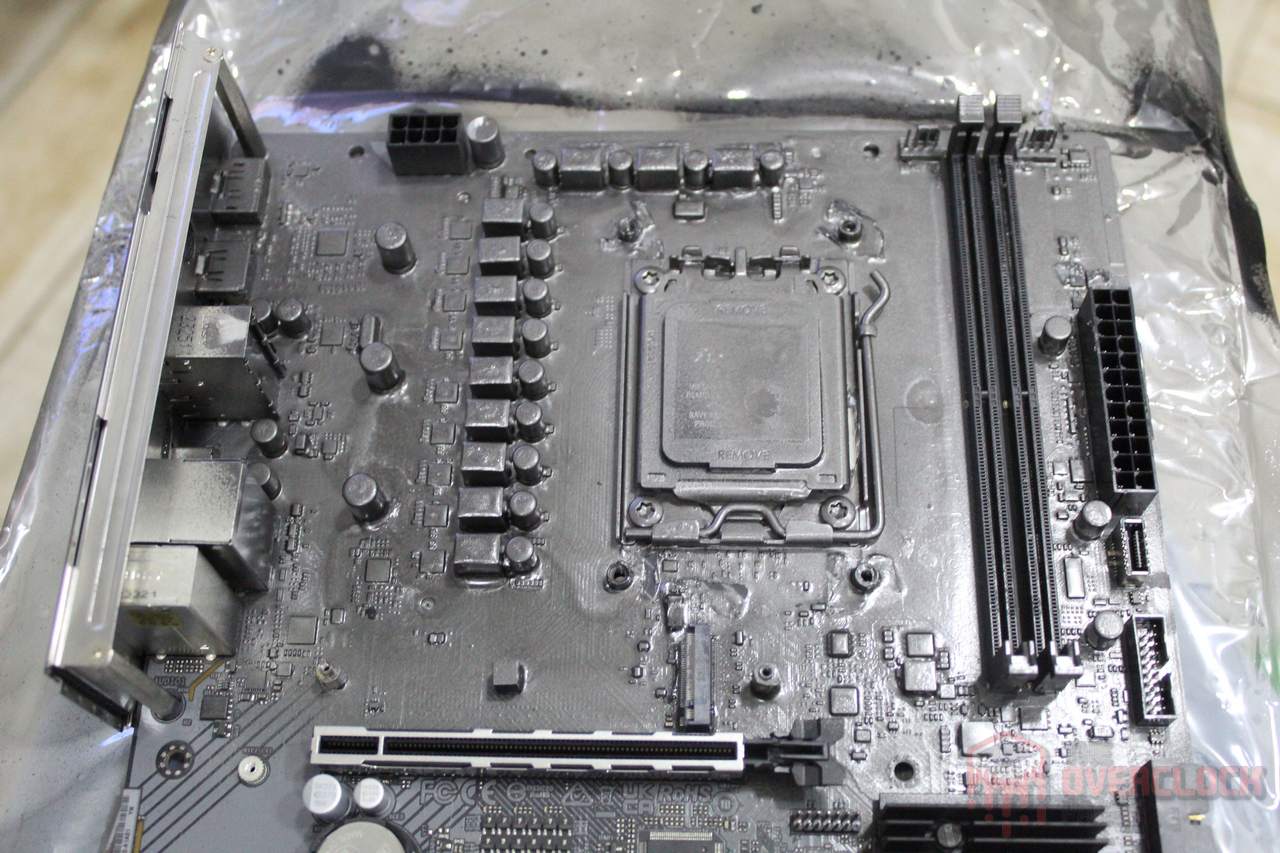
For these tests, the chosen motherboard was the ASRock B650M-HDV/M.2, as it has already been thoroughly proven for extreme use and offers the advantage of being reasonably affordable, a rare combination of characteristics.
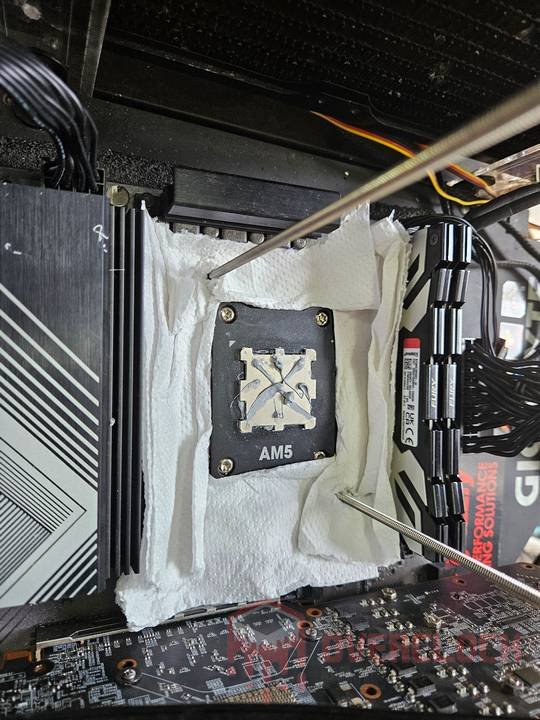
Regarding insulation, it was achieved using three layers of Plastidip and paper towels, making the board effectively waterproof, which protects it from potential tragedies caused by condensation. It does not look pretty, but it is undeniably functional. 🙂
Hardware used:
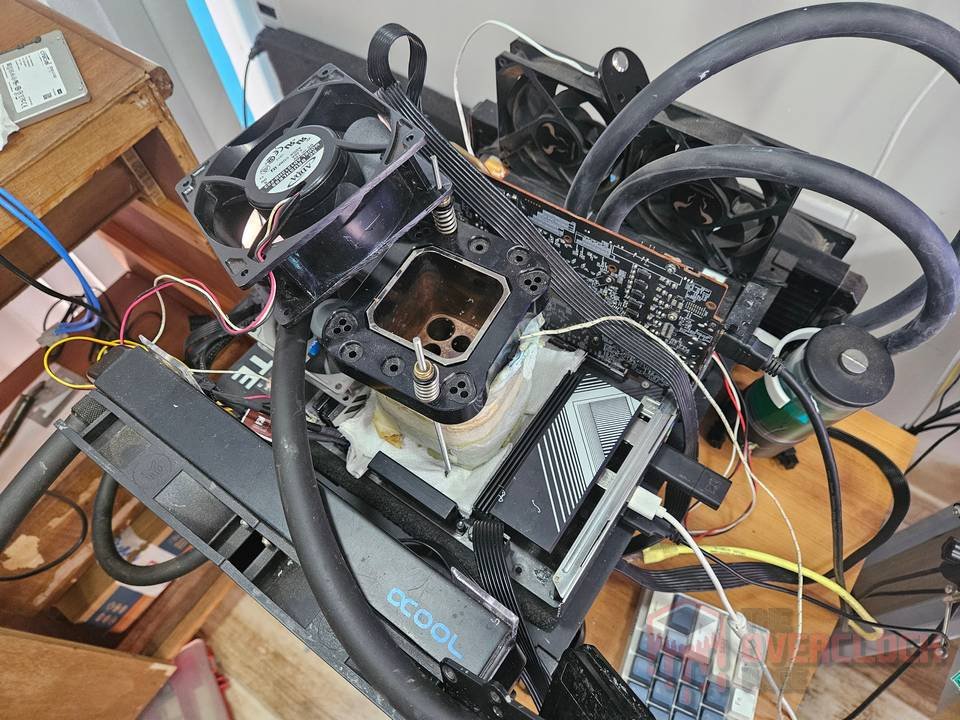
CPU: AMD Epyc 4124P and 4585PX (Thank you AMD!)
MOBO: ASRock B650M-HDV/M.2 (BIOS 4.10)
RAM: 2x16GB Kingston Fury DDR5-8000 CL38 (Thank you Kingston!)
GPU: Powercolor RX 6800 XT Red Devil
PSU: Cooler Master MWE Gold 1250 V2 Full Modular (Thank you Cooler Master!)
COOLER: Kingpin F1 Dark + Dry ice.
STORAGE: Kingspec 240 GB SATA
SOFTWARE: Windows 10 x64 22H2 Ghostspectre, Benchmate and Geekbench 3.4.4
Test objectives:
To discover the extreme overclocking limits using dry ice for the Epyc 4124P and 4585PX, as well as to observe how they behave when subjected to extreme cold and, ultimately, to obtain some benchmark results.
Explanations regarding the methodology adopted or how the tests were conducted are contained in the text accompanying the results below.
Results:
Despite these processors using different architectures, one Zen 4 and the other Zen 5, there are many similarities, such as the I/O Die, a similar package, and the manufacturing process, where 4nm is an evolution of 5nm, meaning that behavior in extreme overclocking is usually not much different between the two generations. In the case of this test, since only dry ice was used, reaching temperatures in the -50 °C range, problems such as CBB or the cold boot bug, which refers to the minimum temperature at which the system can successfully POST, do not exist in the overwhelming majority of samples.
- Epyc 4124P
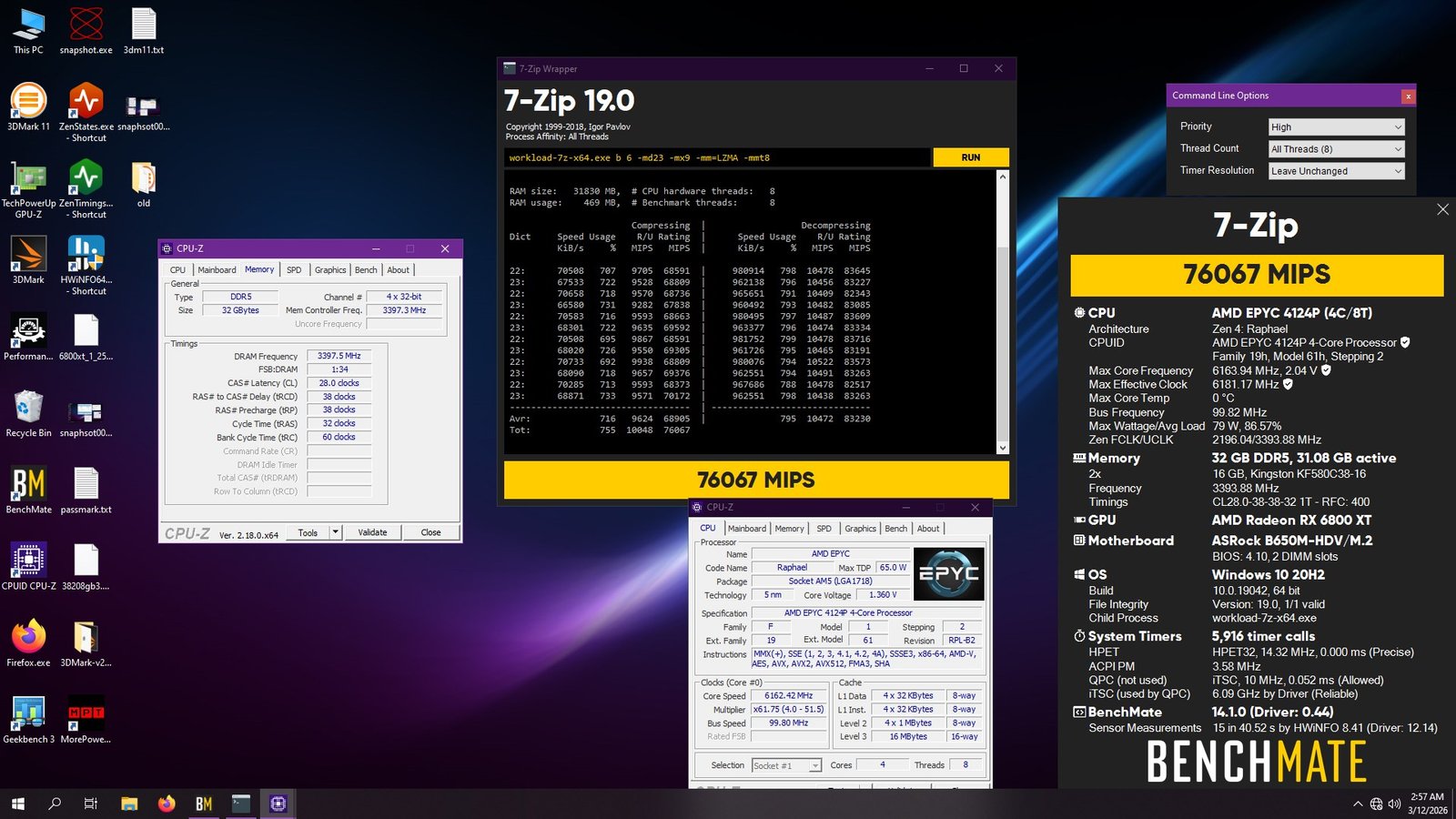
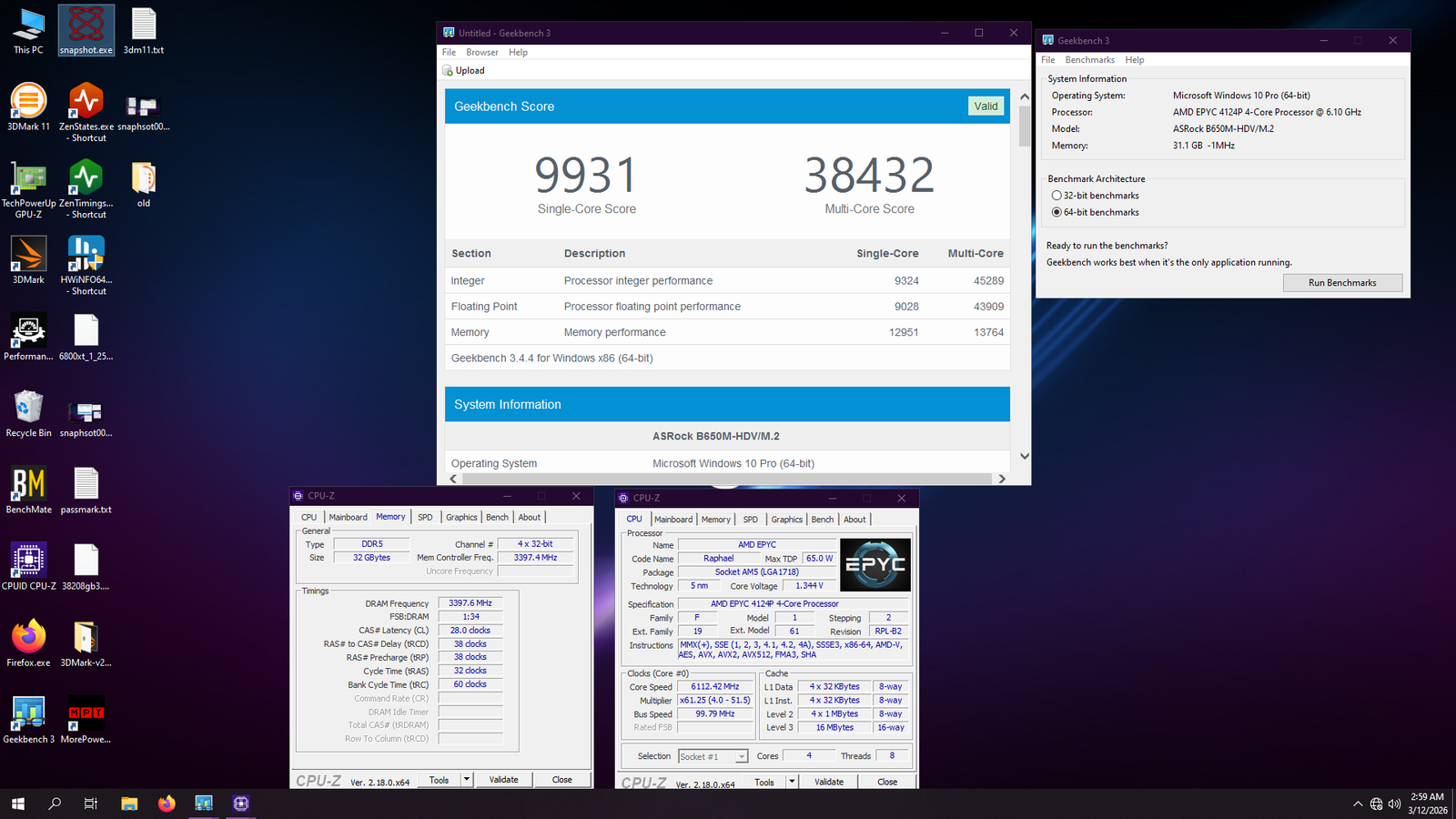
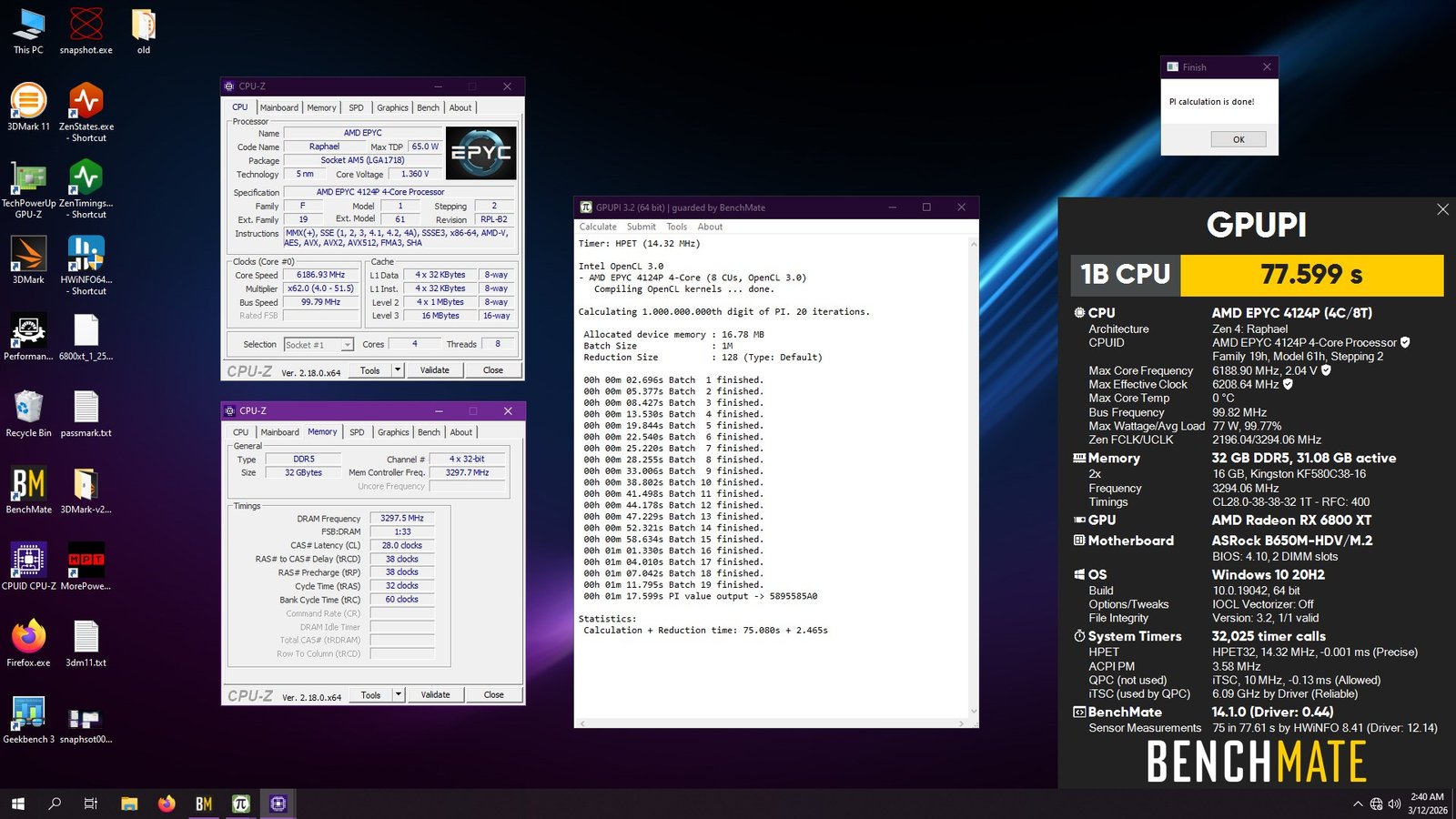
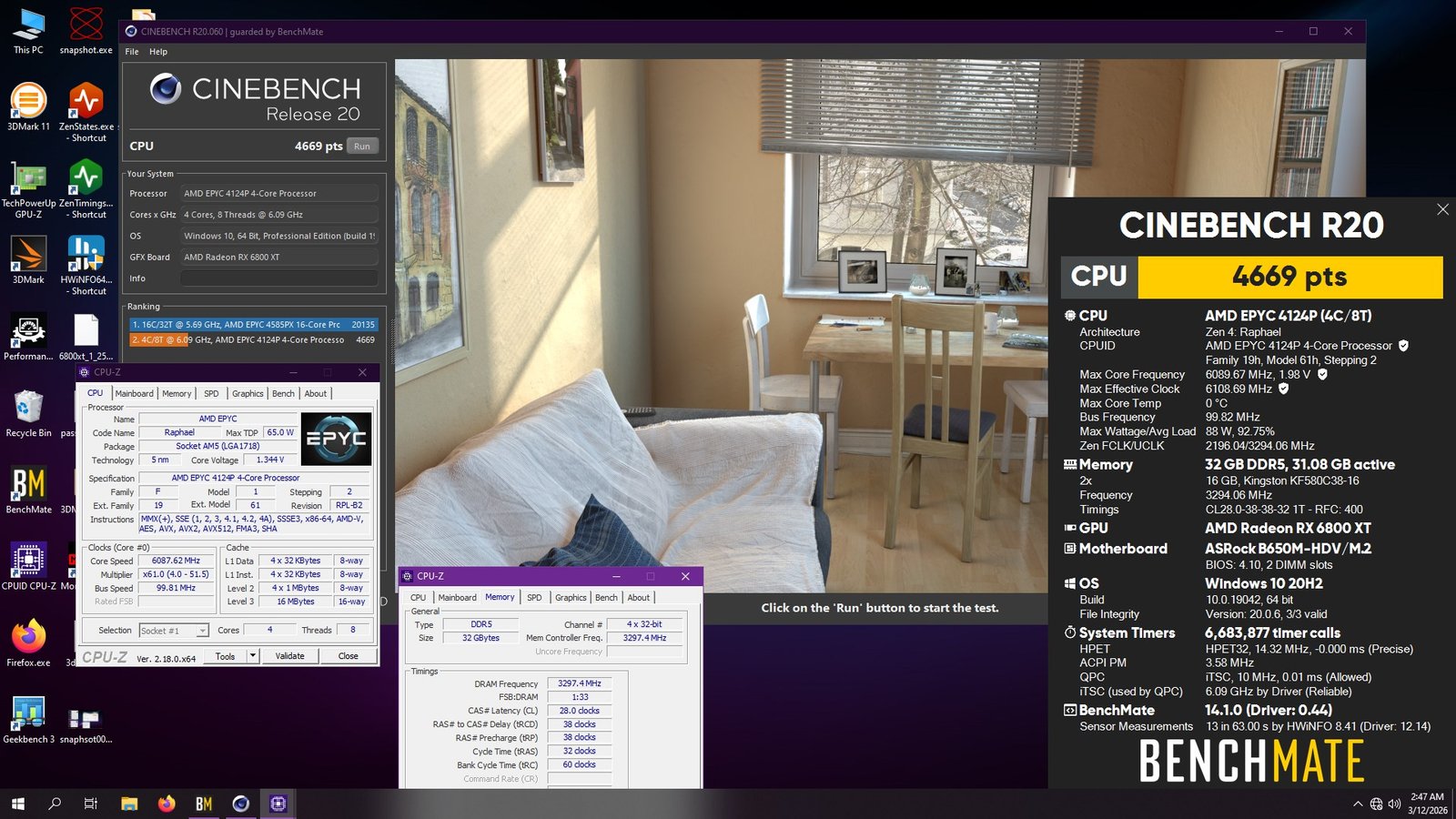
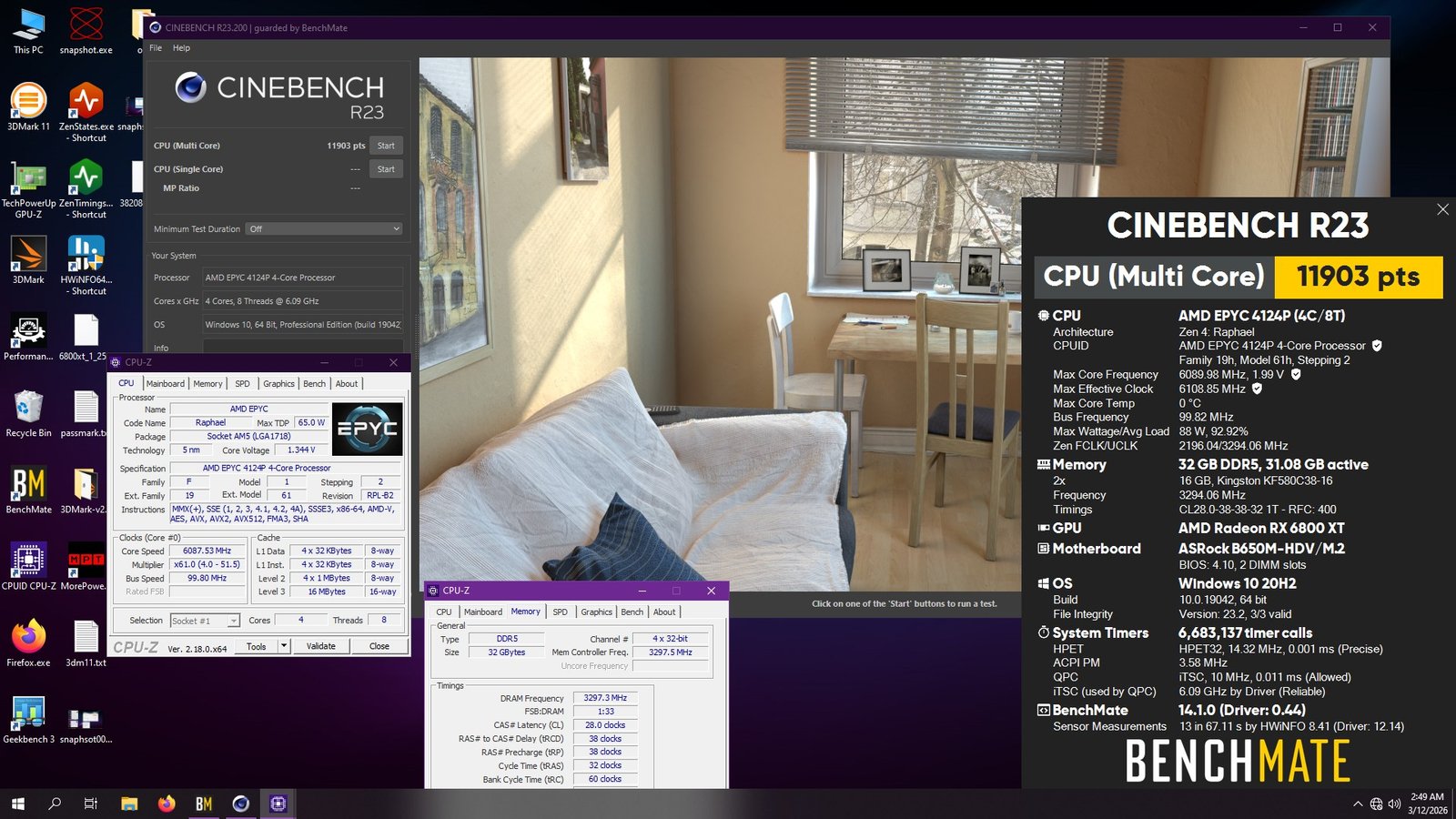
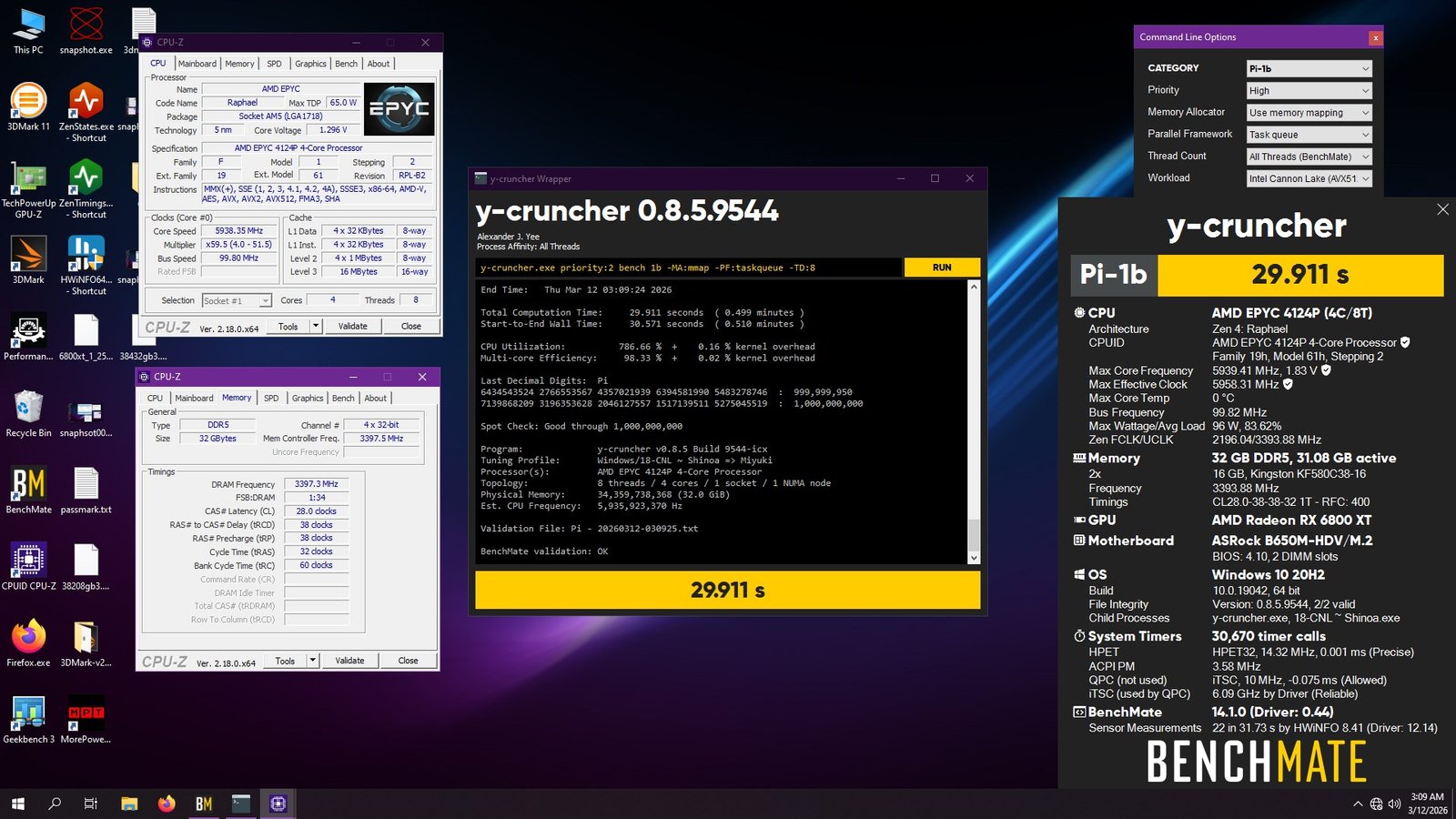
The first to go onto the ice was the 4124P, which finished the benchmarks with frequencies between 5900 and 6200 MHz and voltages up to 1.34V, depending on the benchmark, which is excellent for dry ice alone! Additionally, it performed well with memory running up to 6800 MT/s CL28 in 1:1 mode, and that was with only 1.3V on the VDDSOC.
When attempting to push the RAM to 7000 MT/s, the POST failed and the platform never recovered, which is somewhat strange, but since I had already run several benchmarks, I have the numbers to show! 🙂
Breaking world records on dry ice would be impossible for this model, but the results were still solid, sitting in the 60 global points range on HWBOT, with the GPUPI reaching a TOP-30 spot in the quad-core category.
I am not saying it would be possible to break records with this sample using LN2, after all, it is unknown how it behaves below -100°C, but if it is tolerant of low temperatures, reaching at least 6.6GHz should not be difficult task.
- Epyc 4585PX
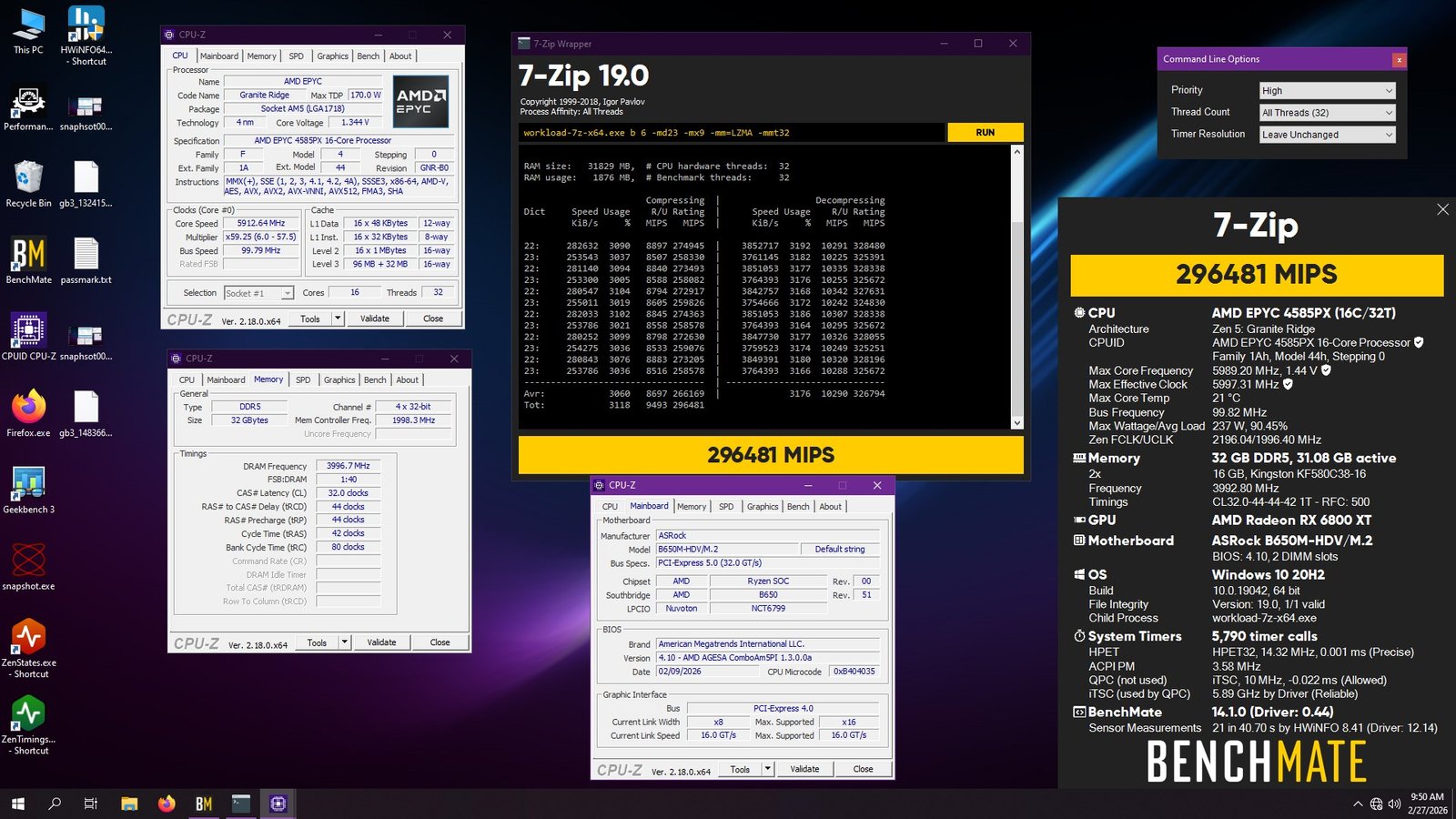
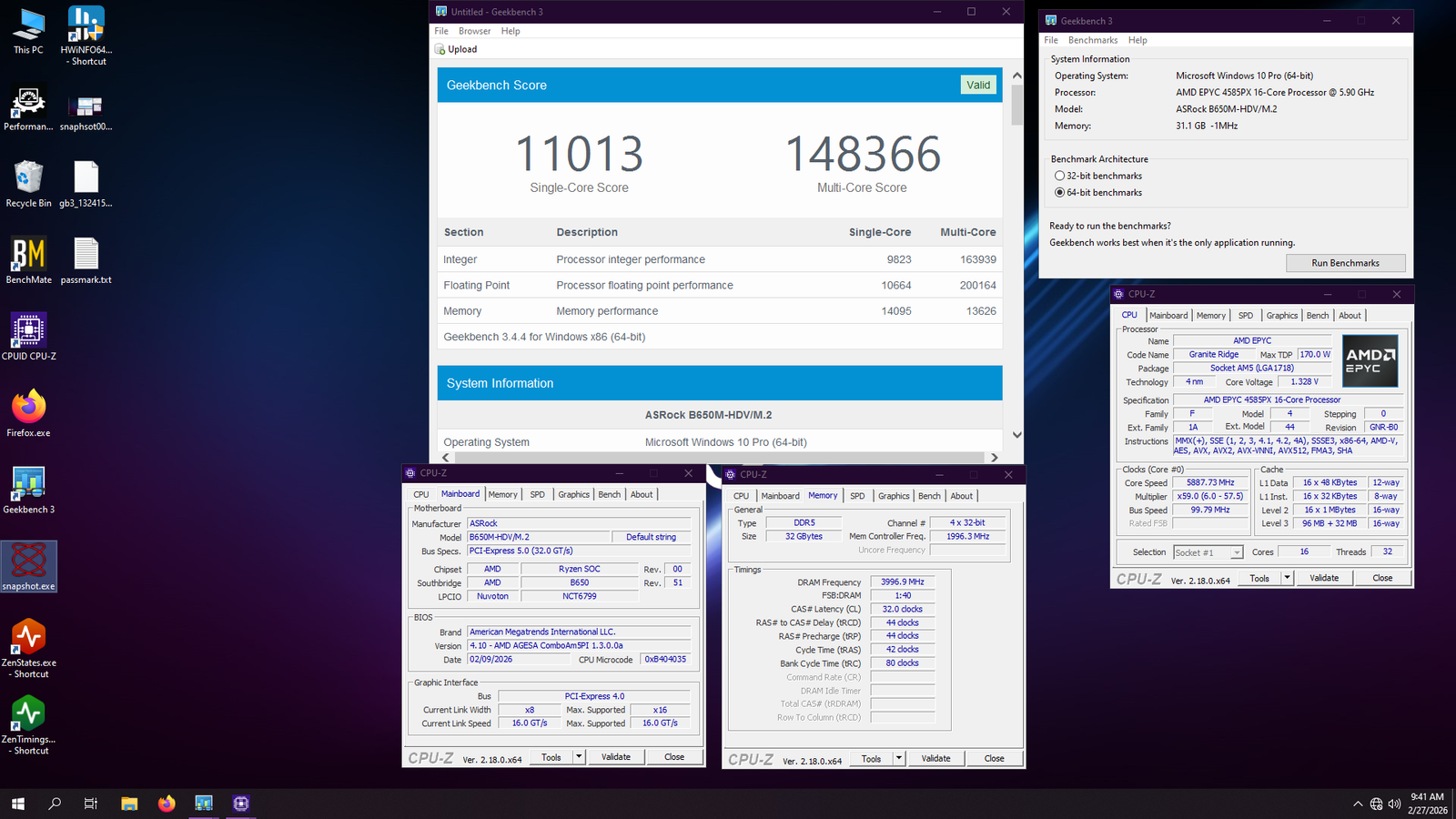
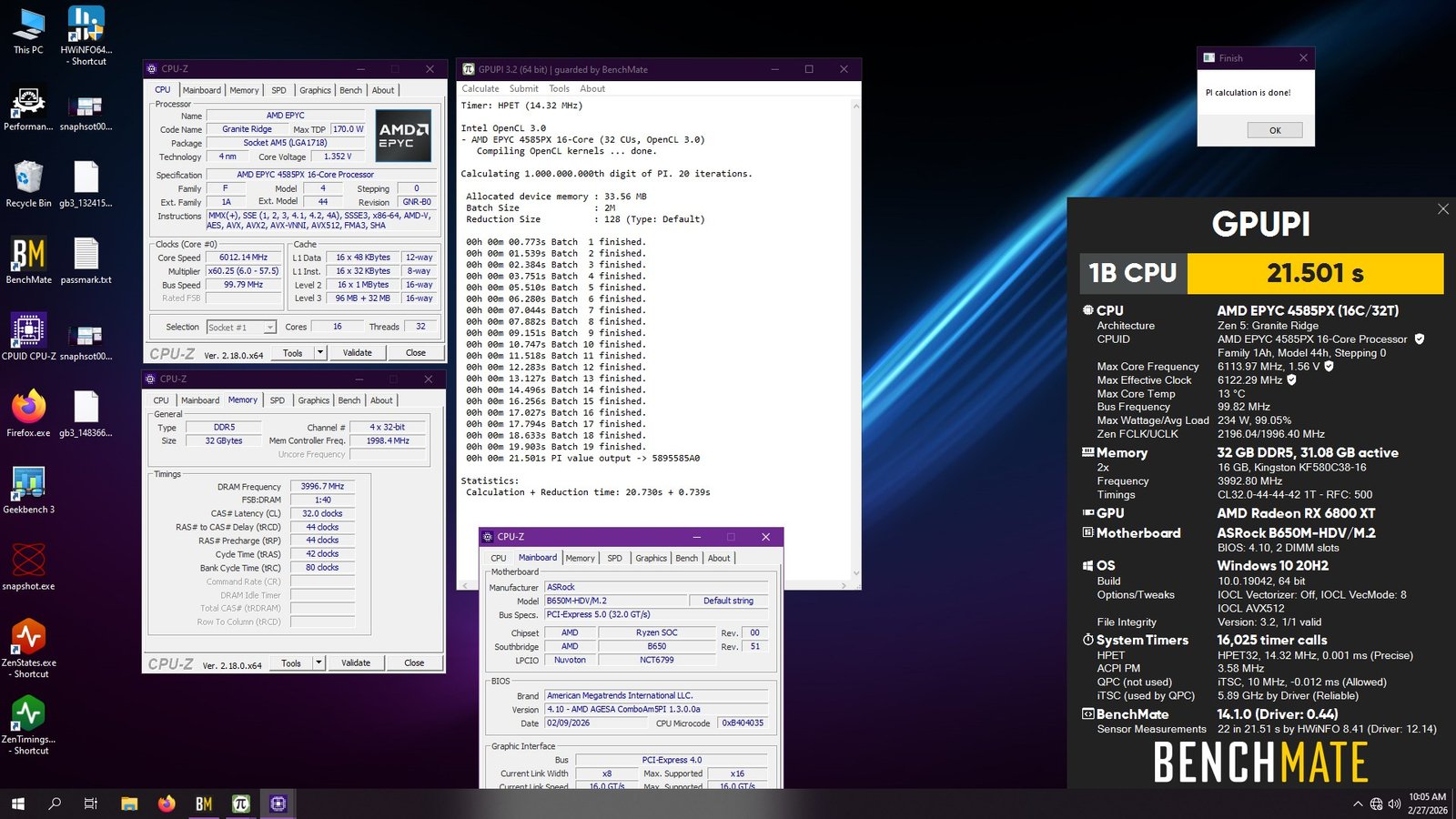
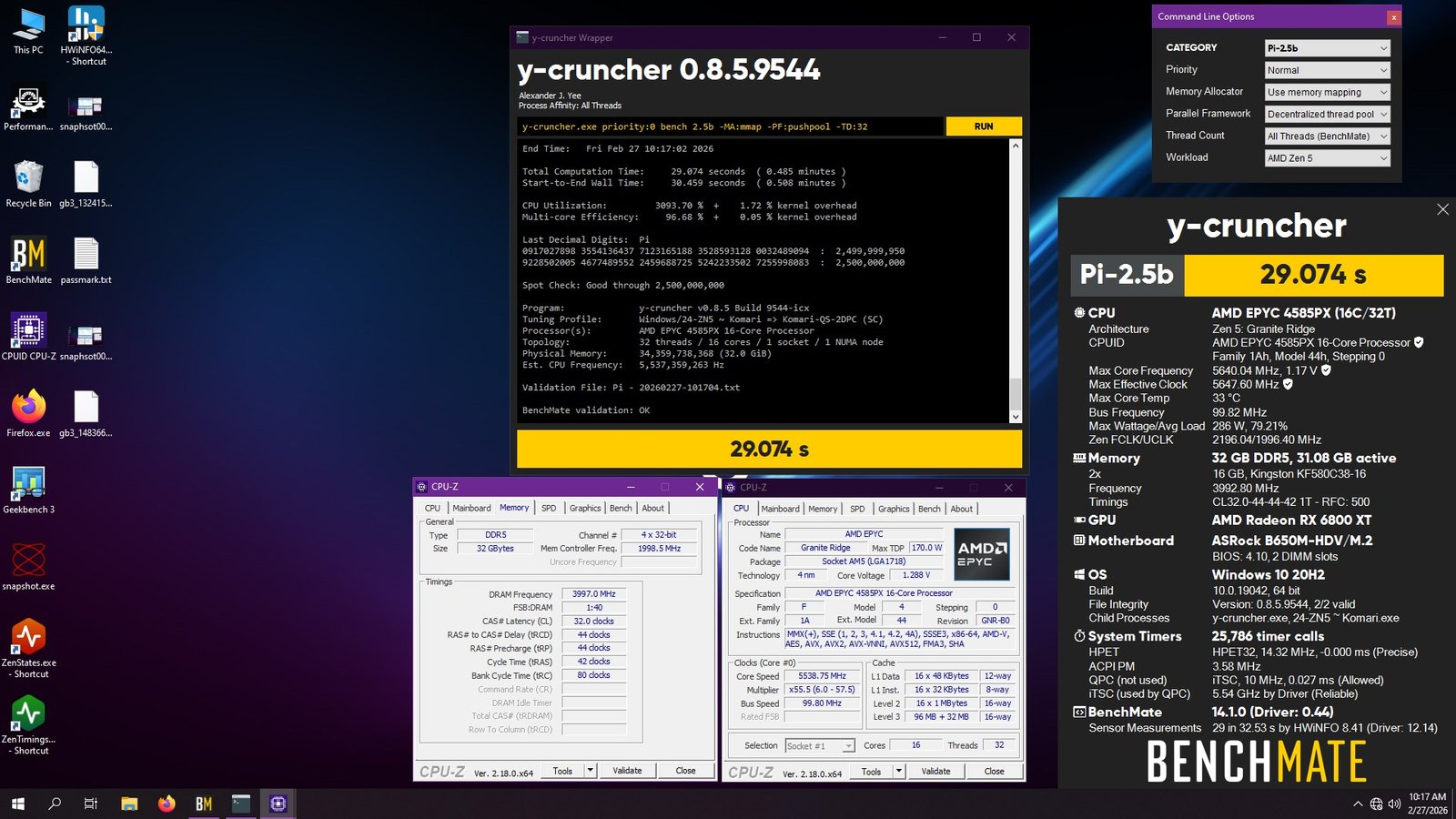
Next up was the powerful 4585PX, which finished the benchmarks with frequencies between 5550 and 6100 MHz, with a vcore between 1.25~1.34V, which is a very reasonable mark for dry ice! Additionally, the ASRock B650M-HDV/M.2 performed well here, allowing the tests to be run with the RAM locked in at 8000 MT/s.
Although the frequencies might seem somewhat “nerfed” compared to the 4124P, it is worth remembering that the 4585PX dissipates MUCH more heat, such that even on dry ice, the pot temperature under load rose by about +8°C compared to idle, not to mention there is an extra CCD to deal with the silicon lottery and to stress the I/O Die, regardless, this chip seems to be somewhat good.
Once again, breaking records on dry ice would be impossible for this model, and just like the 4124P, these results were solid, sitting in the 60 global points range on HWBOT, with Geekbench 3 nearly hitting the TOP-30.
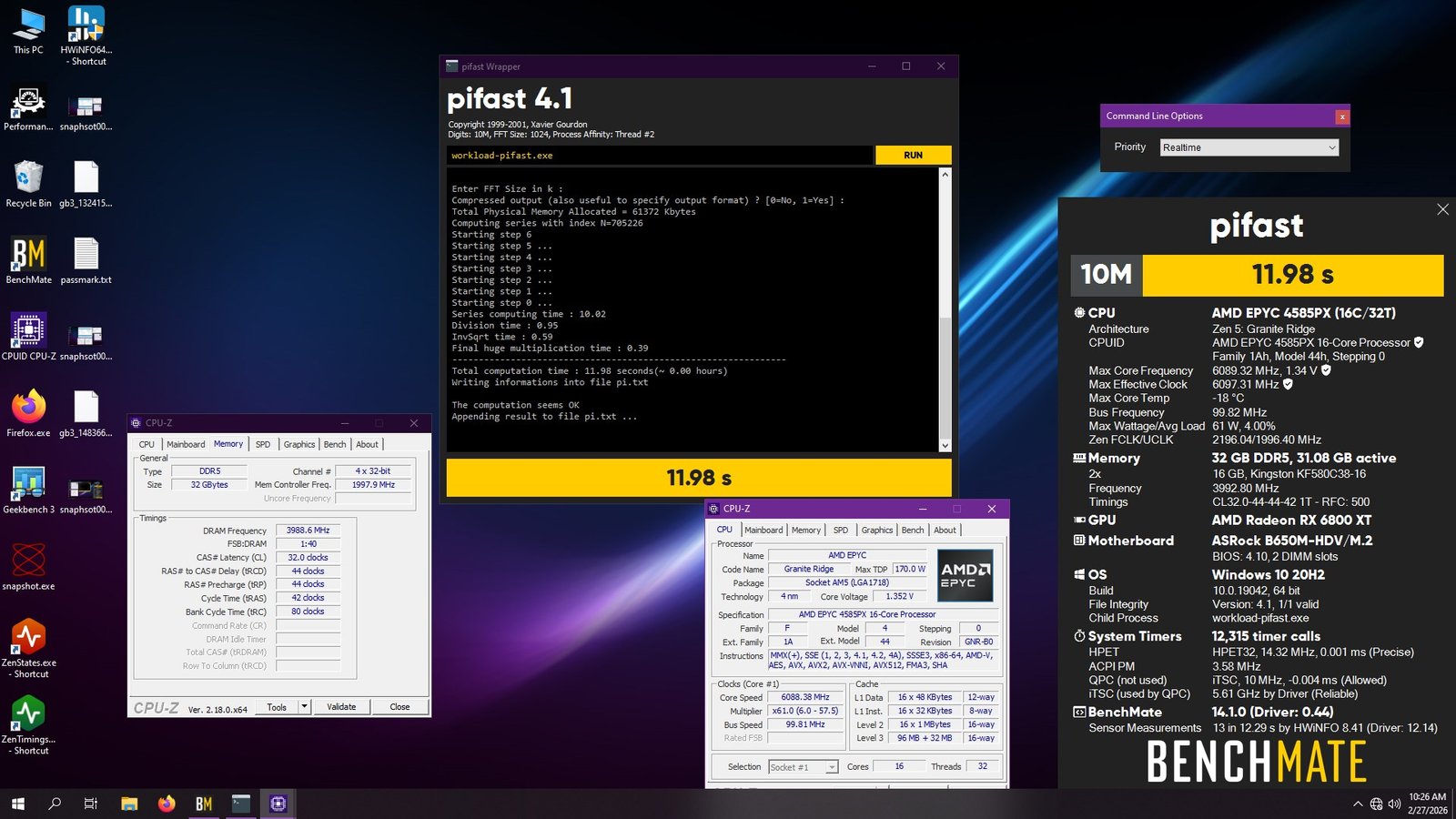
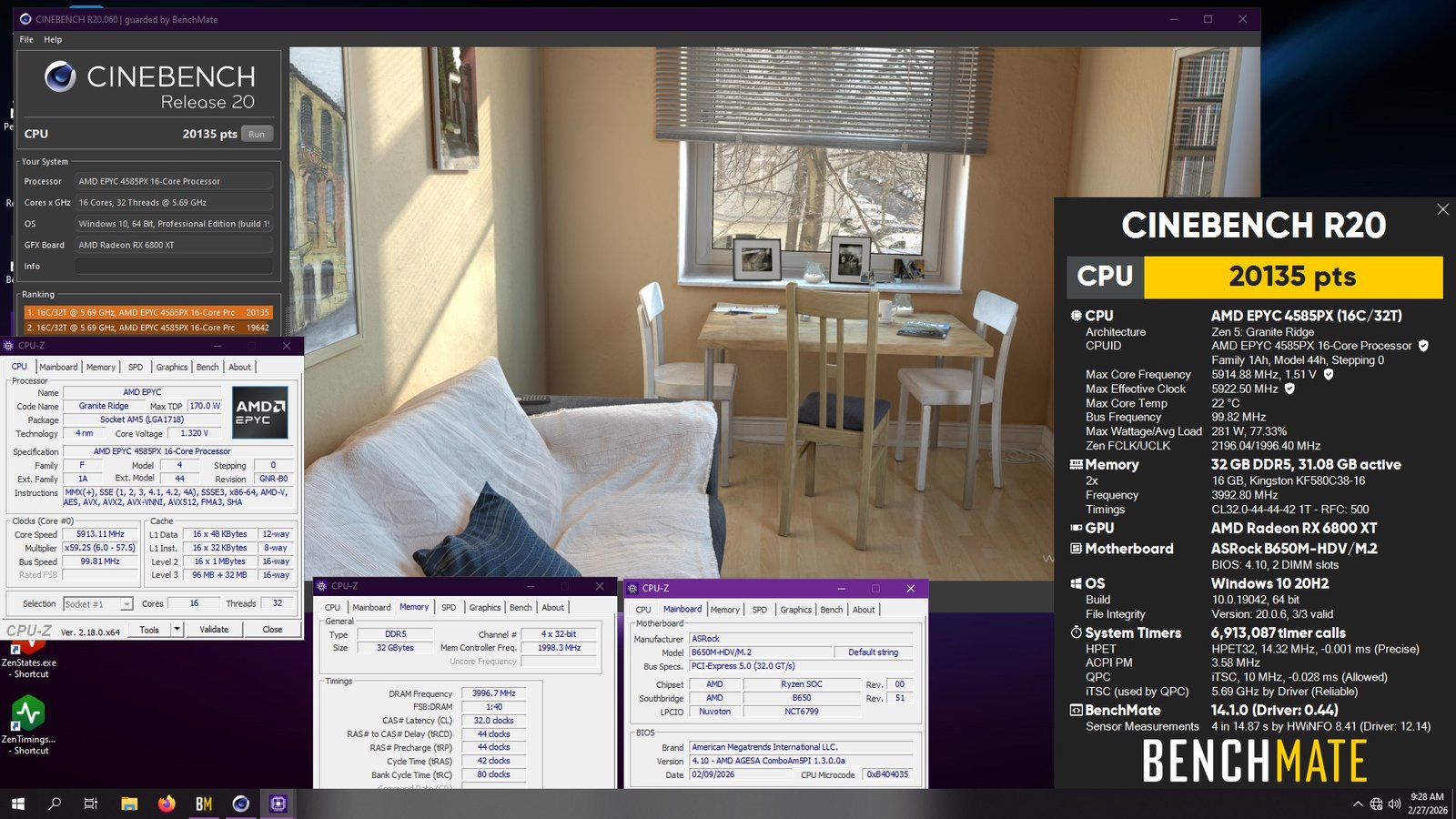
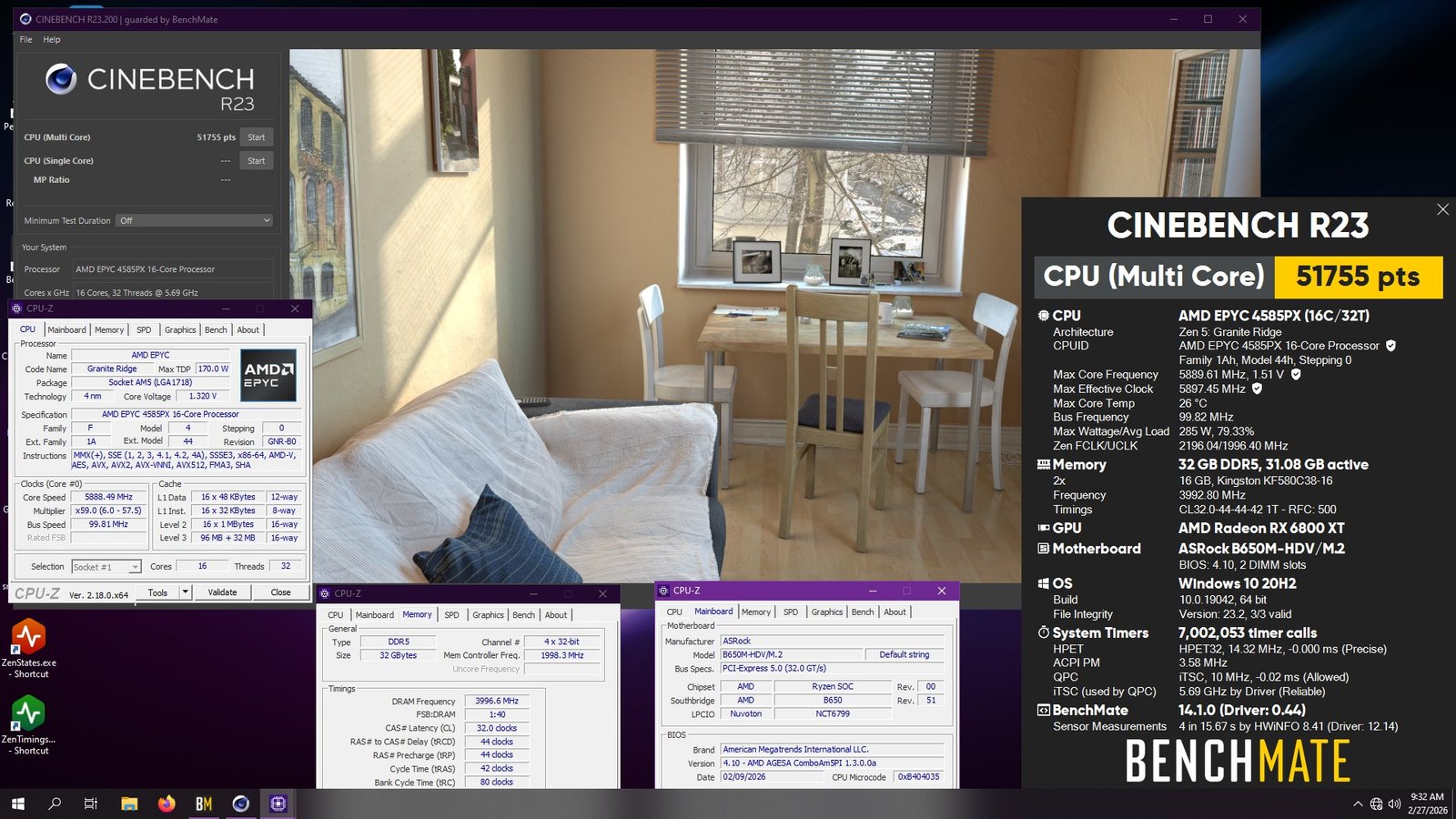
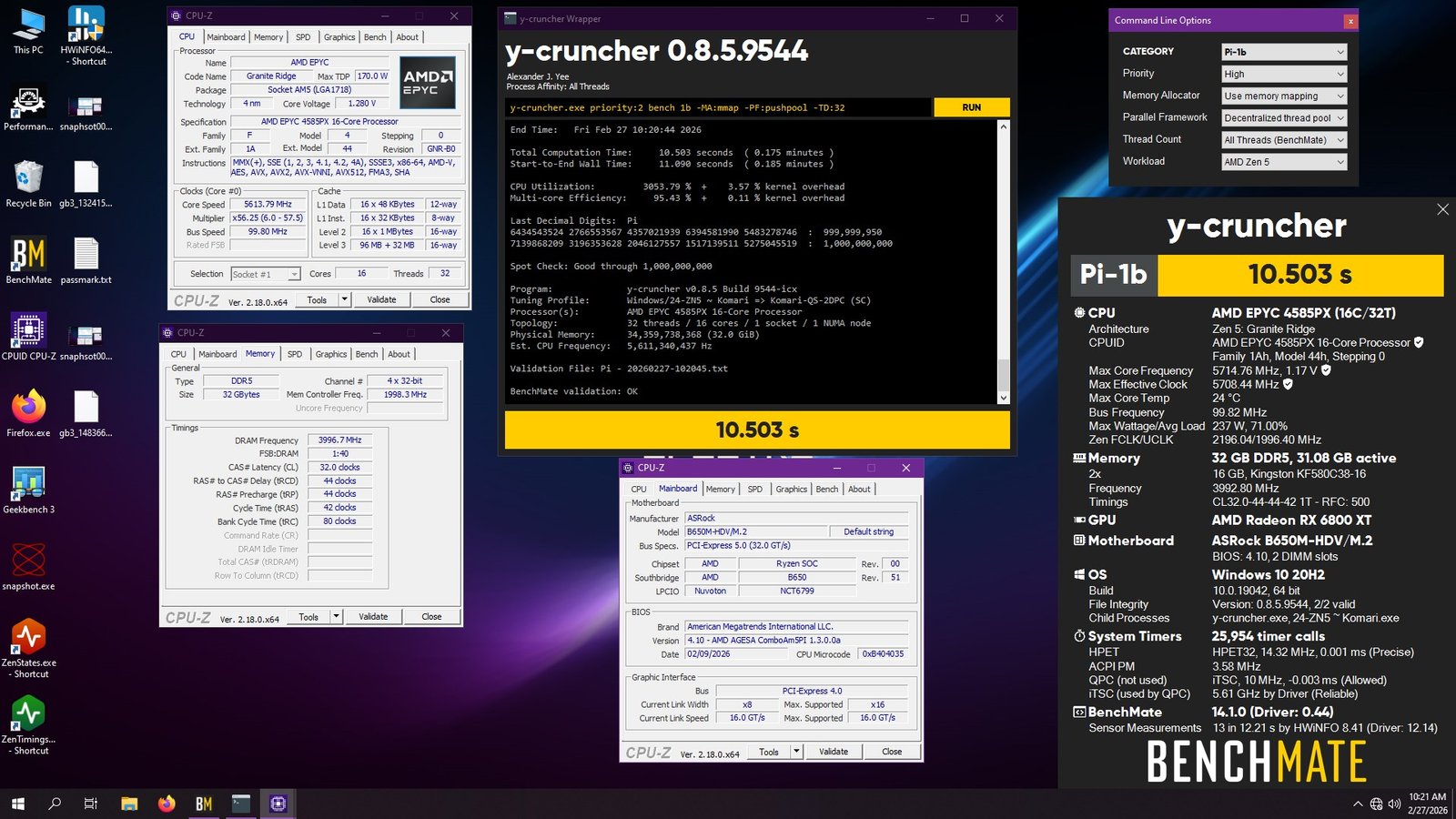
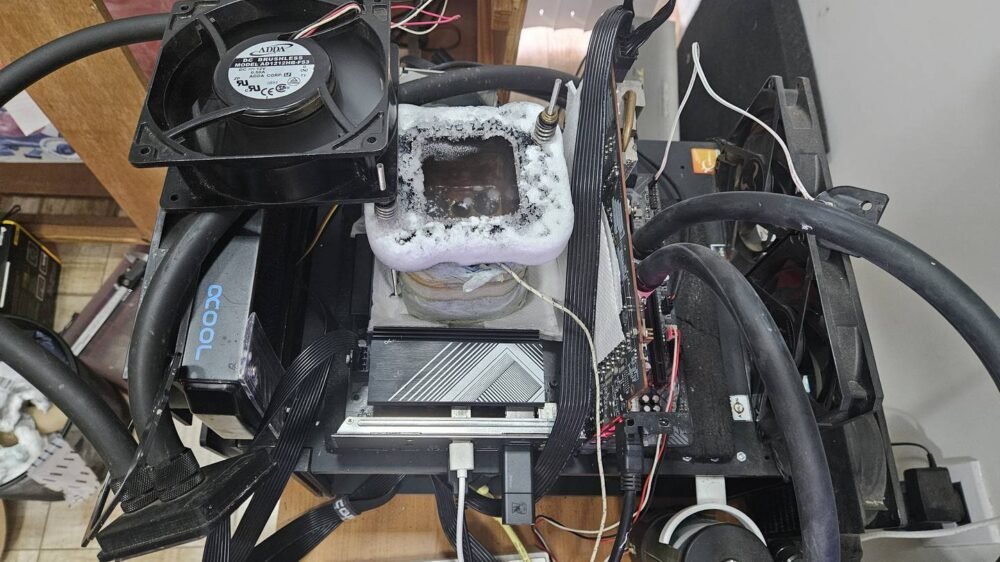
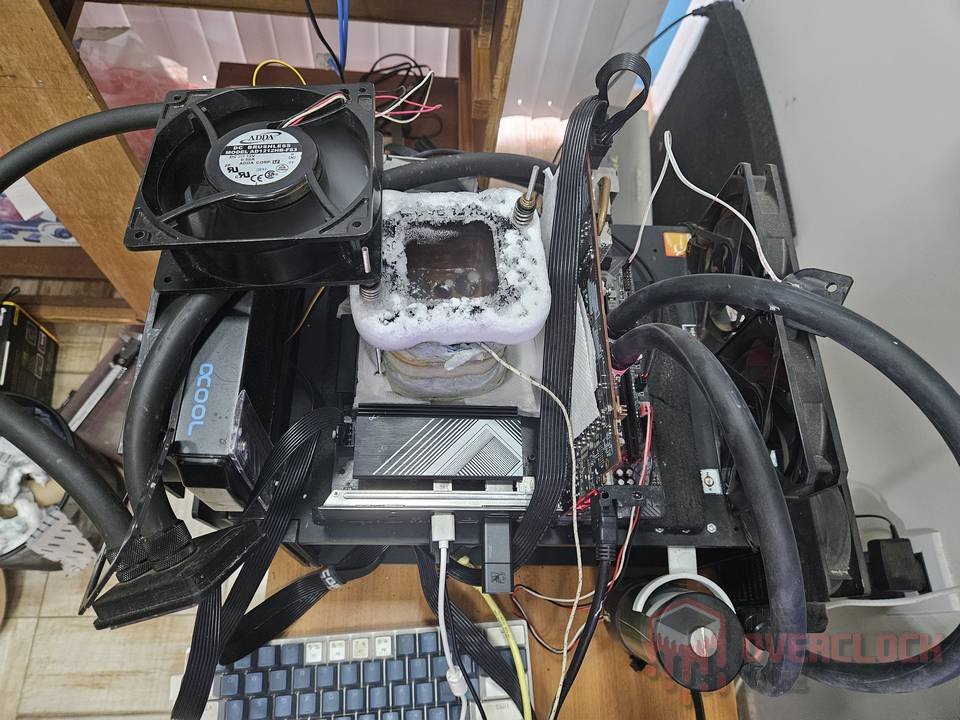
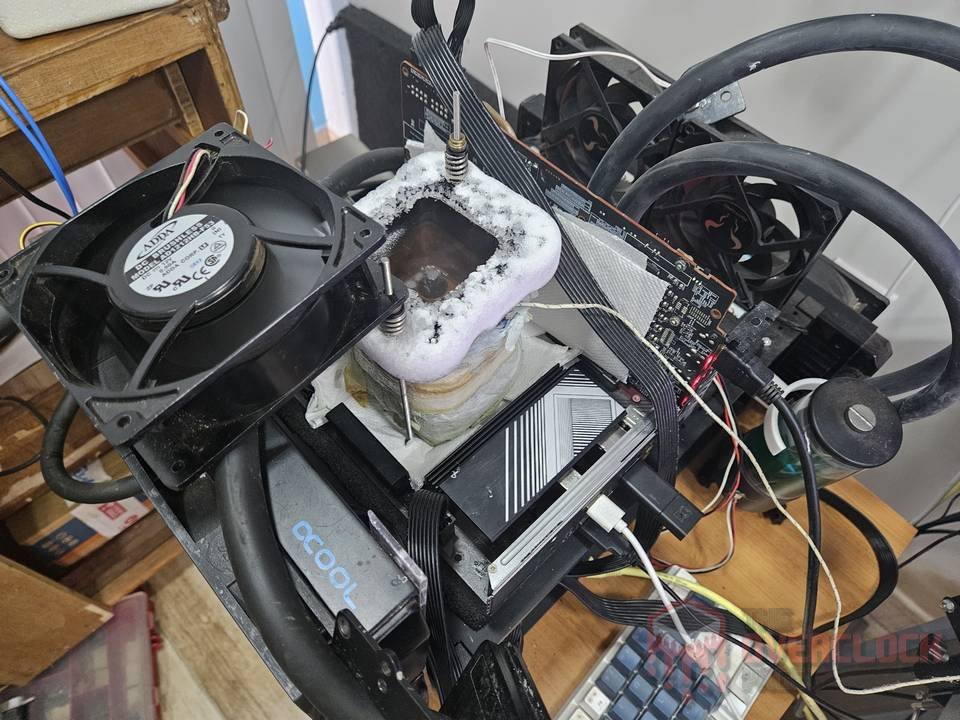
Finally, the traditional photo of all the hardware frozen, something that can never be missing from an extreme overclocking post!
Conclusion:
Both the Epyc processors and the motherboard survived the extreme overclocking session, with both the 4124P and 4585PX having no issues operating at temperatures as low as -50°C, which was to be expected.
The 4124P proved to be a very promising sample, running several heavy benchmarks above 6 GHz on dry ice, which implies, provided it doesn’t have any annoying cold bugs, that on LN2, it could reach at least 6.6 GHz and land some results in the top-20, or perhaps even the top-10.
As for the 4585PX, it performed well in testing, and although it does not seem to be a record-breaking sample, it is certainly above average, completing slightly heavier benchmarks in the 5.9 GHz range. It is worth remembering that the chance of obtaining a monster CPU with 2 CCDs is significantly lower than with 1-CCD models, since you need to win the silicon lottery on an additional die and the I/O Die needs to be truly high-quality, as it is more heavily taxed when running 2 CCDs.