EPOMAKER HE108 Review: A Rare Full-Size Keyboard with Hall Effect Switches
 by Giancarlo C. Dalmedico "NoMS" July 12, 2026 · Periféricos / Peripherals / Reviews / Reviews
In this article, I will review the EPOMAKER HE108, which is a “100%” mechanical keyboard. This means it has every single key, including the numeric keypad, in an ANSI layout without the “Ç” key. It features a plastic build and RGB lighting, but its main highlights are the Hall Effect switches and wireless connectivity. Is this a good keyboard? That is what we will find out.
I would also like to thank EPOMAKER for providing the sample for this review.
- Unboxing:
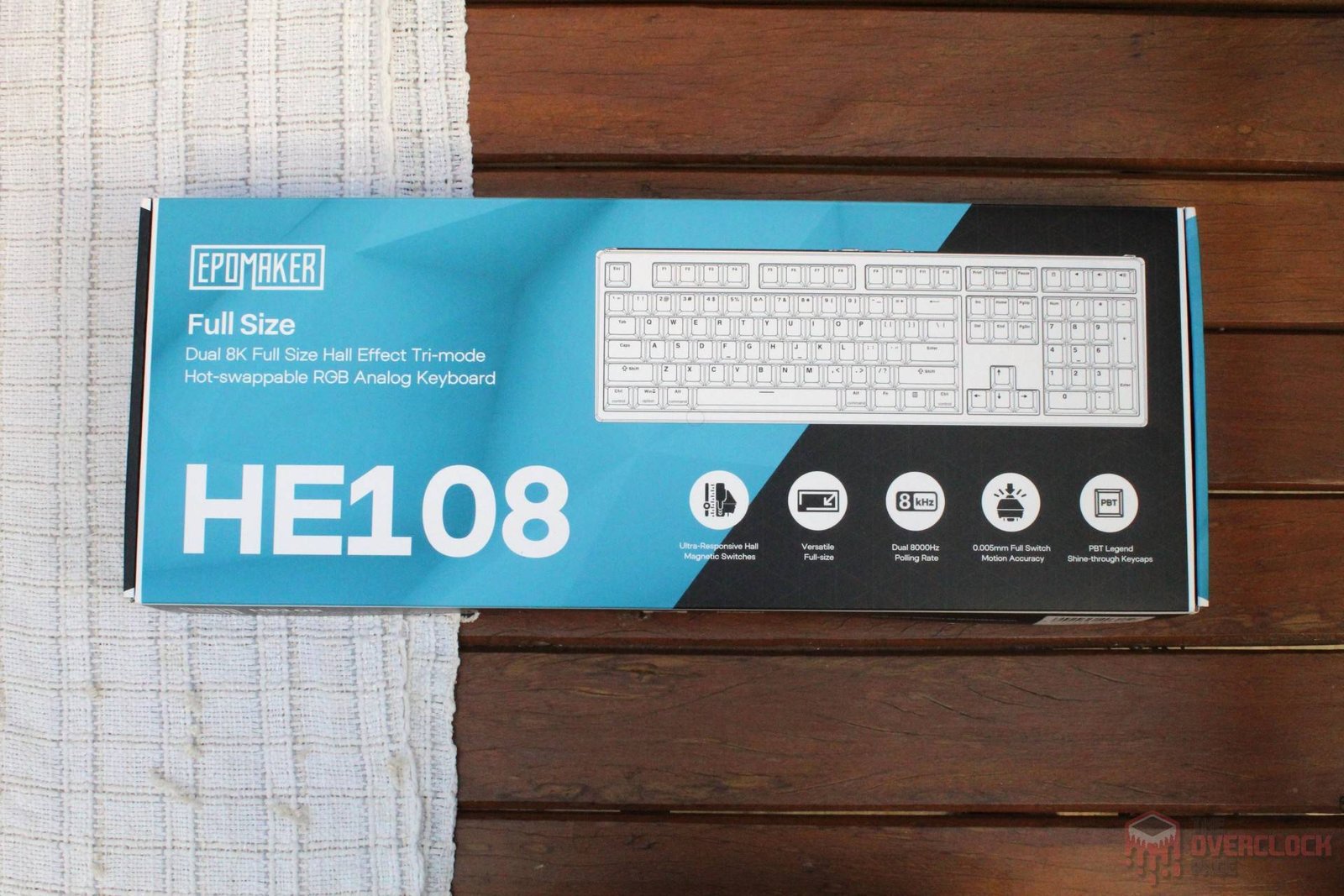
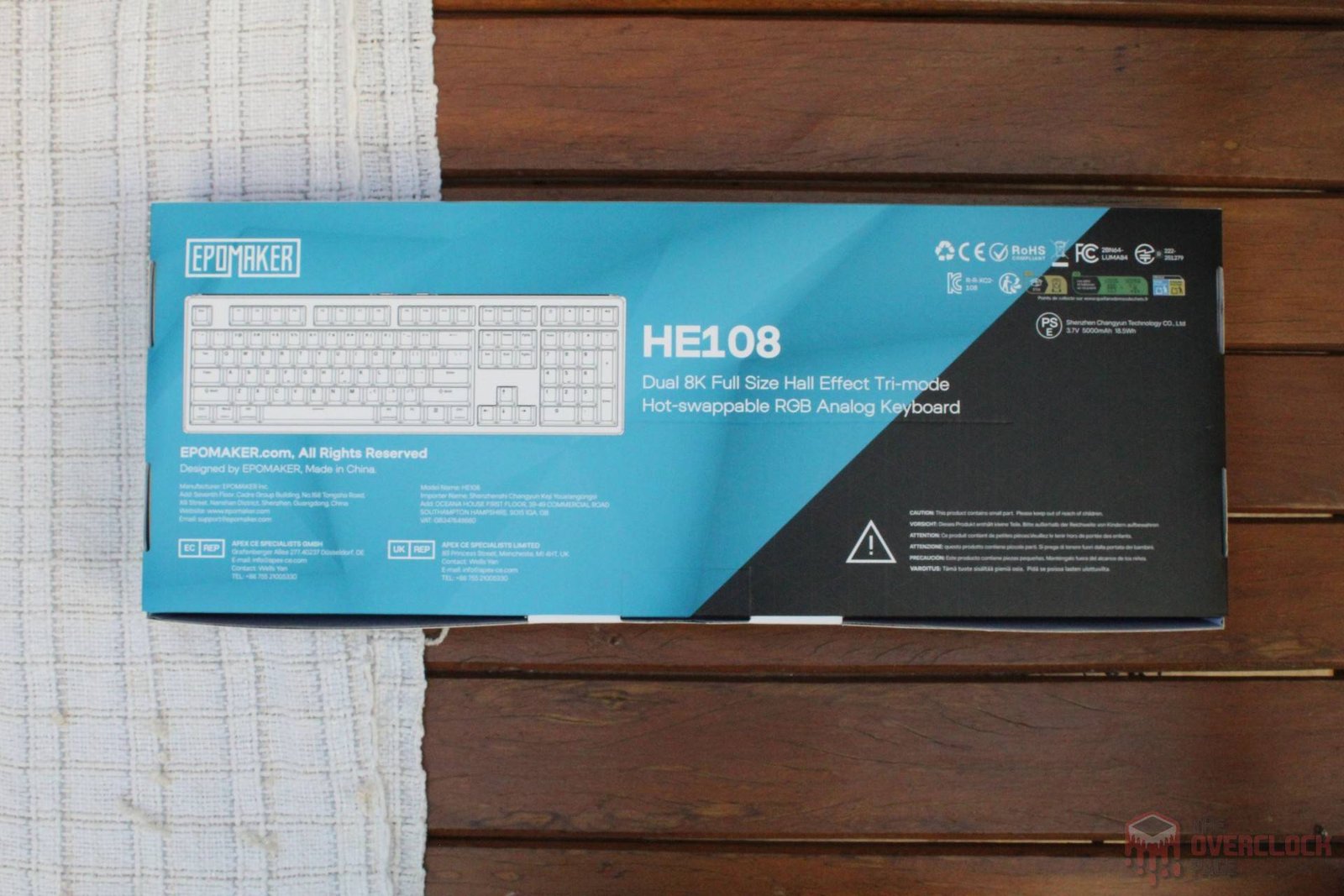
The packaging features an illustration of the product on the front, mentioning the brand, model, and several features like the 108 keys, Hall Effect switches, polling rate, and RGB. On the back, there is the same illustration of the keyboard and its model name.
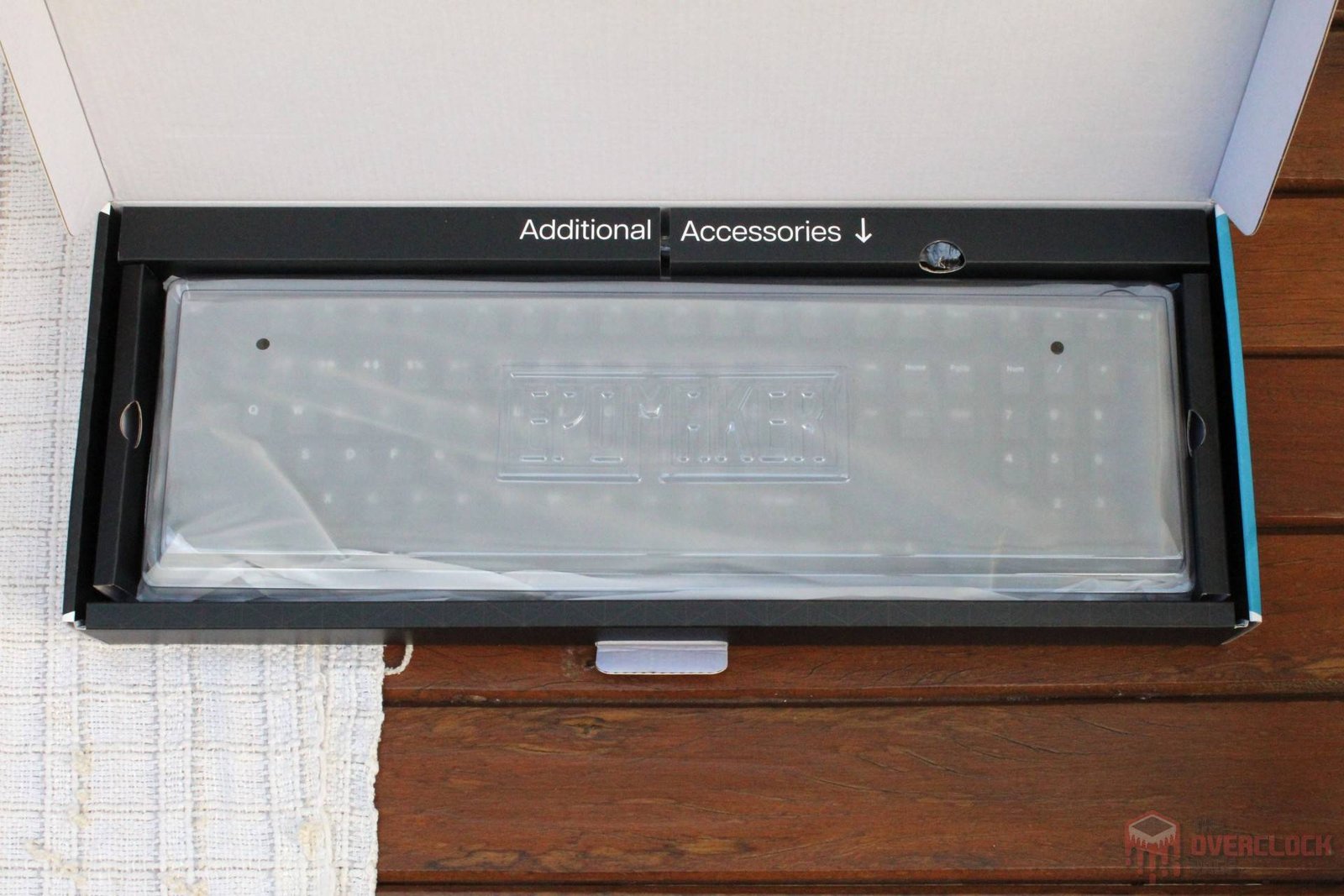
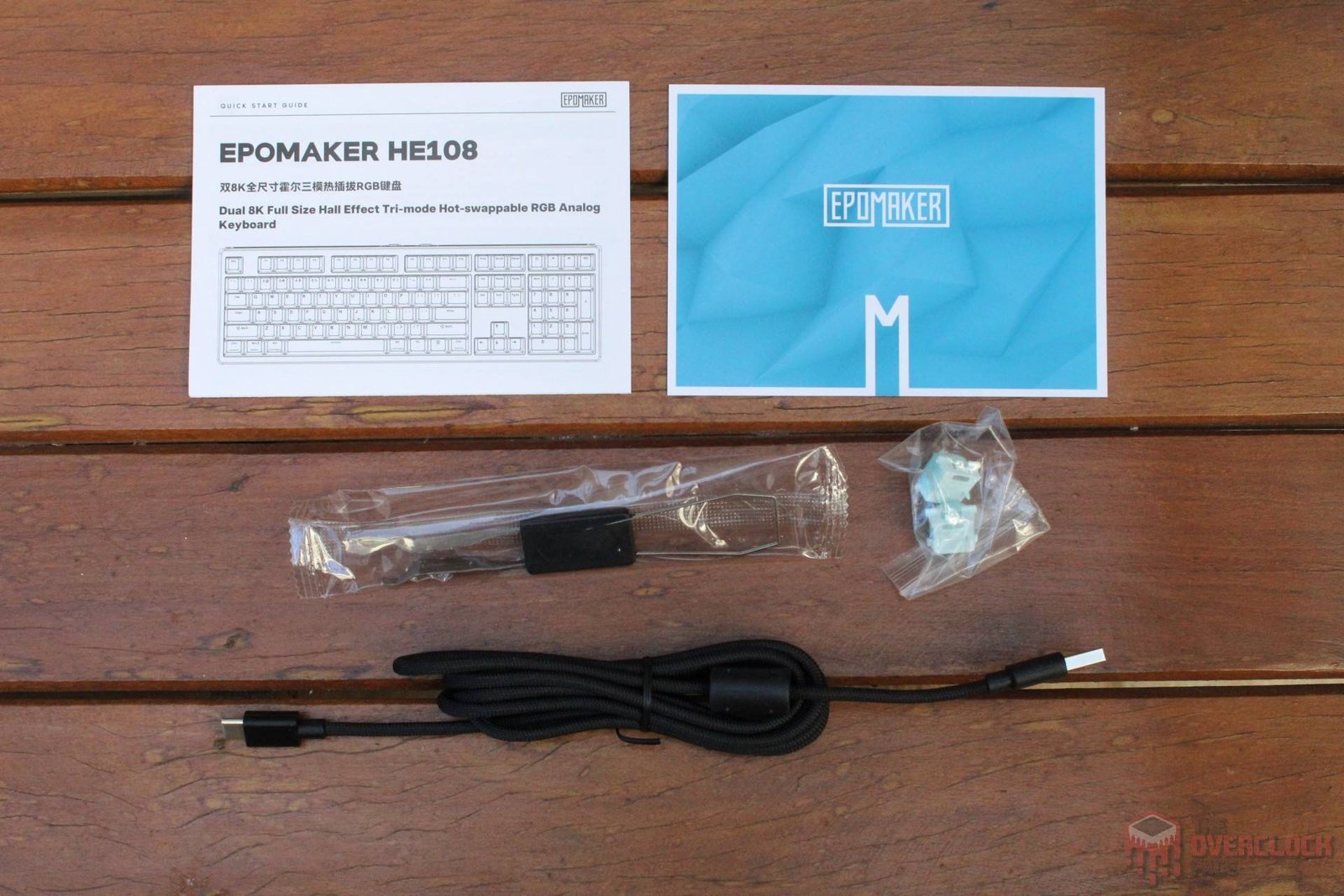
Opening the package reveals the keyboard wrapped in a protective bag, a printed manual, a USB-C cable, a tool for removing switches and keycaps, and two spare switches.
- Hardware:
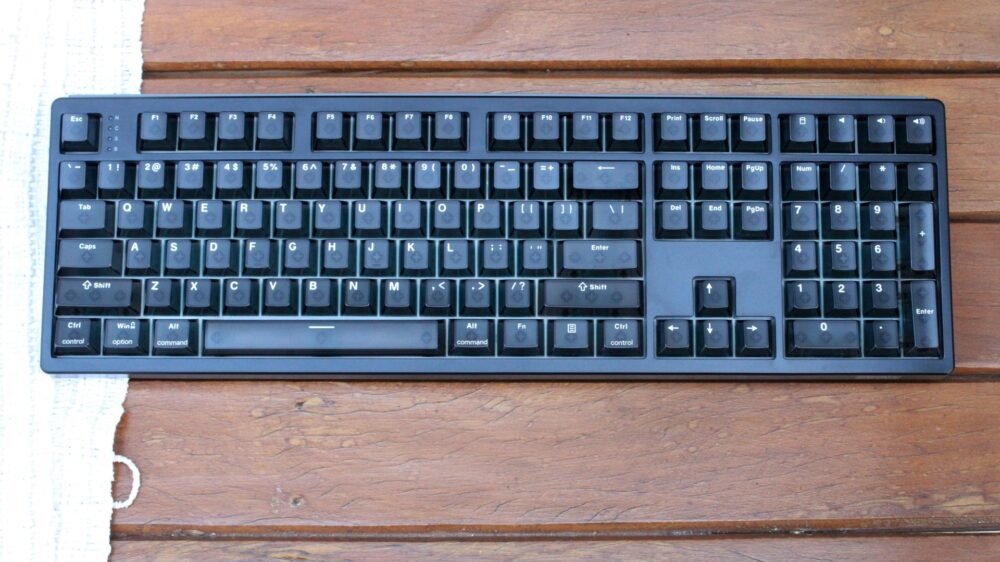
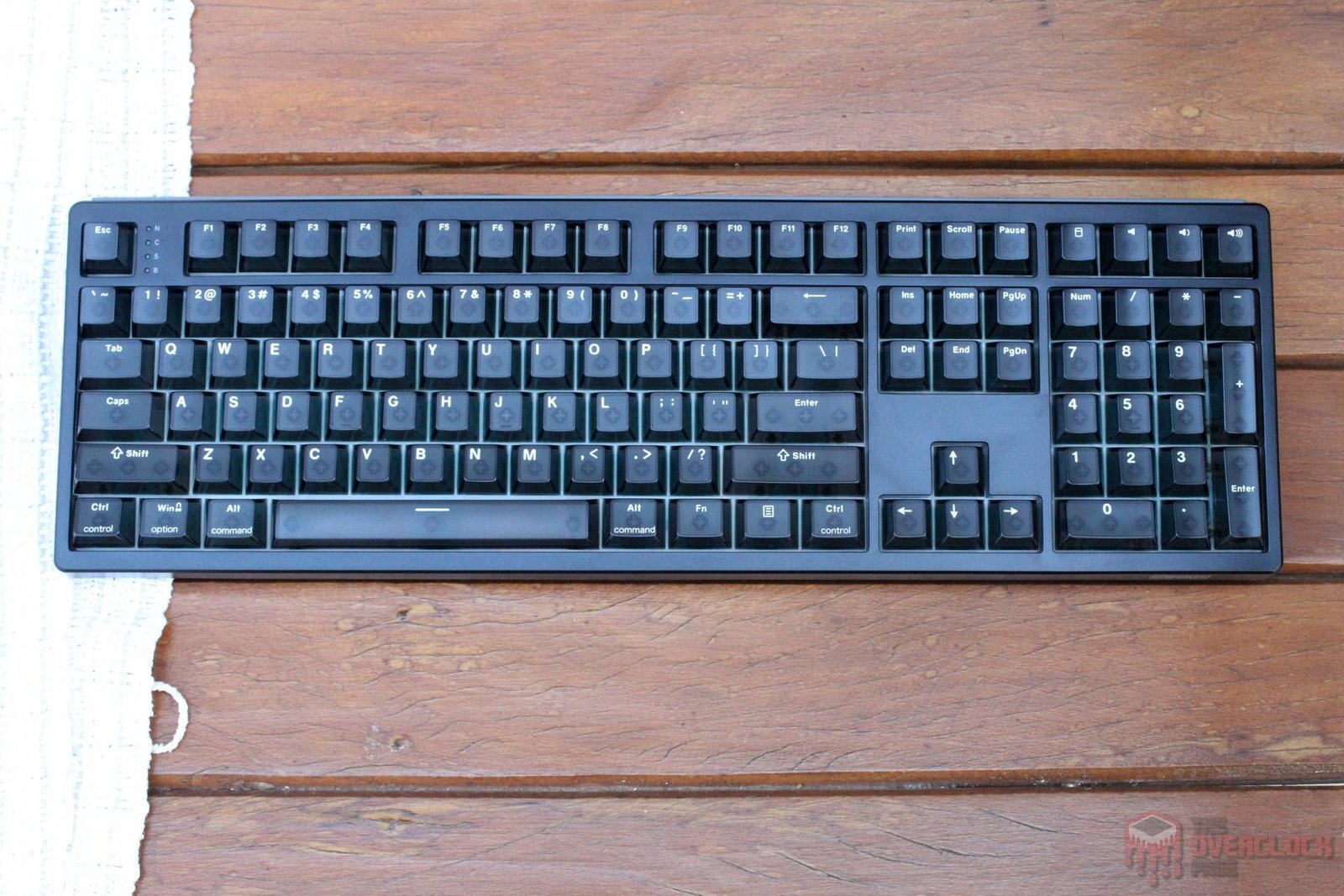
As mentioned before, the EPOMAKER HE108 is a standard full-size keyboard, which means it includes a numeric keypad. The structure is made of plastic, but the finish is high quality, and the keyboard feels quite heavy, which was expected given the multiple layers of sound-dampening foam. Overall, this gives off a very positive impression of sturdiness.
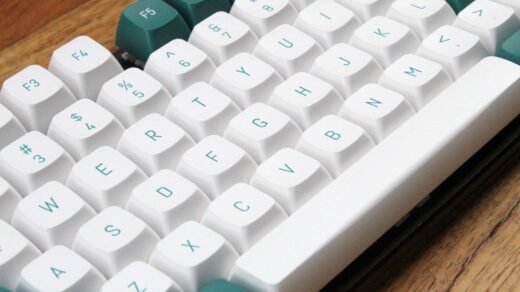
One detail that might be polarizing is the translucent keycaps used to let the RGB lighting shine through. I personally found this a bit strange at first, but it started making sense as soon as I turned on the keyboard.
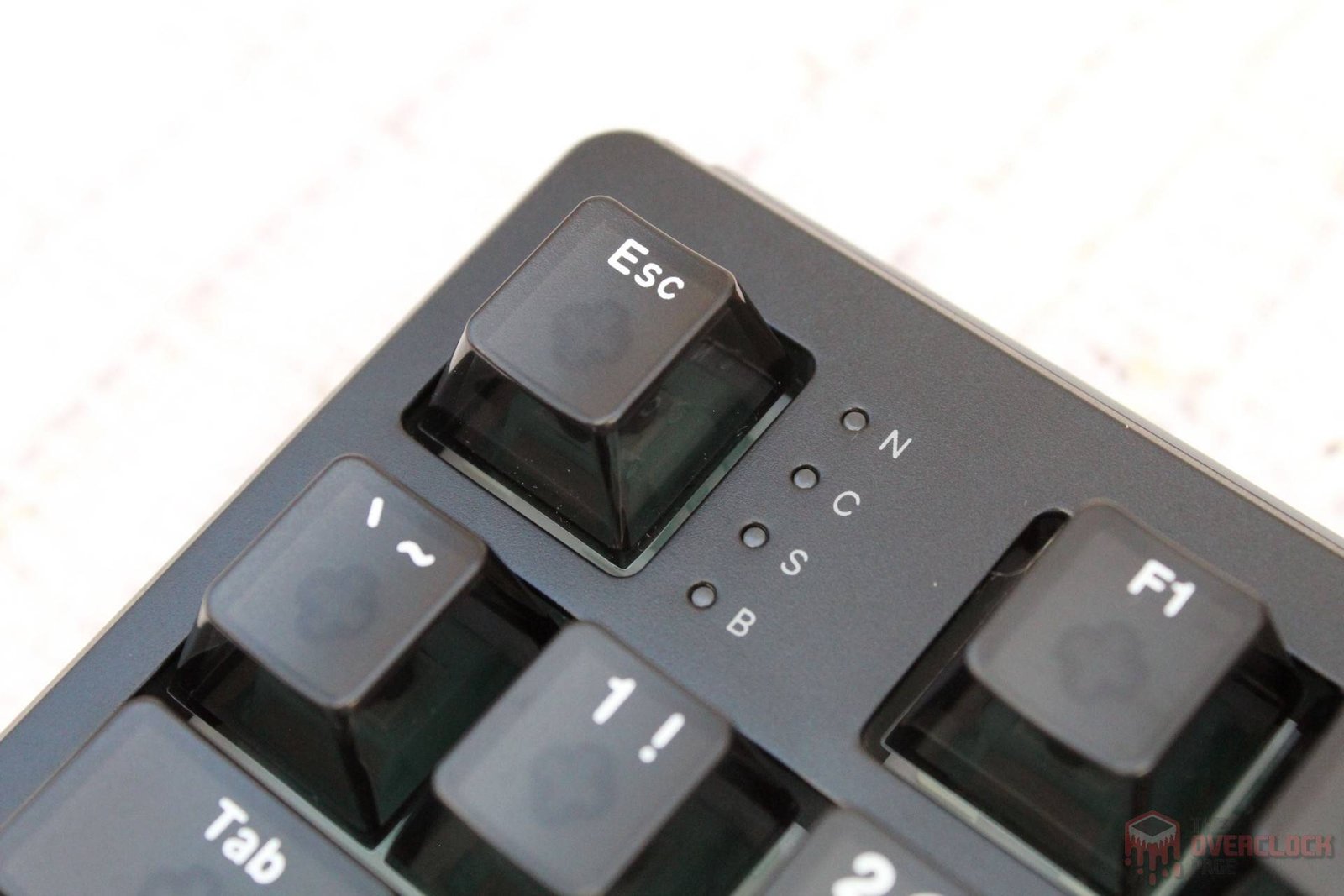
Next to the ESC key, there are also LEDs for Num Lock (N), Caps Lock (C), Scroll Lock (S), and a battery indicator (B).
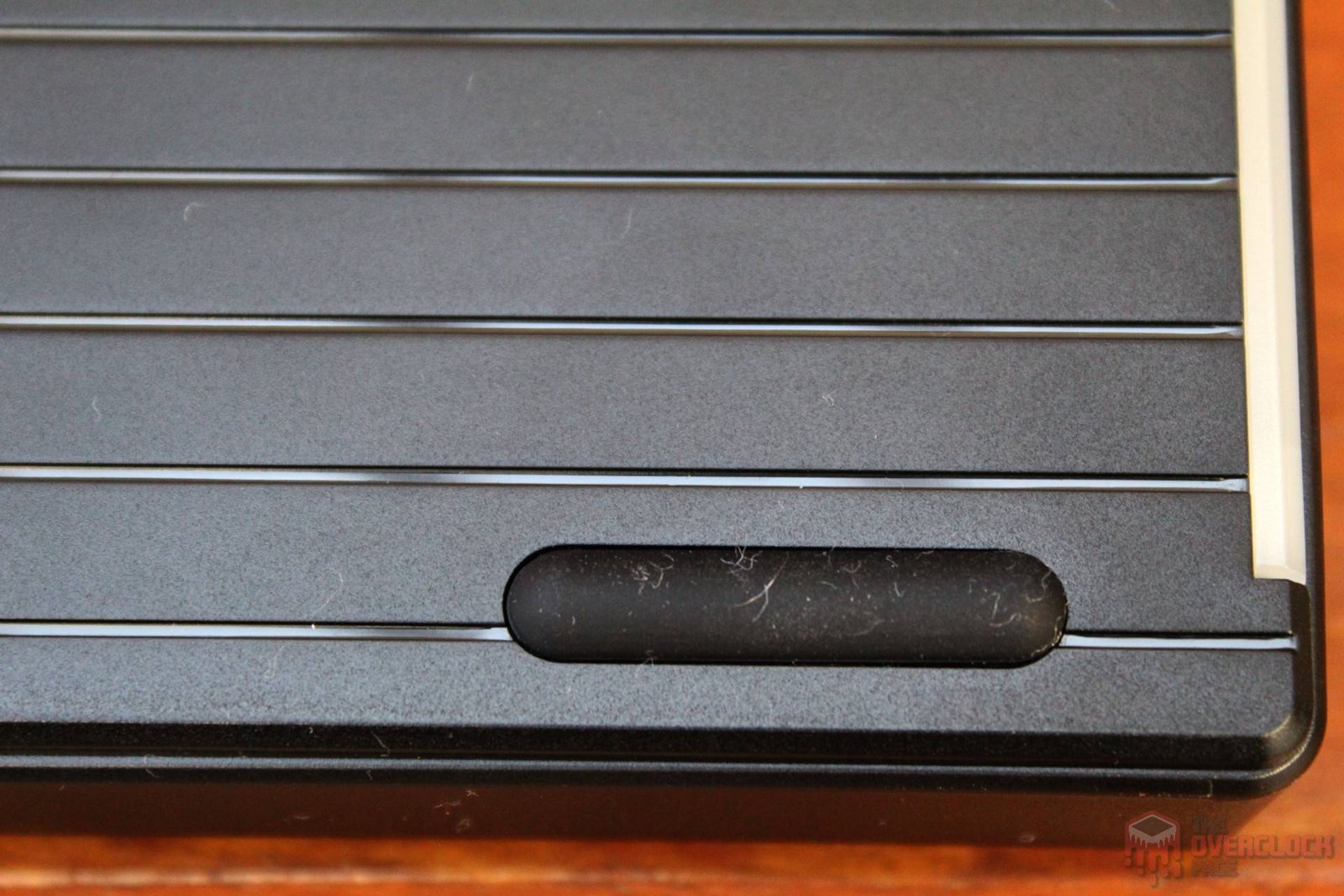
On the sides, there are two plastic accents that also feature RGB lighting. The bottom of the keyboard has four rubber pads on the edges, which proved to be quite effective at keeping the keyboard from slipping on the surface. Additionally, it has adjustable feet for height, which are also made of plastic, just like the rest of the housing.
A cool detail is that the wireless receiver is stored under one of the feet, a very clever move by EPOMAKER.
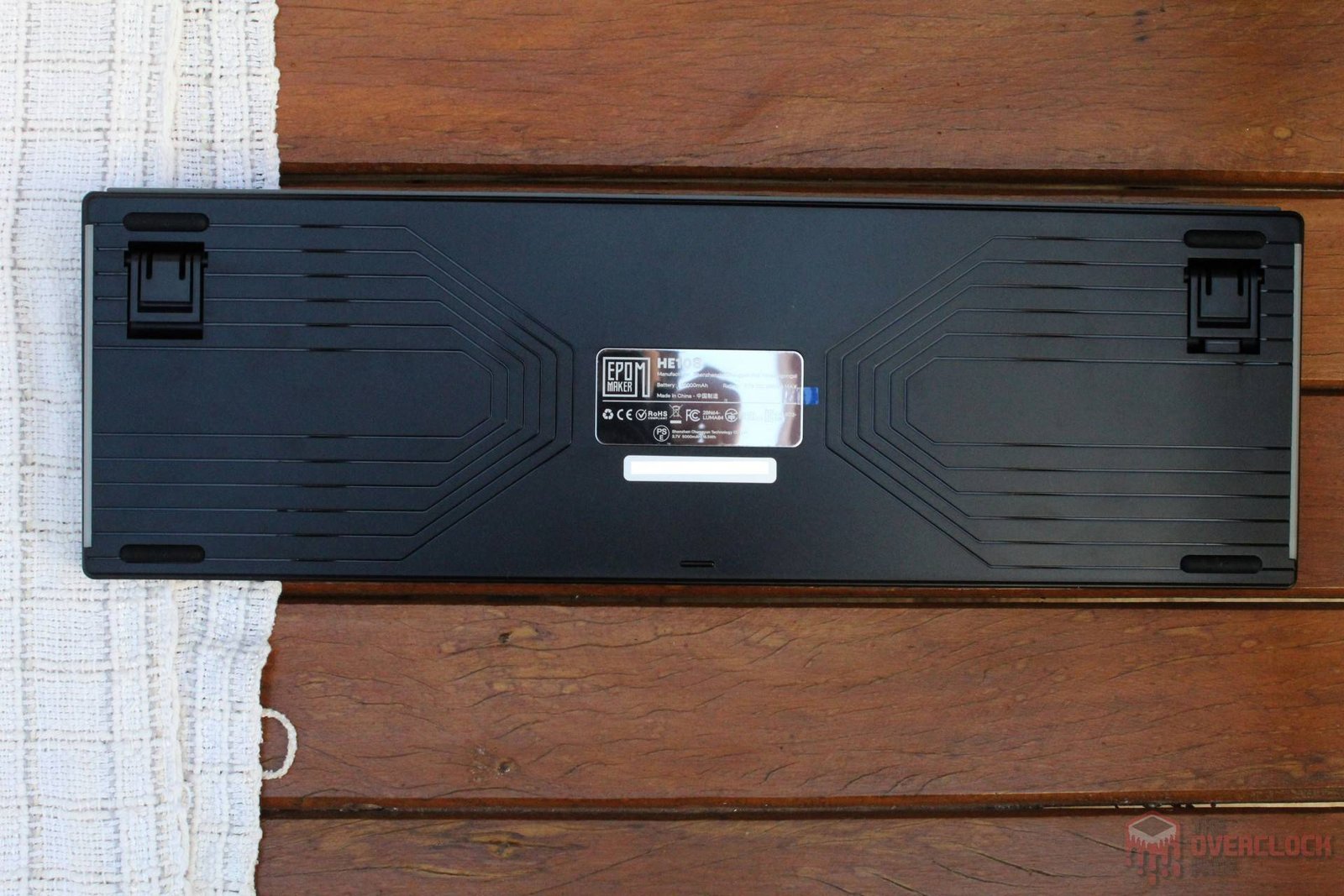
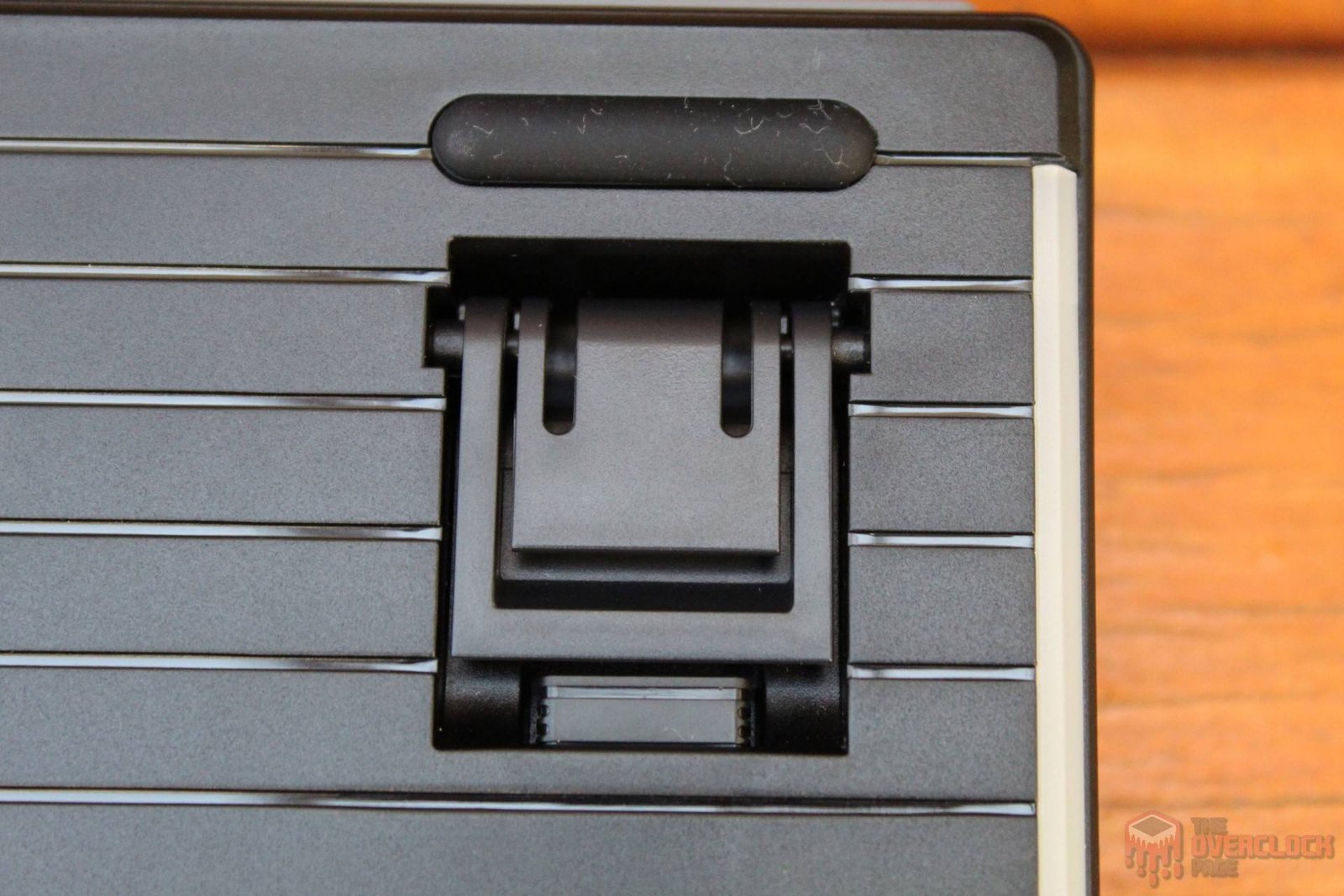
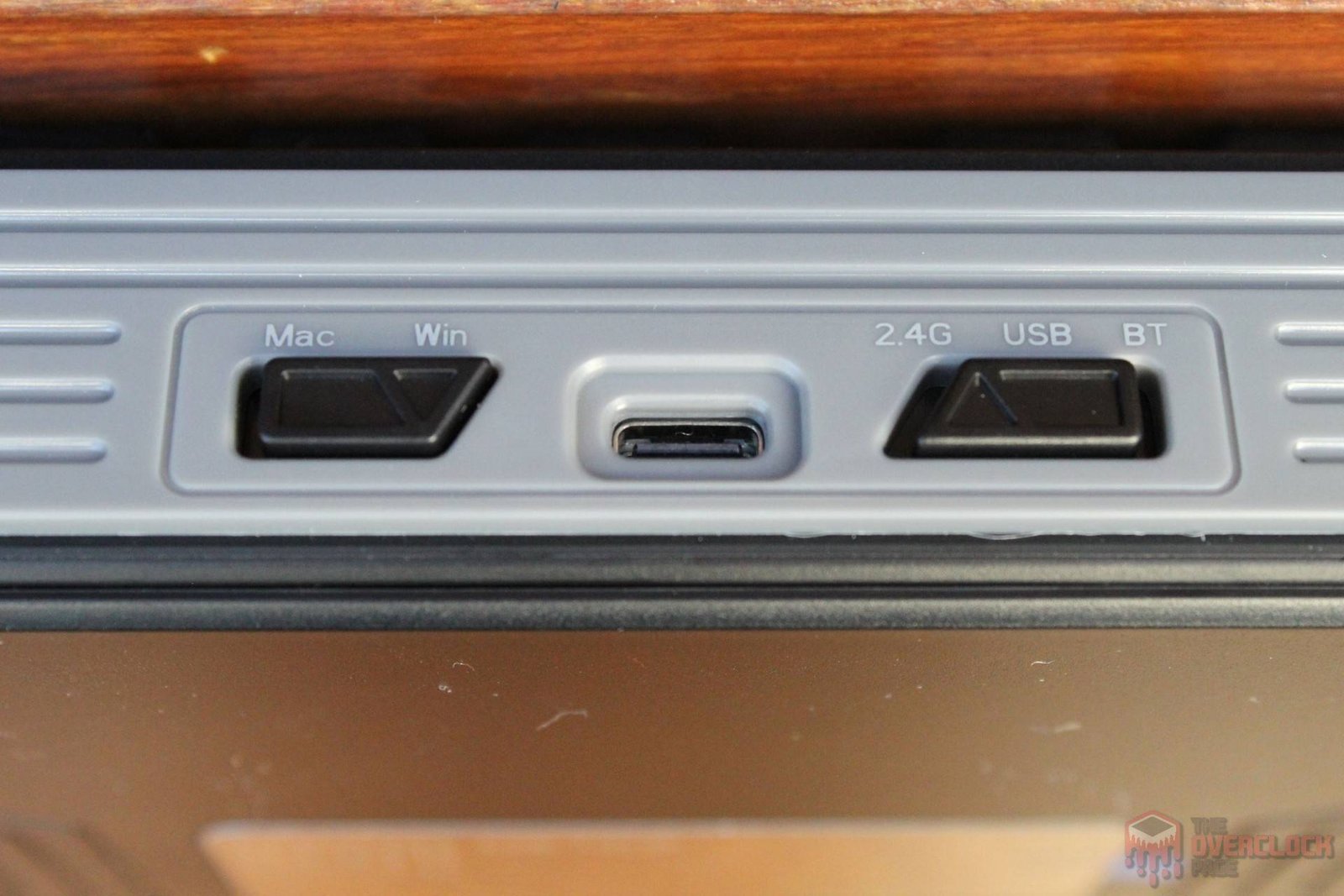
The keyboard connects via a USB-C port with a removable cable, which is great since it’s a modern and widely used standard. Additionally, you can use the wireless receiver that comes with the keyboard or connect via Bluetooth.
An important detail is the polling rate, which is how many times the keyboard communicates with the PC. For example, at 1000 Hz, it does this 1000 times per second, reducing communication latency and the feeling of input lag.
On the HE108, the polling rate is 8000 Hz when using a USB cable or wireless mode, and 125 Hz with Bluetooth. Unlike the MagCore 65, which has a reduced polling rate in wireless mode to save battery, the HE108 doesn’t have this difference, which can likely be explained by its larger batteries compared to the MagCore.
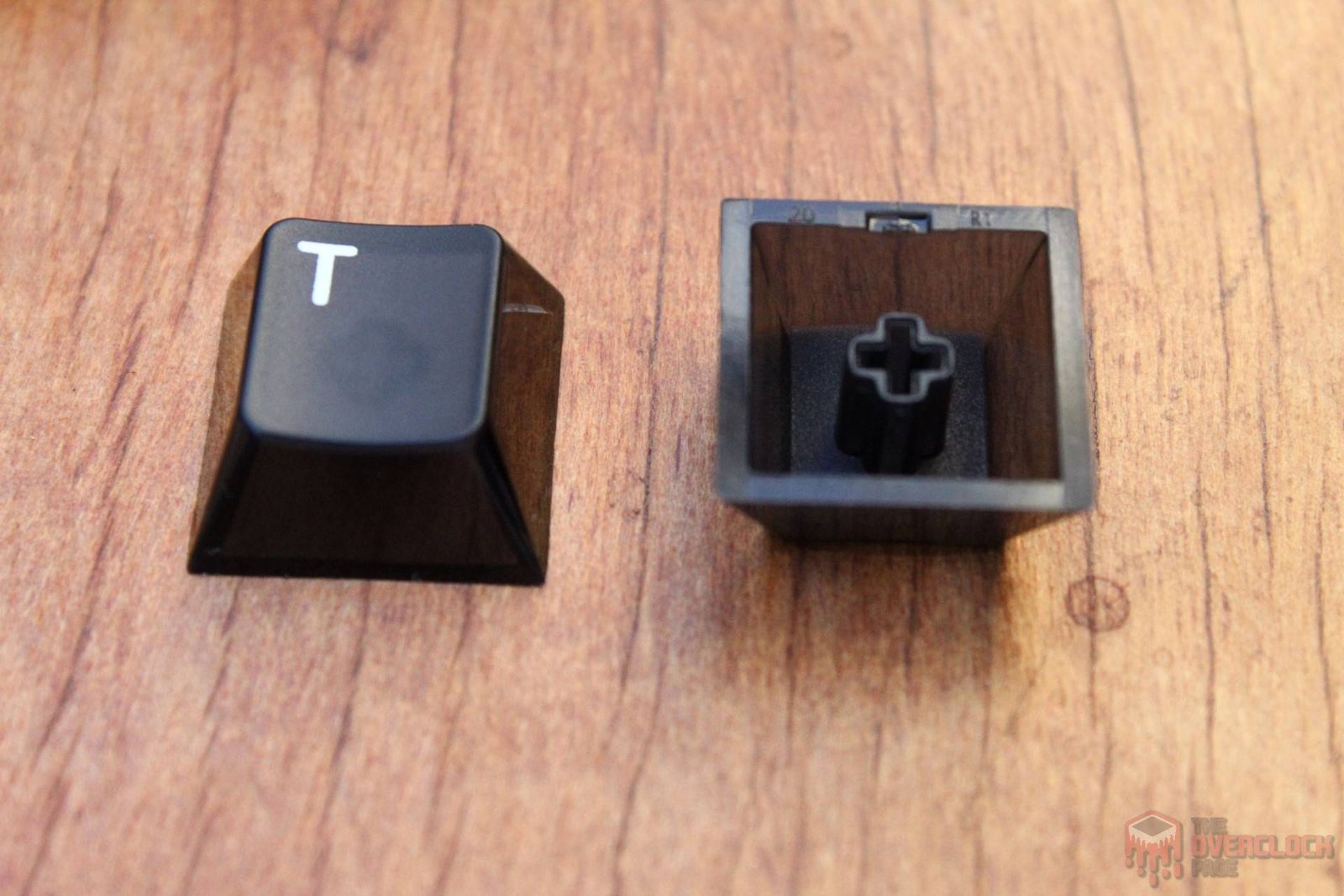
The black keycaps are made of PBT plastic with doubleshot printing, which is a process where the keycap is pressed onto another piece of plastic with the character. The advantage here is that this process prevents them from peeling off or becoming unreadable over time. Another benefit of this material is that these keycaps don’t develop that “shiny” look with time, which is typical of ABS parts, it is a plus for durability.
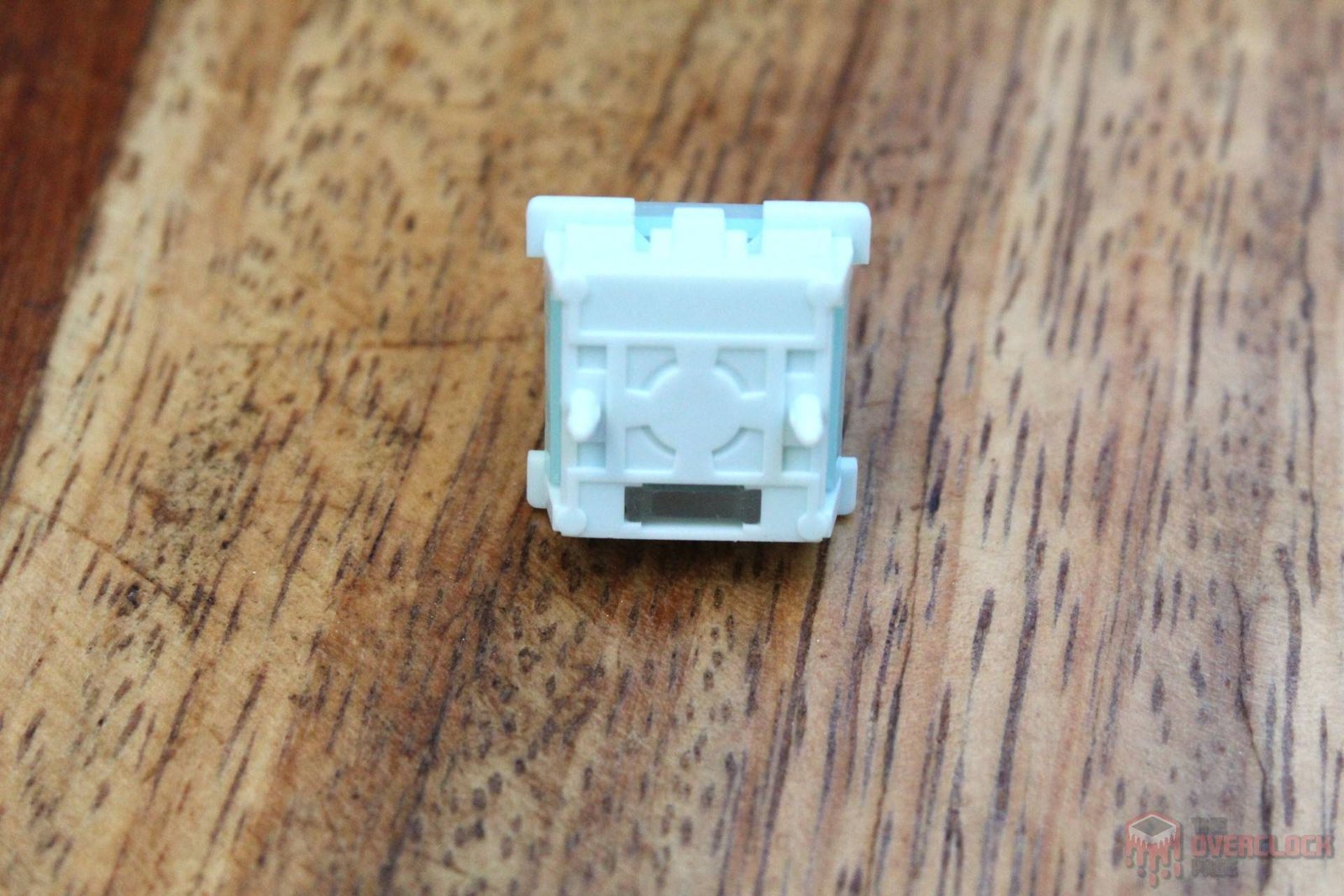
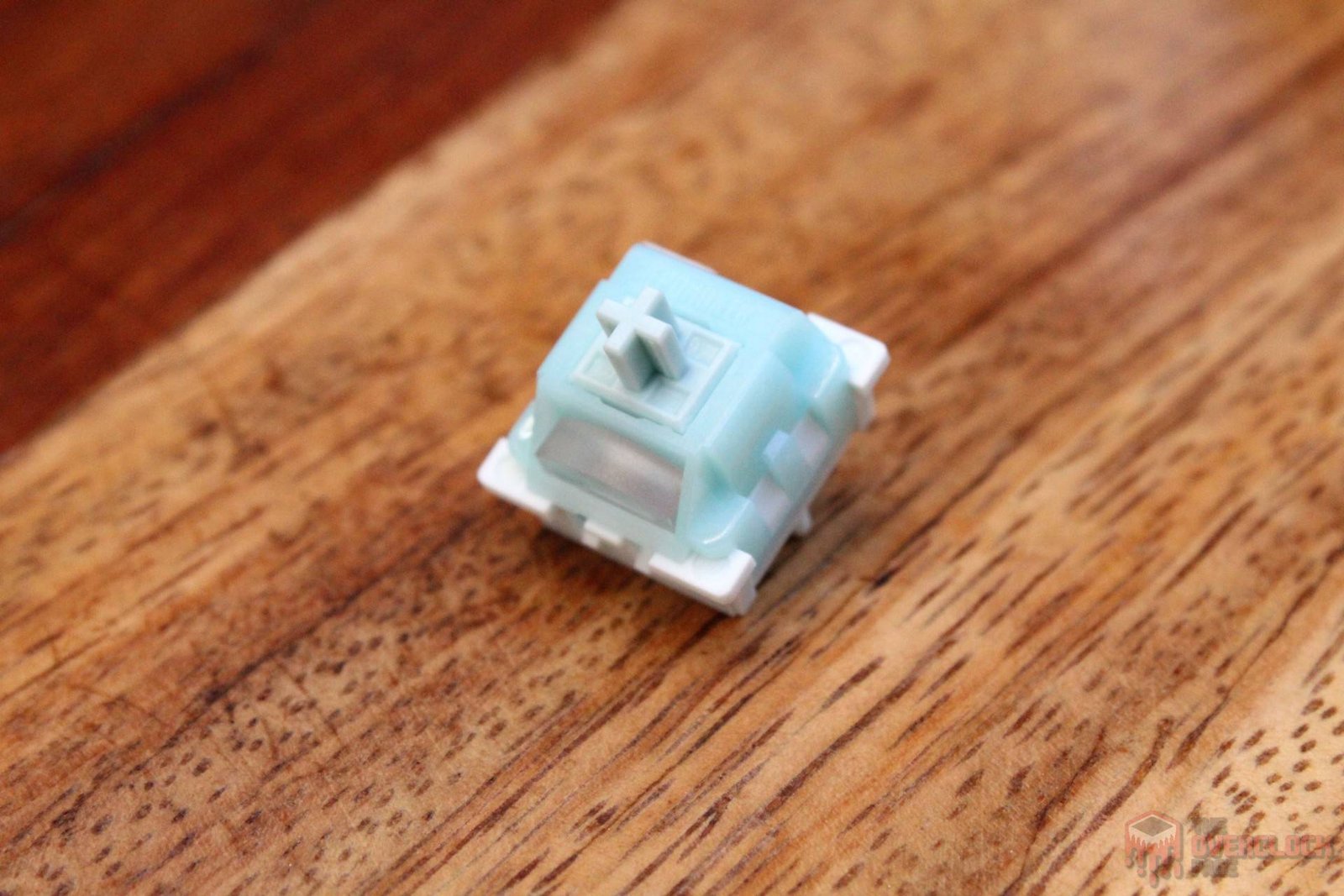
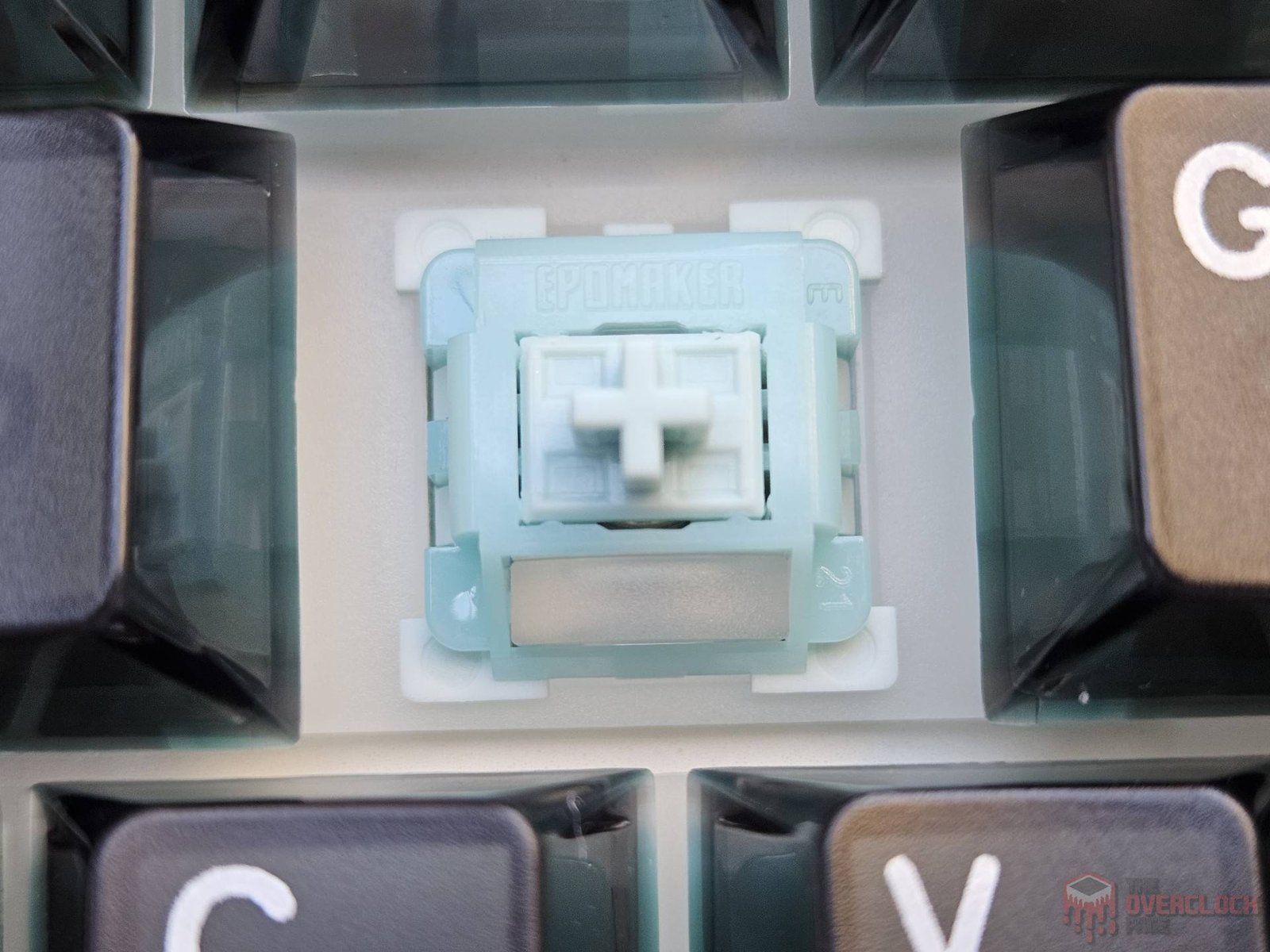
What sets the HE108 apart from the vast majority of keyboards are its switches. They carry the Epomaker brand and show signs of being manufactured by Gateron and while they follow the traditional Cherry format with the cross-shaped stem for keycap installation, that is where the similarities end.
These switches do not use physical metal contacts to send electrical signals because they work using the Hall Effect. The switch stem has a small magnet, and the keyboard PCB is equipped with magnetic sensors, also known as Hall sensors. When you press the switch, this magnet moves toward the sensor and causes changes in the intensity of the magnetic field. These changes are read by the keyboard’s MCU, which determines not only if the key was pressed but also its exact position in real-time.
The big advantage of this system is precision, which allows users to adjust parameters like the actuation point and sensitivity. Additionally, the response time is faster than a traditional mechanical switch. This enables features like Rapid Trigger, making this model particularly interesting for competitive gaming where the lowest possible input lag is required.
The switches on this keyboard are linear, meaning they have no tactile feel or “clicky” sound. They have an initial actuation force of 30gf and bottom out at around 55gf, which makes them feel light. Another feature is that they come factory-lubed, providing a very smooth and buttery feel when typing.
The stabilizers, which provide extra support for long keycaps, like the spacebar, so they don’t wobble when pressed at the edges, are of the Cherry style. They use cross-shaped stems similar to those on the switches, but located at the ends of the keycap. The keys with stabilizers felt very smooth even when pressing firmly on the edges, which is a positive point.
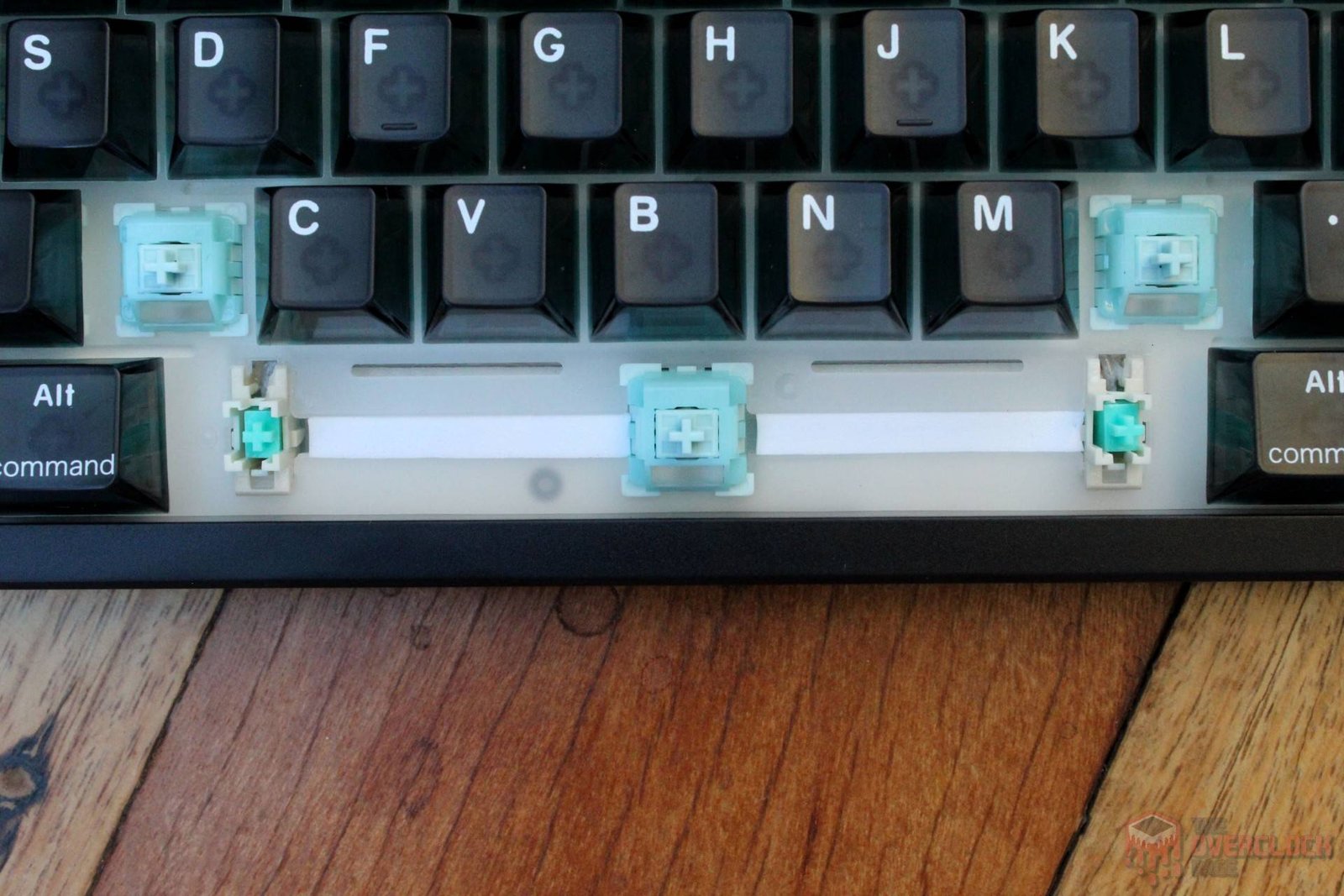
As expected from a keyboard that includes spare switches, it is hot-swappable. However, it is not compatible with traditional mechanical switches, which means your only options are Hall Effect switches. This might not be a big issue, since there are many different types of these switches available from various manufacturers.
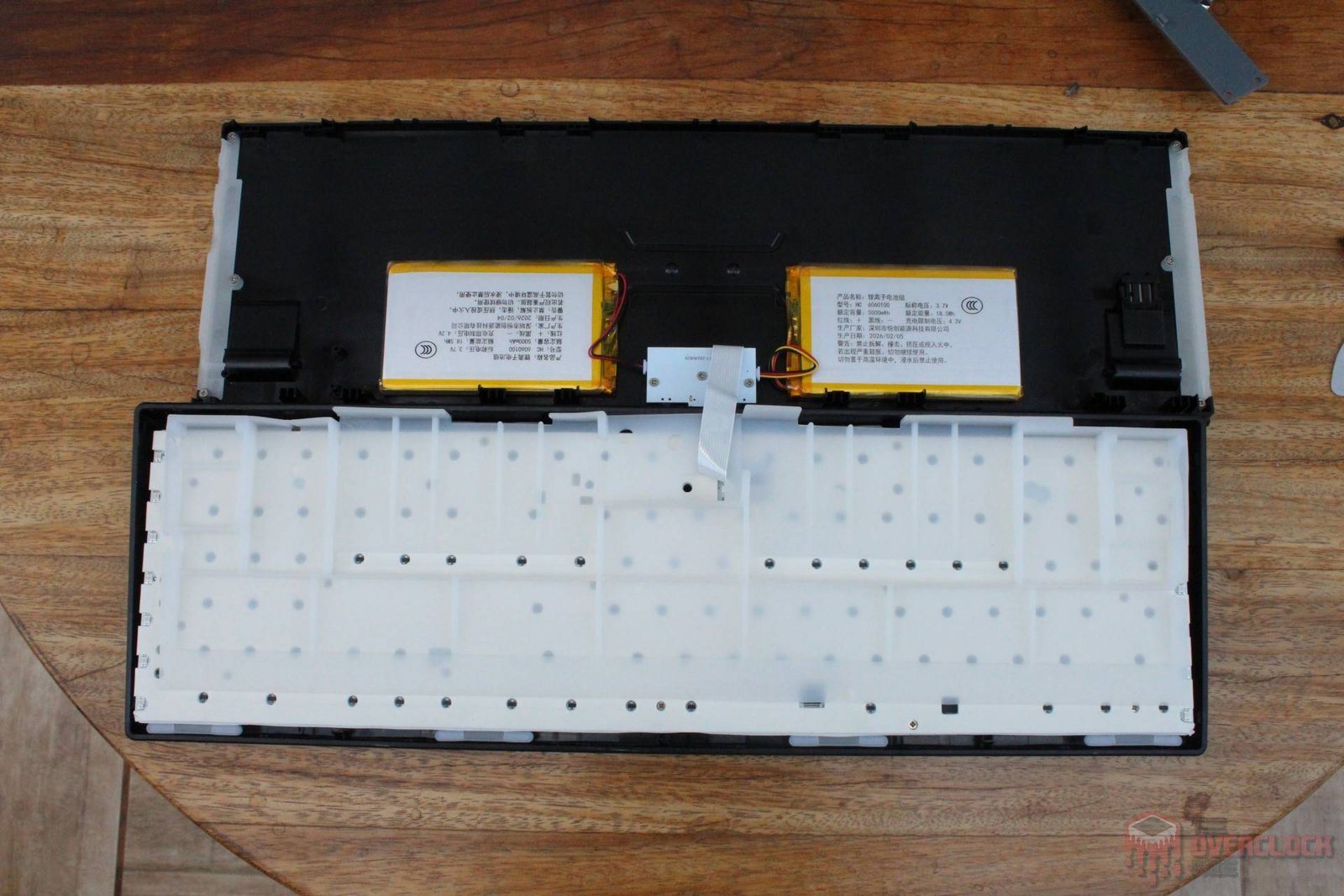
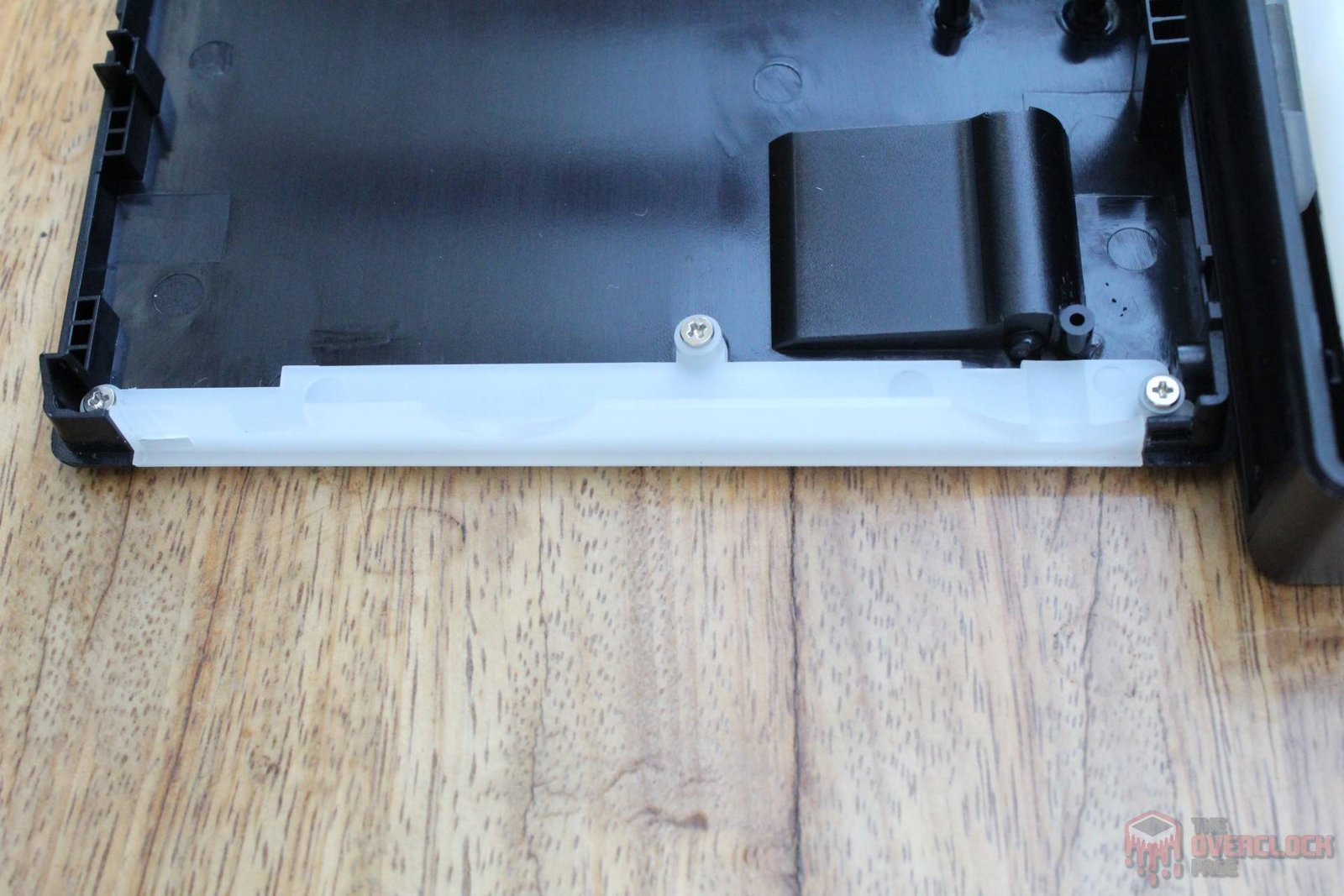
As for the disassembly process, you just need to remove the four screws on the rear side panel and then use a thin plastic tool in the corners to release the clips that hold the housing together.
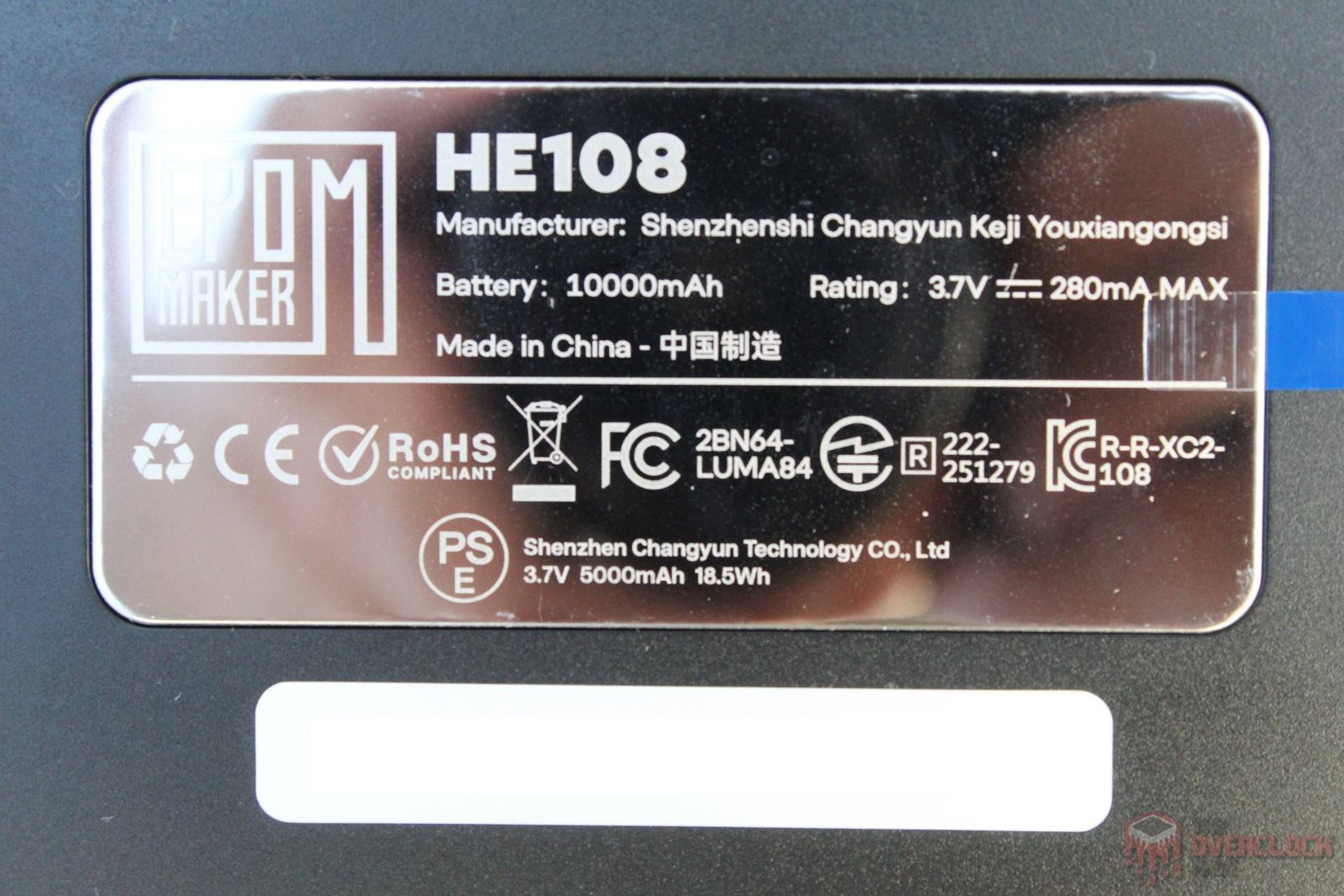
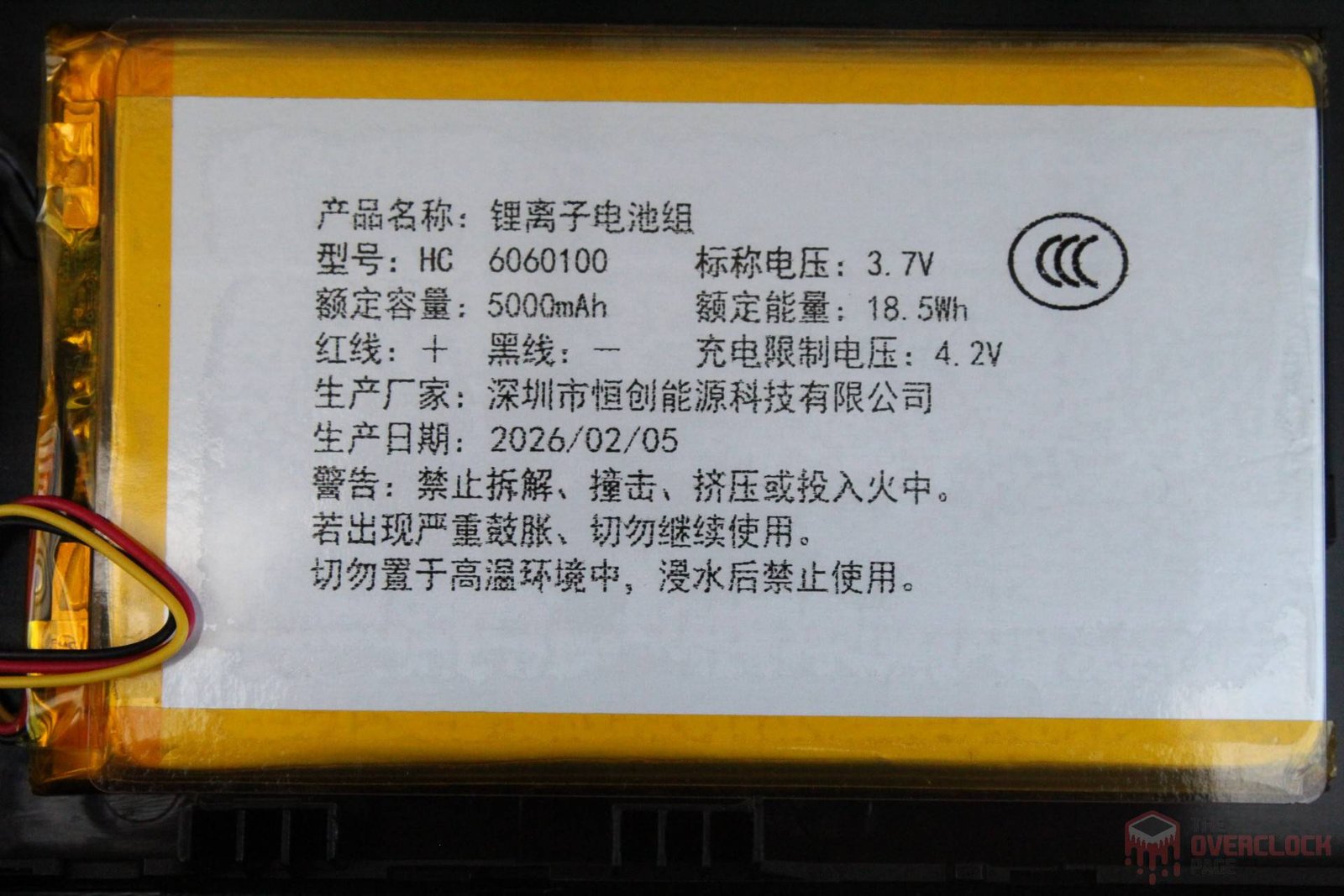
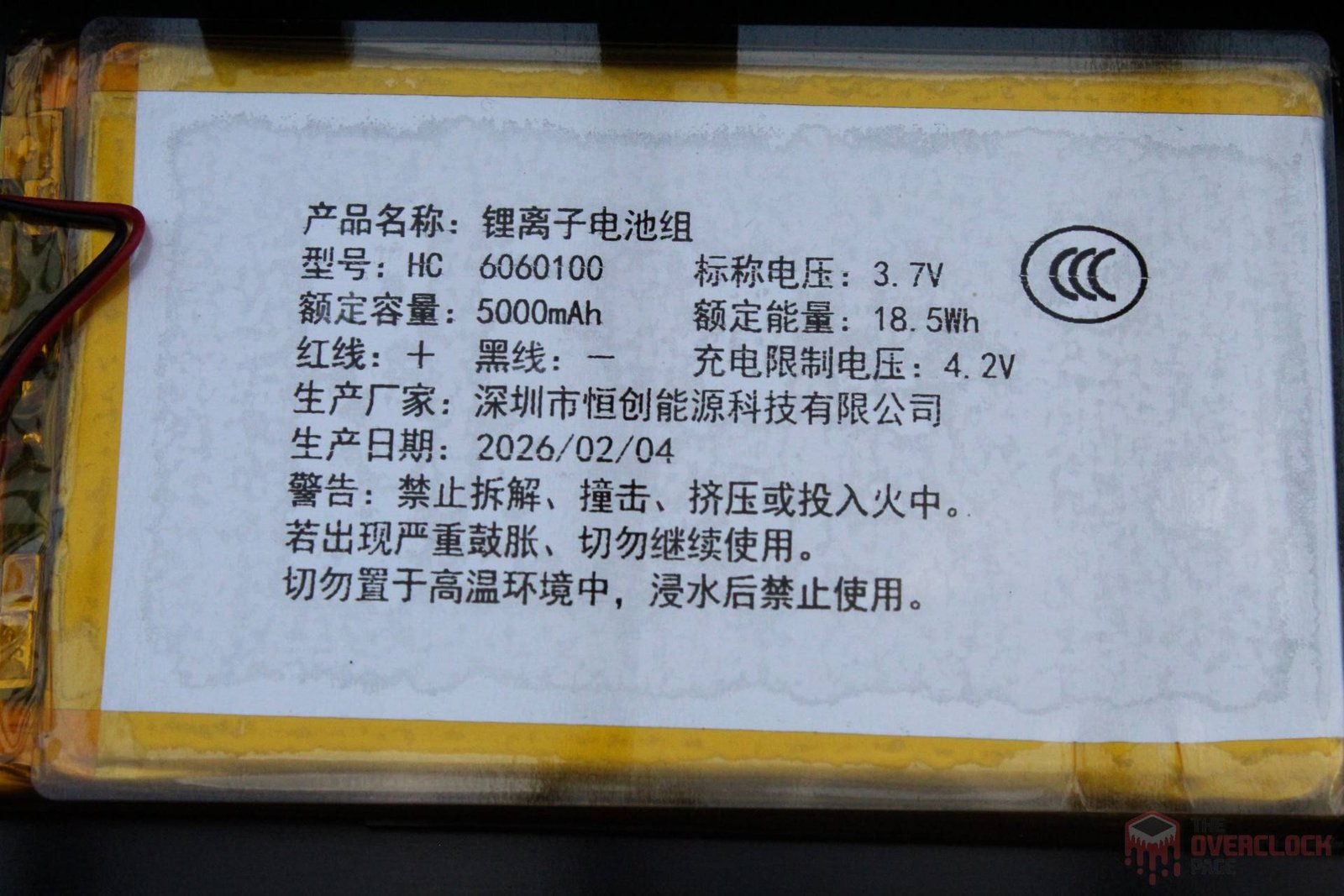
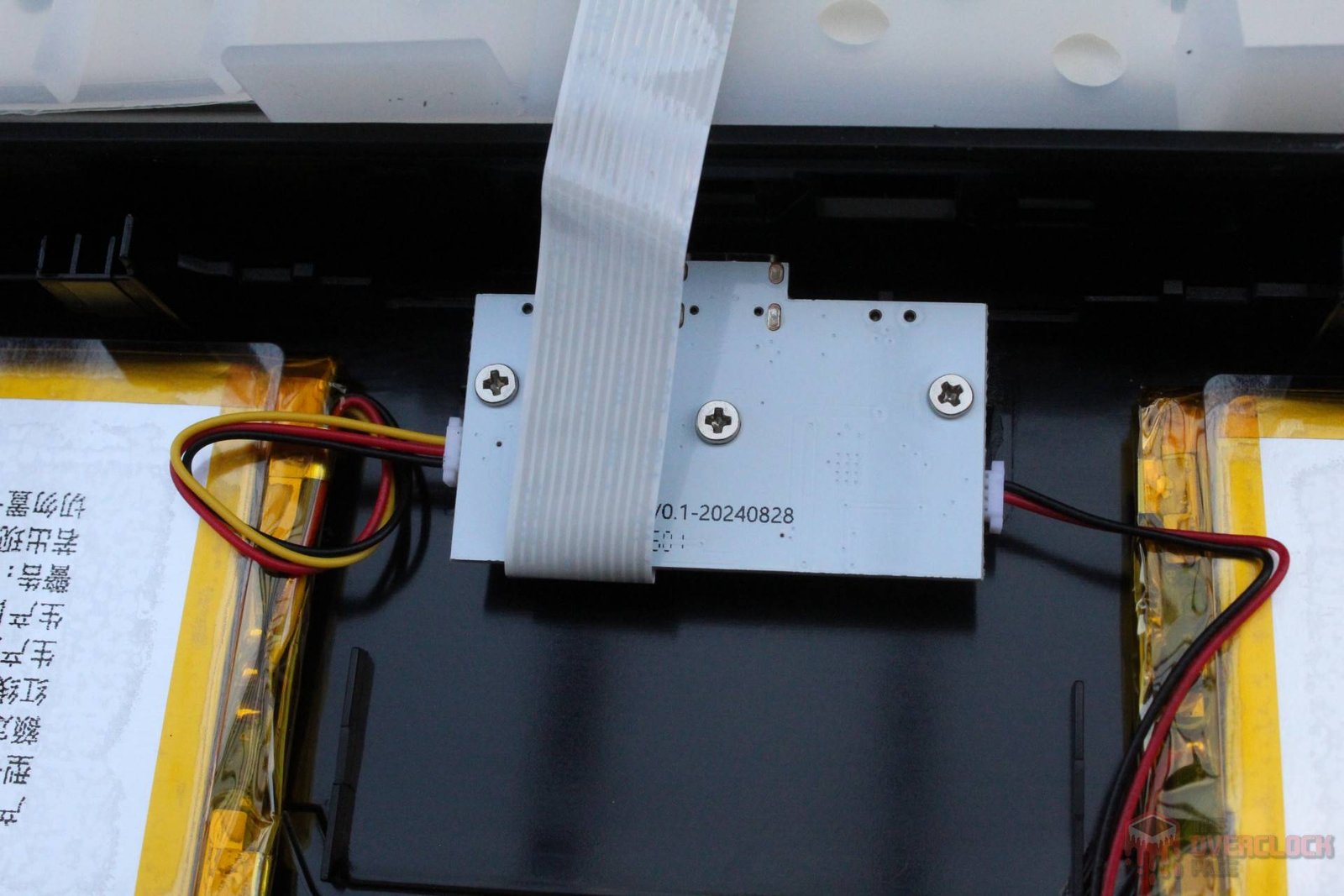
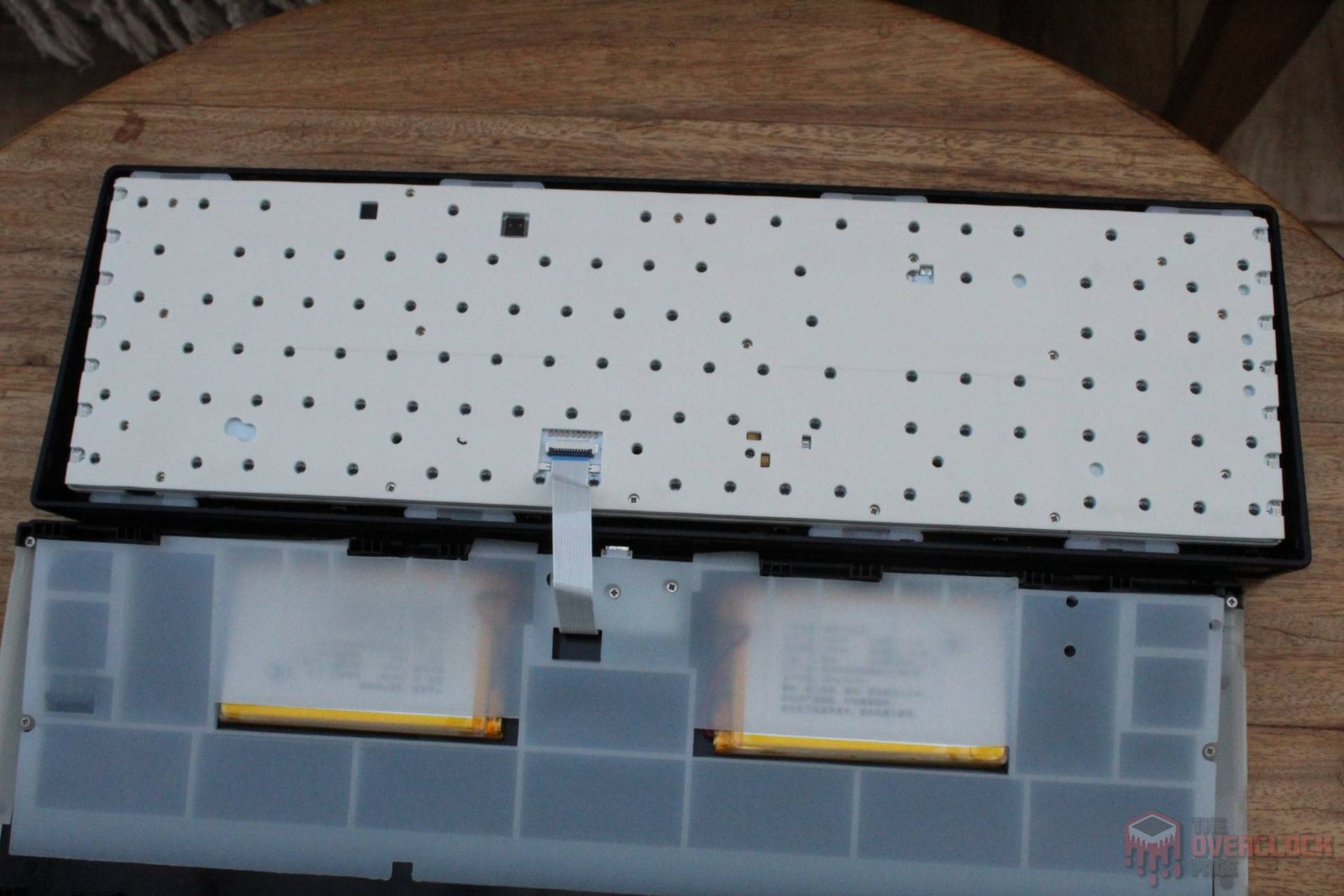
Upon opening it up, we see the two massive 5000mAh batteries and the first of the five layers of sound-dampening foam. Their job is to reduce vibrations and contribute to the typing sound profile. Additionally, the PCB itself has insulation because it is screwed directly into the keyboard’s top plate.
- Software:
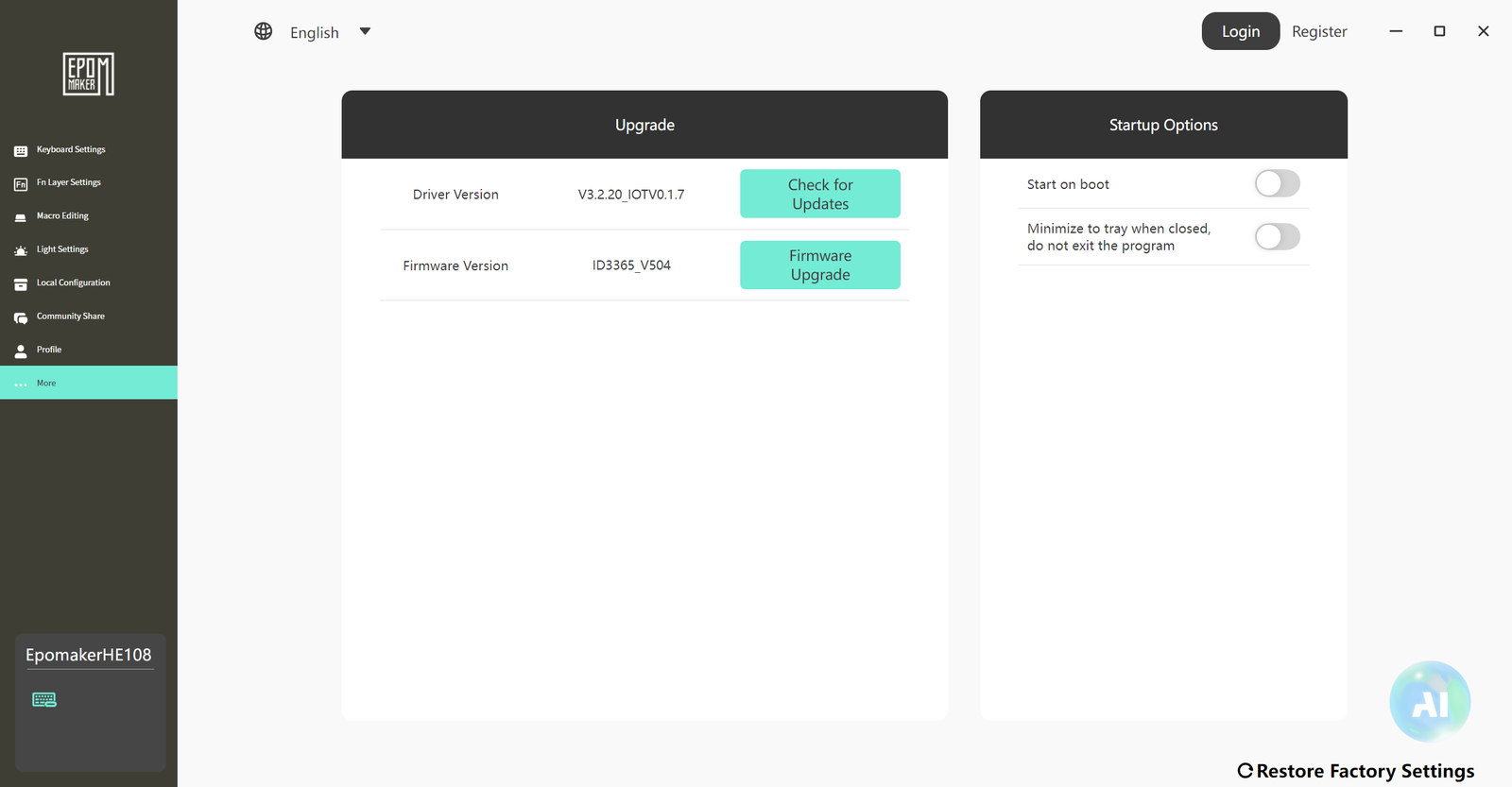
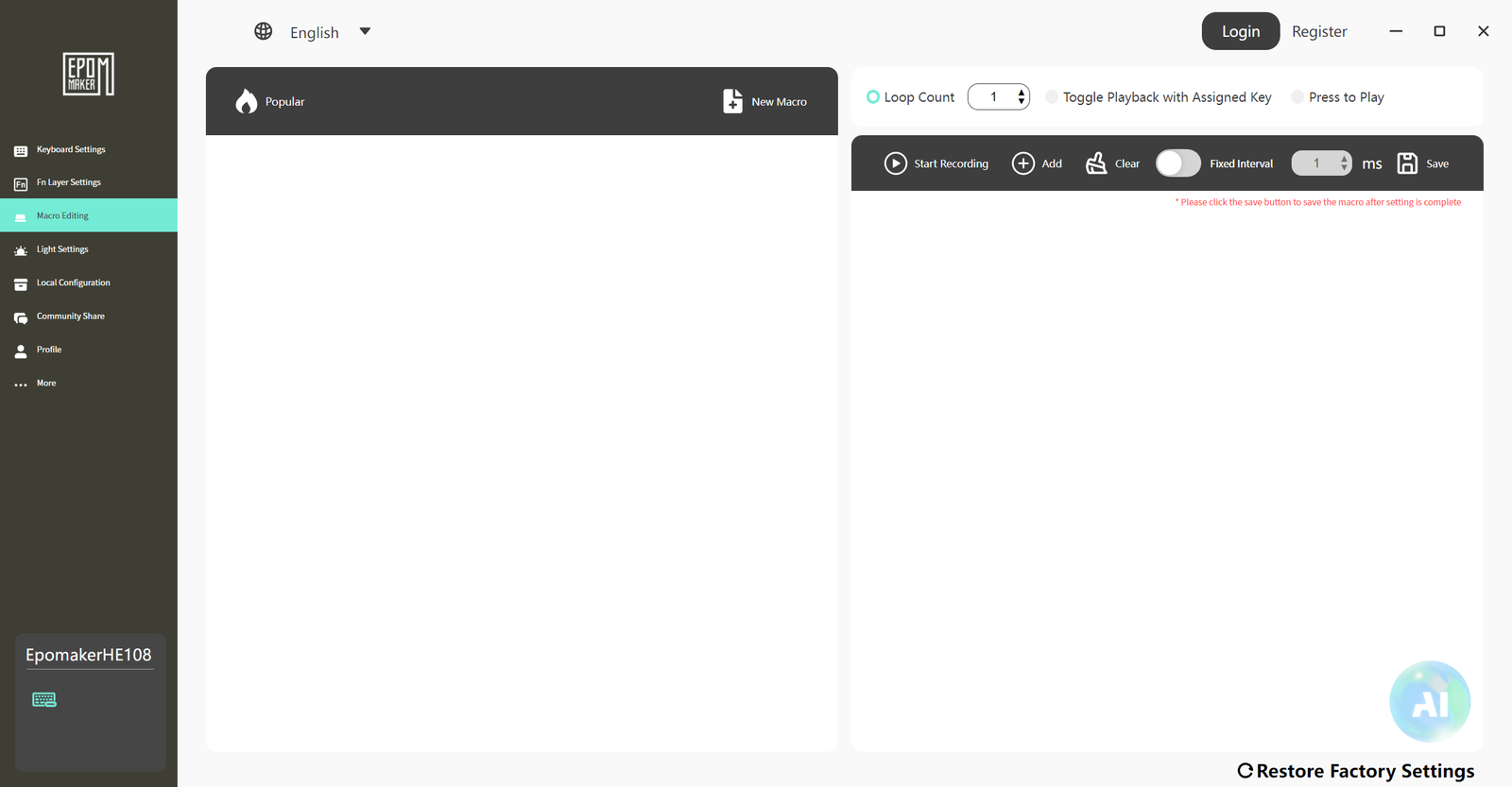
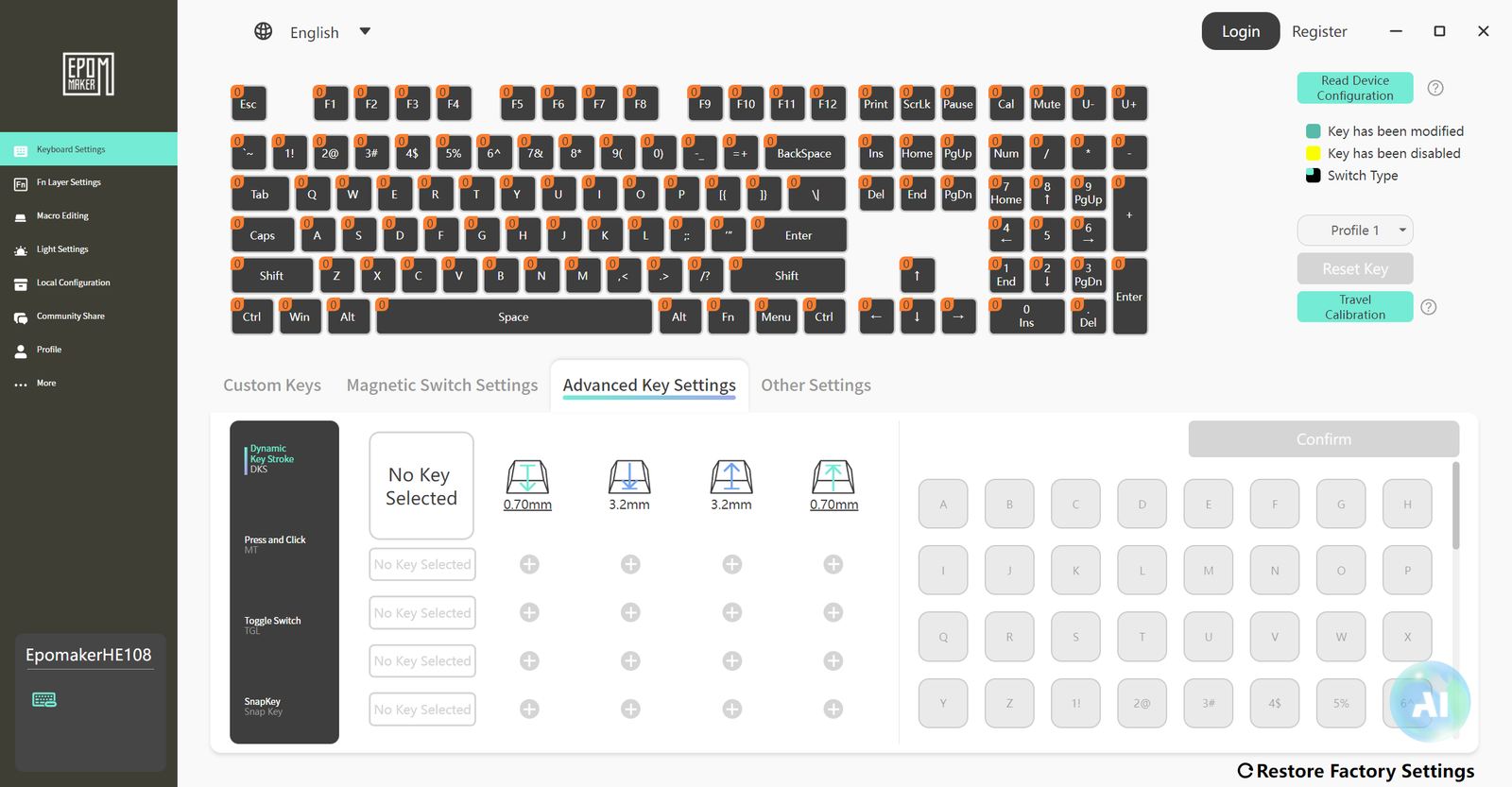
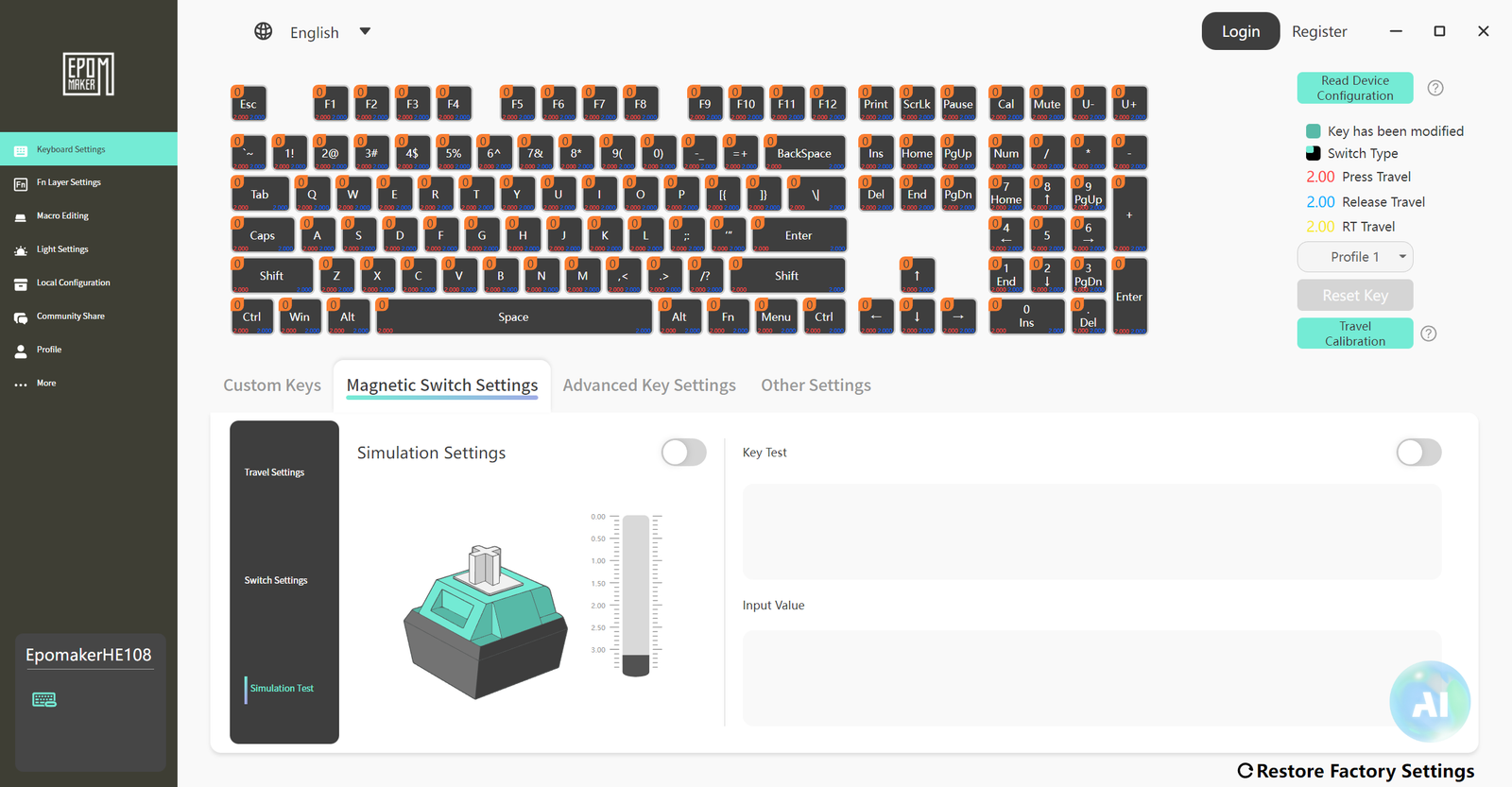
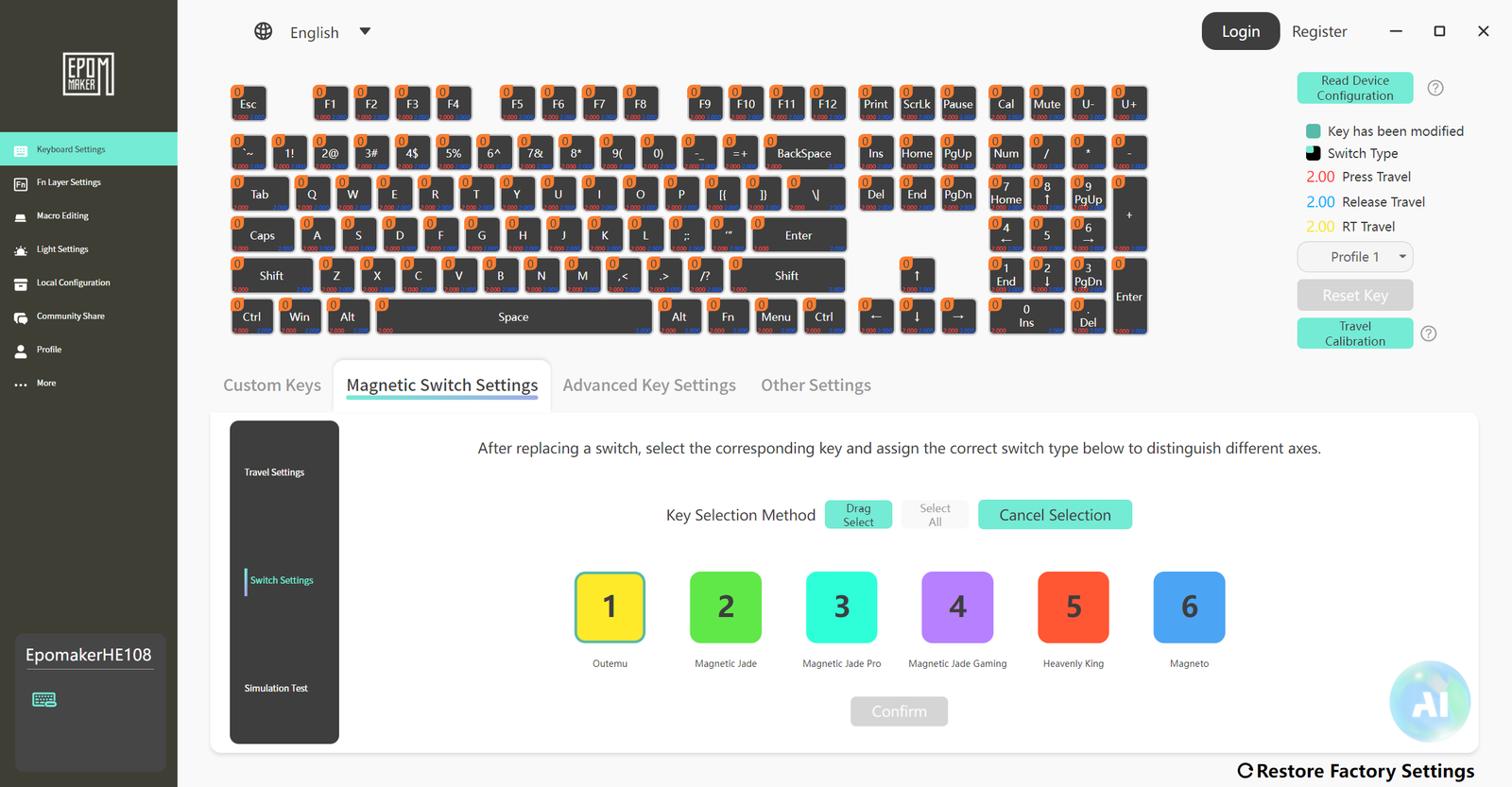
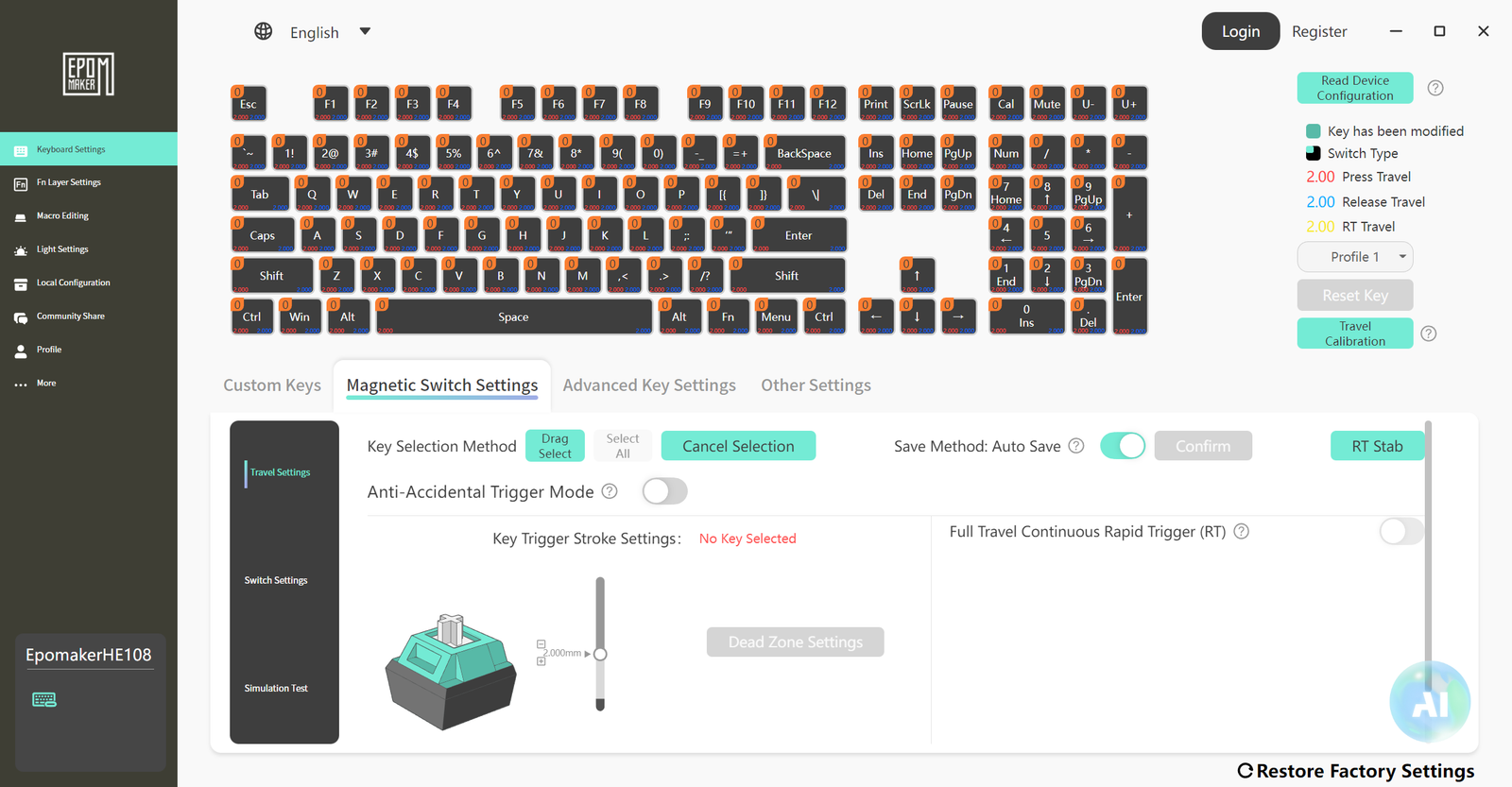
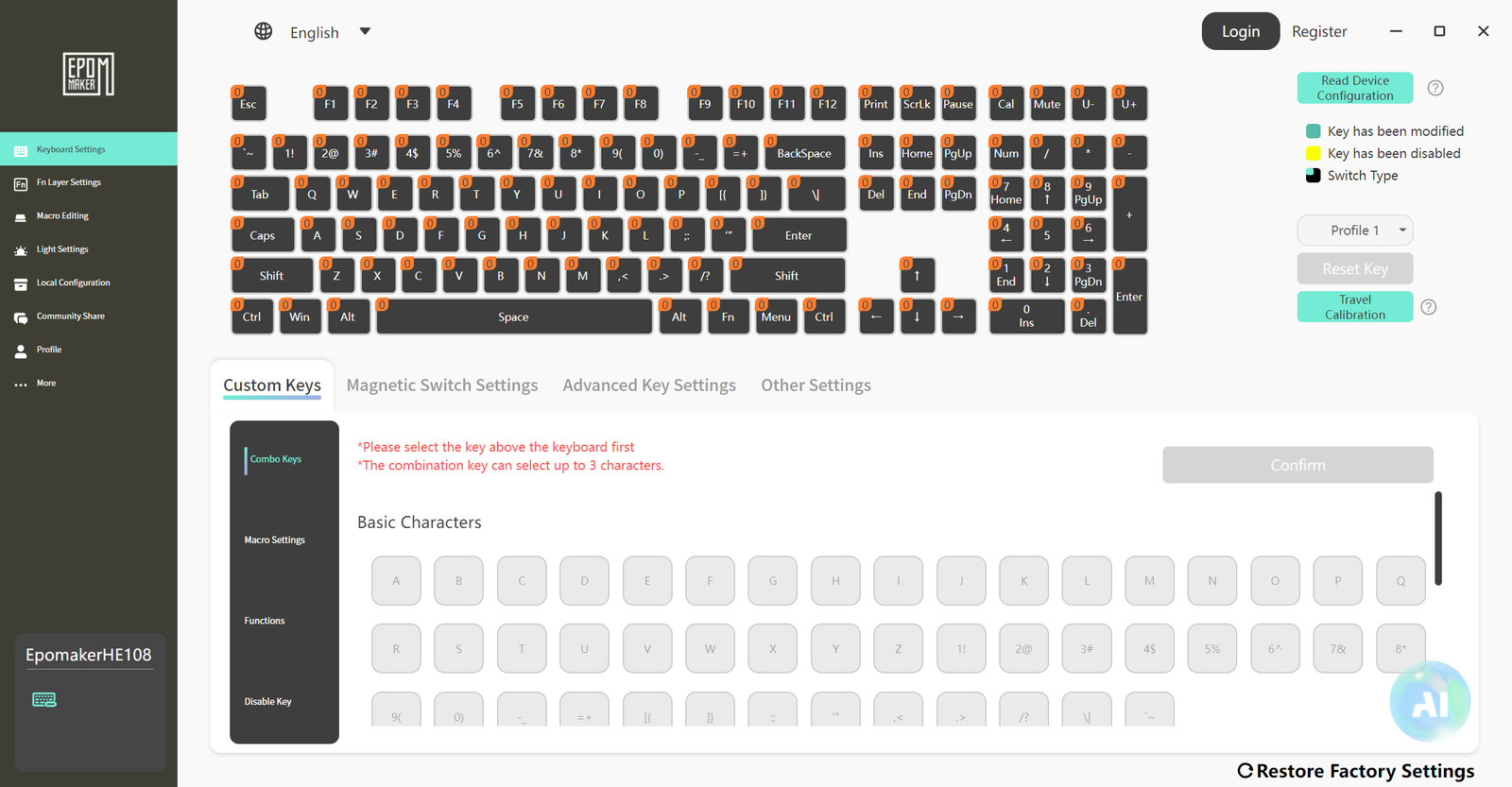
Unlike the MagCore65, which uses online software, EPOMAKER took a more traditional approach with the HE108 by offering a local installation package for Windows and Mac.
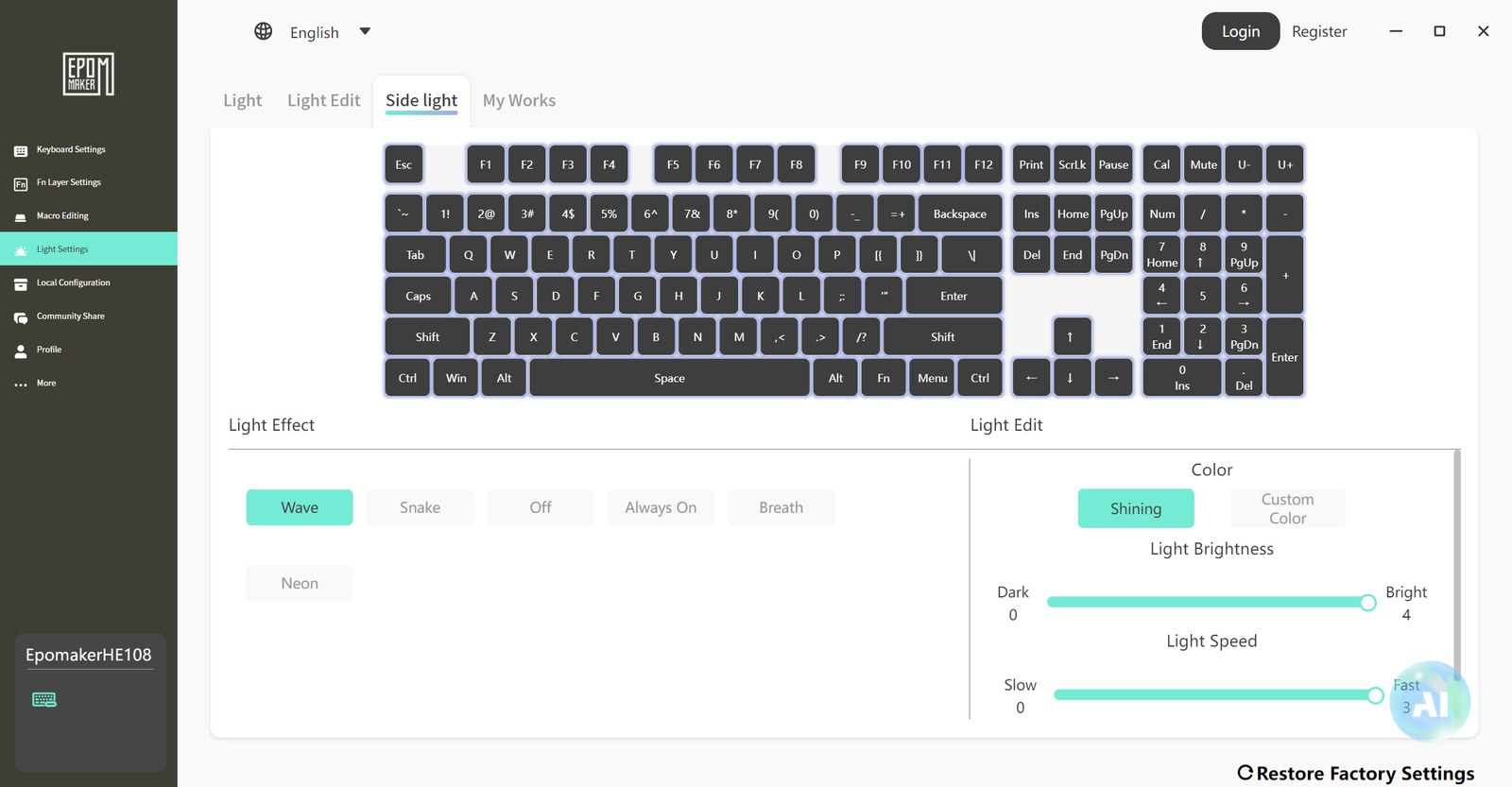
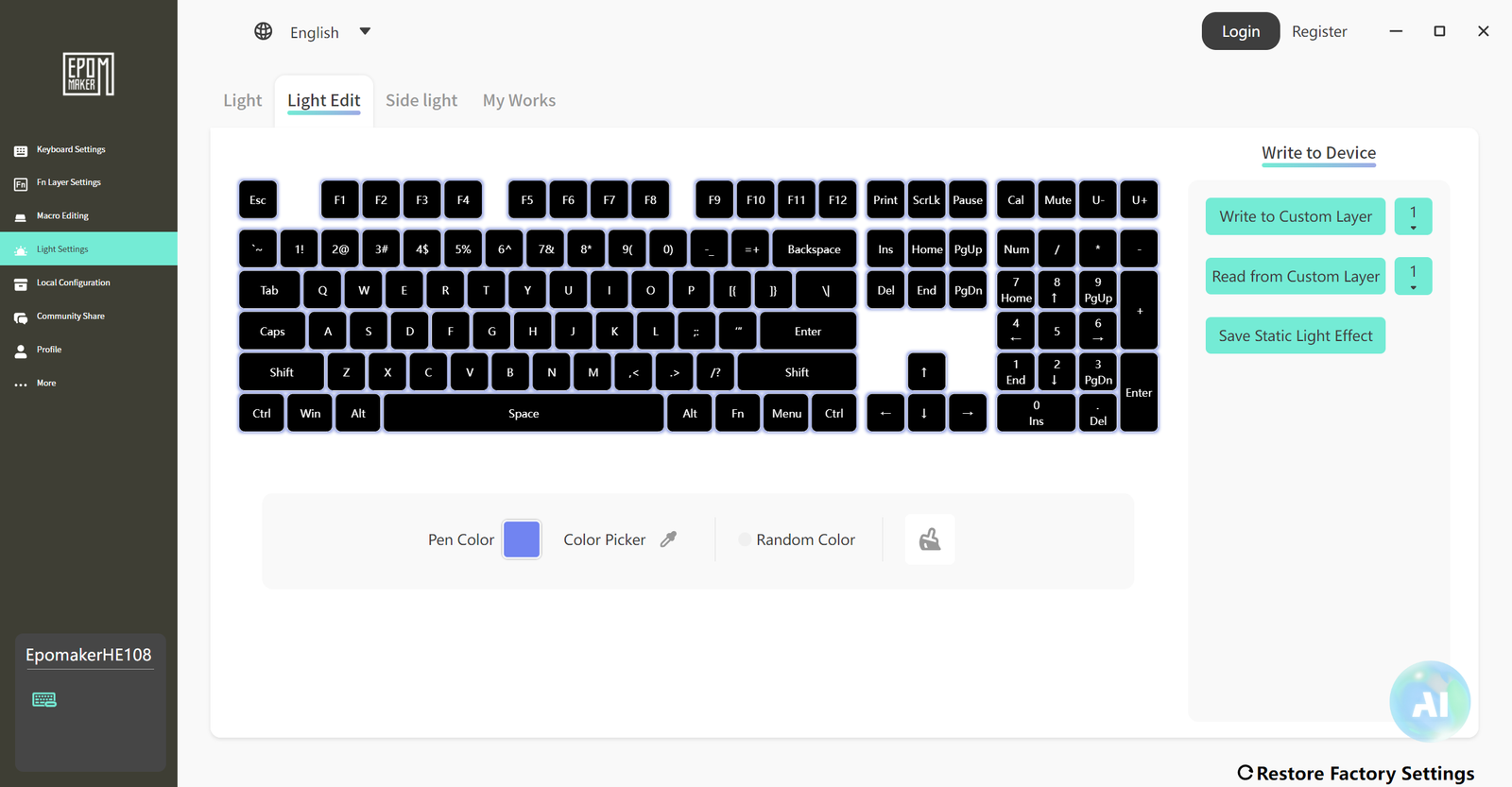
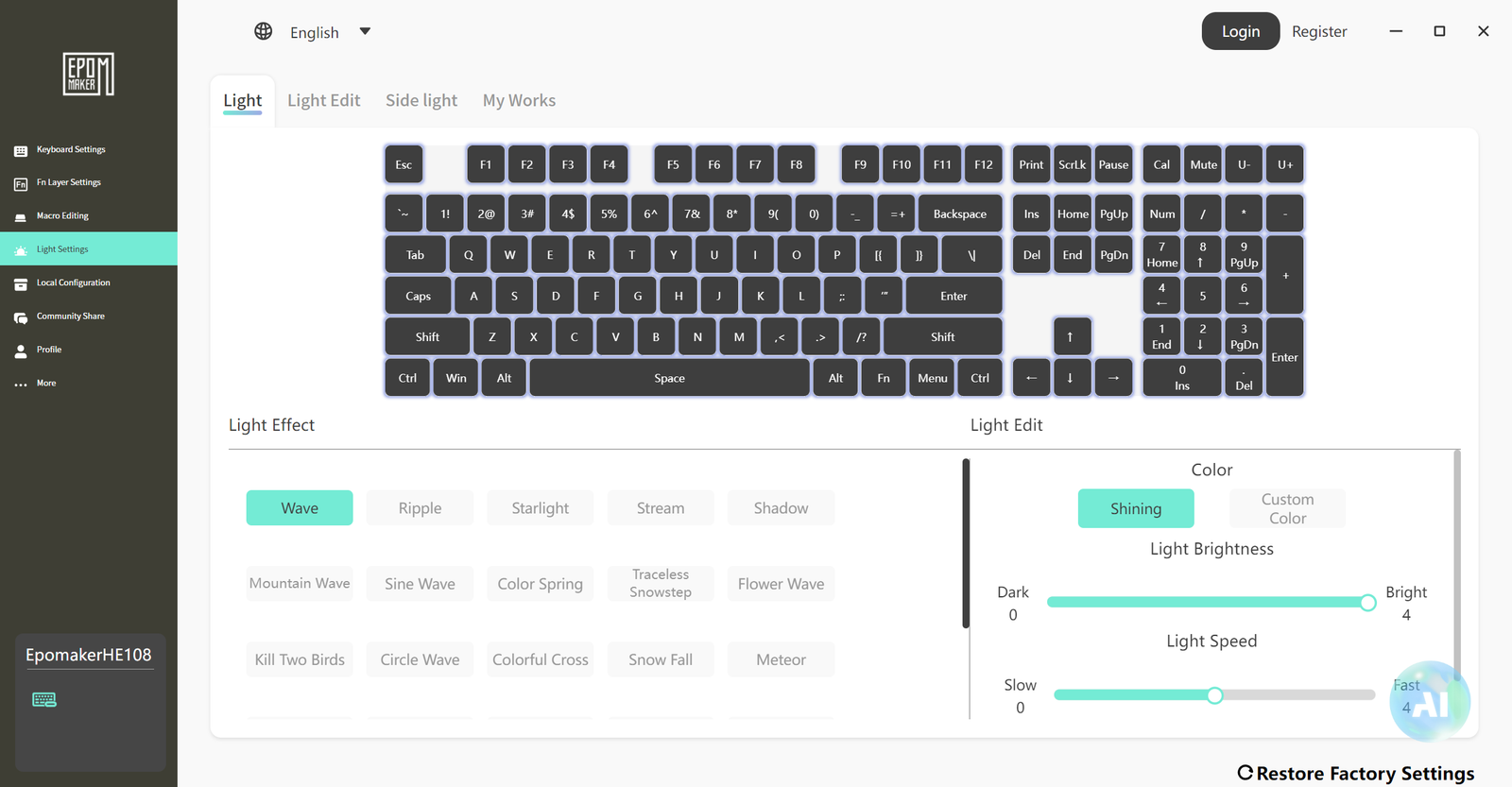
You can create custom keymappings to assign different functions to specific keys, customize the RGB with various patterns, colors, brightness levels, and speeds, activate Rapid Trigger, set the actuation point, calibrate the switches (even if you choose to replace them), define multiple functions for keys, and check for firmware updates.
It has all the features you would expect from a top-tier Hall Effect keyboard. The only major downside is the lack of Linux support, which would be nice since the number of Linux is growing.
- Real-World Usage:
Because it is a full-size keyboard, the HE108 is extremely convenient to use. You don’t have to rely on function key shortcuts for anything since you have a dedicated numeric keypad, separate arrow keys, and the entire navigation block.
It is important to clarify that taking up more desk space isn’t really a negative point of the product, but rather a natural characteristic of this layout and its full set of keys. Aside from that, the model is very comfortable to use and quite quiet for a mechanical keyboard. The sound and feel are very similar to the legendary Gateron Yellow switches, even delivering the same “thocc” and a very similar sound, which is a big plus! The only notable difference is that these Jade switches seem to be slightly heavier than the Yellows.
Regarding battery life, the manufacturer promises 60 hours of continuous use with RGB turned on and an impressive 500 hours without lighting. Since validating this autonomy requires many days of testing, I will update the article in the future to share my practical results, checking if turning off the RGB really provides all that extra gain in real-world use.
Finally, here is a short video showing how the HE108 performs during use. The idea is to show details like the typing noise, which is very unique to each keyboard due to differences between keycaps, switches, and the chassis, as well as showing what the backlight looks like.
- Conclusion:
Based on what we’ve seen, here are the key takeaways:
Regarding design and usability, the EPOMAKER HE108 has a fairly sober look, with its main standout feature being the translucent keycaps, which help it stand out from the crowd.
In terms of usability, this keyboard uses the ANSI standard and a standard full-size layout. This means you won’t need to use many function key shortcuts, except perhaps for specific accents or symbols.
Regarding build quality, the HE108 structure is made of plastic, but it feels very solid. You can tell that the keyboard has some “heft” to it, with a firm frame that doesn’t flex or twist. The switches are the biggest highlight of this product. Unlike traditional mechanical keyboards that use physical metal contacts, this one uses Hall Effect technology. This provides faster response times and allows users to adjust parameters like the actuation point, while also providing the Quick Trigger feature.
The software is quite complete and easy to navigate. My only note is that it’s only available for Windows and Mac, so it would be great to see a Linux version as well, since the number of Linux users continues to grow.
Regarding the price, the EPOMAKER HE108 can be found for around 87 USD on AliExpress. This makes it an excellent choice if you are looking for a full-size keyboard with solid construction, Hall Effect switches, and a high-end feel. It is worth mentioning that there are cheaper Hall Effect models available, but the vast majority of them are in 75% layouts or smaller, so we recommend the HE108.